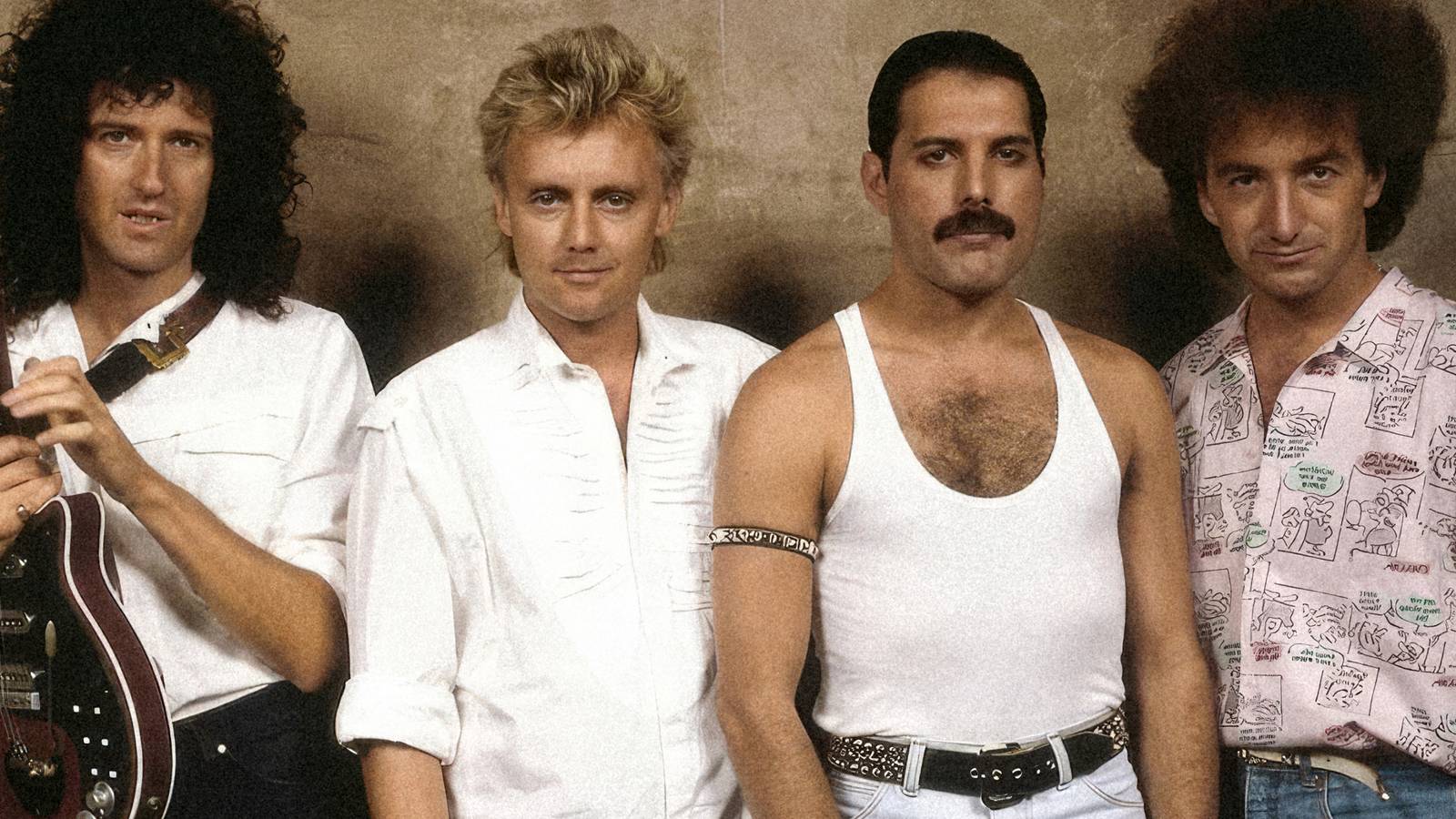
When Bohemian Rhapsody hit theaters in 2018, it reignited the world's love affair with Queen, culminating in a stunning recreation of their 1985 Live Aid set. That 20-minute performance is rightly hailed as one of rock's greatest moments. But Live Aid was a 16-hour marathon across two continents, featuring over 70 acts. While Freddie Mercury commanded Wembley Stadium, legends like David Bowie, The Rolling Stones, and Led Zeppelin also graced the stage—and some of those moments have faded from memory.
Queen's Day at Wembley
Queen performed between Dire Straits and David Bowie at London's Wembley Stadium. Dire Straits brought out Sting for "Money for Nothing," while Sting had earlier shared the stage with Phil Collins. Collins became the only artist to perform at both the London and Philadelphia shows, thanks to a supersonic Concorde flight. Elton John was joined by members of Wham! for "Don't Let the Sun Go Down on Me," and Paul McCartney led a star-studded "Let It Be" with Bowie, Pete Townshend, and Bob Geldof.
America's Star-Studded Lineup
Across the Atlantic, Philadelphia's JFK Stadium hosted its own legends. Judas Priest delivered a blistering set in full leather despite the July heat. Bryan Adams and The Beach Boys followed, with the latter's harmonies still razor-sharp. Run-DMC represented hip-hop's emerging voice, while Madonna—riding high on "Like a Virgin"—drew in younger fans. Mick Jagger of The Rolling Stones teamed up with Tina Turner for an electrifying duet of "State of Shock" and "It's Only Rock 'n Roll (But I Like It)," showcasing raw chemistry and powerhouse vocals.
Reunions and Risks
Black Sabbath reunited with original frontman Ozzy Osbourne for the first time since his late-'70s departure. Despite a legendary hangover, they tore through "Children of the Grave," "Iron Man," and "Paranoid." Guitarist Tony Iommi later revealed the reunion was meant to spark a full comeback—though that wouldn't happen for decades.
Then came Led Zeppelin. The band reunited for the first time since drummer John Bonham's death, with Phil Collins filling in on drums. The premise was monumental, but the execution fell flat. Robert Plant's voice strained on "Rock and Roll," Jimmy Page's guitar was out of tune, and the rhythm stumbled. It was a rare misstep in an otherwise triumphant day.
Live Aid wasn't just Queen's show—it was a gathering of rock royalty, each act adding to a historic day. For fans of Queen's deeper catalog or those curious about forgotten HBO gems, the concert remains a treasure trove of moments both brilliant and flawed.