One of the greatest strengths of video games as a medium is their ability to create fully immersive worlds that players can explore with unparalleled freedom. While movies like The Lord of the Rings offer glimpses into fantastical realms, games like God of War let you live inside them. The key to these engrossing settings is worldbuilding—the art of crafting not just a landscape, but a living, breathing universe with history, culture, politics, and constant change.
Worldbuilding goes beyond unique geography; it weaves together lore, religion, and societal structures that feel authentic and dynamic. The following ten video game masterpieces excel at this, offering richly detailed worlds that captivate players from start to finish.

Metroid Prime (2002)
Nintendo's Metroid Prime is a standout in worldbuilding, set on the alien planet Tallon IV. Samus Aran tracks space pirates while uncovering the planet's ancient history and the deadly mutagenic substance corrupting it. Despite being a linear game, Metroid Prime integrates lore seamlessly into gameplay, using environmental cues and narrative moments to build intrigue. The result is a world that feels alive, with diverse regions and a deep sense of history.
Baldur's Gate 3 (2023)
Building on the established Dungeons & Dragons universe, Baldur's Gate 3 expands the Forgotten Realms with new lore and player-driven storytelling. While it borrows from existing mythology, the game excels by letting players shape the world through their choices. This blend of rich pre-existing lore and interactive agency makes it a standout, even if it ranks slightly lower for originality. For more on immersive storytelling, check out our list of flawless sci-fi masterpieces.
Horizon Zero Dawn (2017)
PlayStation's Horizon Zero Dawn presents a far-future Earth where mechanical creatures roam and civilization has regressed to tribal societies. The game masterfully reveals two timelines: the ancient, advanced world that fell to ruin and the new world struggling to survive. The tribal cultures are well-crafted, and the mystery of the planet's past adds layers of intrigue, making it one of the best examples of worldbuilding in gaming.
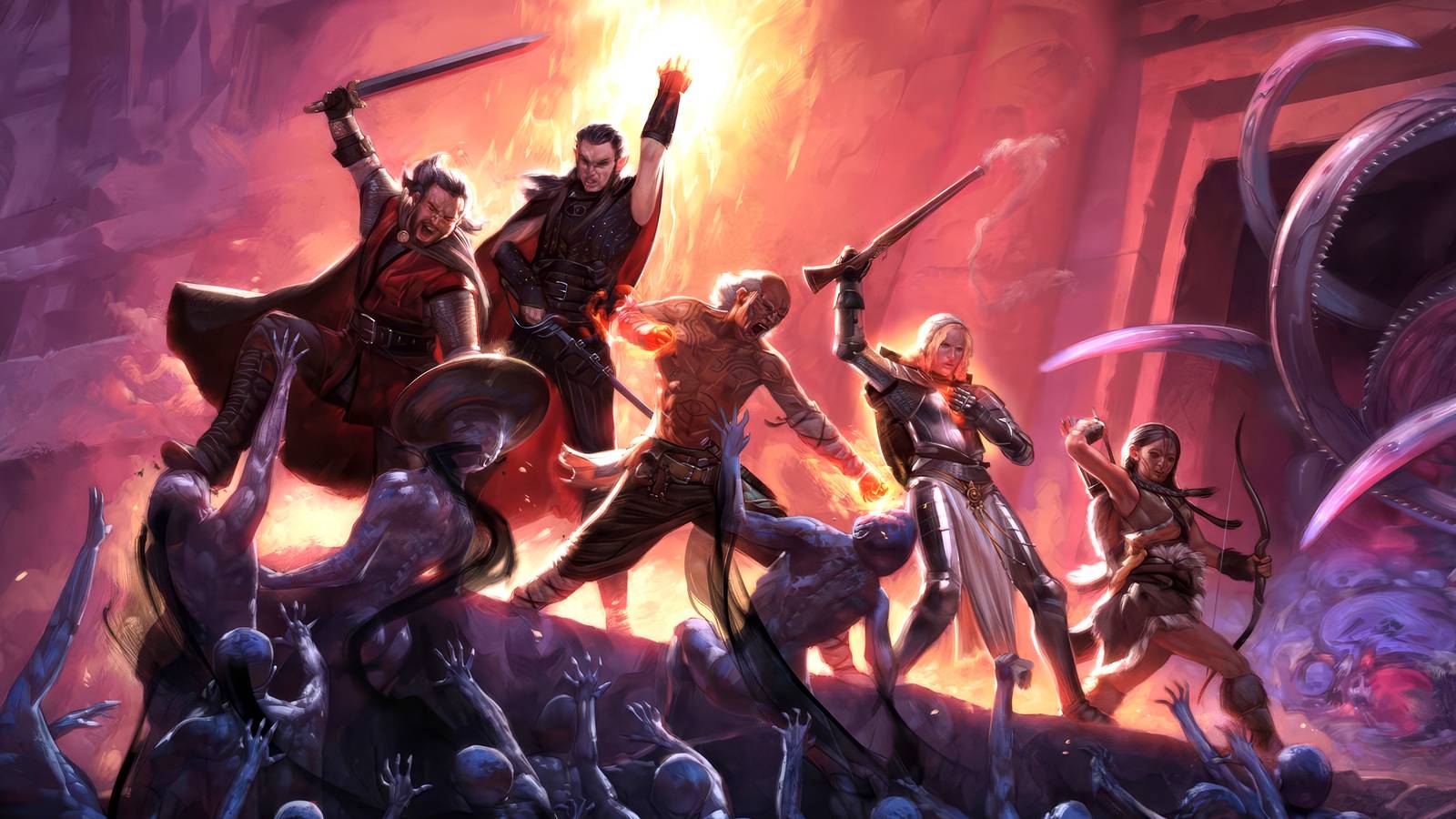
Pillars of Eternity (2015)
Lesser-known but equally impressive, Pillars of Eternity takes place in Eora, a dark fantasy world undergoing a technological renaissance. Its unique soul system—where souls are quantifiable energy fueling reincarnation—drives both gameplay and worldbuilding. The game explores the ethics of soul science, weaving philosophy, magic, and conflict into dense lore. It's a hidden gem that deserves more attention.
Cyberpunk 2077 (2020)
CD Projekt's Cyberpunk 2077 captures the cyberpunk genre's critique of capitalism through Night City, a dystopian metropolis that feels like a character itself. The city's oppressive atmosphere, shaped by greed and inequality, affects every inhabitant. V's story—a street punk with a terrorist's mind in their head—unfolds in a world where the city is the true villain. The detail and coherence of Night City's design make it a worldbuilding triumph.
The Legend of Zelda: Breath of the Wild (2017)
Hyrule in Breath of the Wild is a post-apocalyptic kingdom reclaimed by nature, filled with ancient mechanisms and monsters. The game's worldbuilding shines through its environmental storytelling and Easter eggs, creating a sense of discovery and history. While Tears of the Kingdom added more, the original remains a benchmark for open-world design. For more visually stunning games, see our feature on pixels that pop.
These games prove that worldbuilding is about more than just maps—it's about creating worlds that feel real, lived-in, and worth exploring. Whether through sci-fi epics or fantasy gems, they set the standard for immersive storytelling in gaming.