Hard science fiction is a genre that takes its science seriously. It's all about getting the math, physics, biology, and engineering right, even when imagining far-future technologies or alien encounters. The best hard sci-fi books don't just dazzle with technical accuracy—they use that foundation to explore deep questions about humanity, existence, and our place in the cosmos.
We've ranked the greatest hard sci-fi novels of all time, from tales of lonely astronauts fighting for survival to epic sagas of civilizations meeting incomprehensible intelligences. These books are engaging, thought-provoking, and emotionally resonant, proving that even the most cerebral sci-fi can hit you right in the feels.

10. Children of Time (2015)
Adrian Tchaikovsky's masterpiece begins with a human terraforming project gone awry, accidentally accelerating the evolution of spiders on a distant planet. The novel alternates between the remnants of humanity on a failing ark ship and the rise of a spider civilization over millennia. Tchaikovsky's genius lies in making the spiders genuinely alien yet emotionally relatable—their religion, politics, and science evolve from their biology, not human assumptions. It's a meditation on intelligence itself, wrapped in a gripping survival story.
9. The Andromeda Strain (1969)
Michael Crichton's debut novel put him on the map with a chilling premise: a military satellite crashes in a small Arizona town, killing nearly everyone. A team of scientists investigates an extraterrestrial microorganism that could wipe out life on Earth. Crichton's documentary-style storytelling, complete with diagrams and medical jargon, makes the science feel real and the suspense unbearable. It's a techno-thriller that still holds up today.
8. The Forever War (1974)
Joe Haldeman drew on his Vietnam War experiences to craft this time-twisting military sci-fi novel. Soldier William Mandella fights an interstellar war against the Taurans, but due to relativistic time dilation, centuries pass on Earth while he experiences only a few years of combat. Each return home reveals a humanity he no longer recognizes. The book is a powerful metaphor for veteran alienation, with battle scenes that are chaotic and brutally impersonal—less space opera, more industrialized catastrophe. For more on war's true horror, check out our list of films that get it right.
7. Contact (1985)
Astronomer Carl Sagan's novel follows Dr. Eleanor Arroway, a SETI scientist who detects a signal from deep space. Hidden within is a blueprint for a mysterious machine. But Contact isn't about alien invaders—it's about humanity's longing for meaning in a vast, indifferent cosmos. Sagan suggests that science and spirituality both spring from our desire to understand existence. Arroway is one of the genre's greatest protagonists: intelligent, skeptical, flawed, and deeply devoted to truth.
6. The Martian (2011)
Andy Weir's debut is stubbornly practical and utterly gripping. Astronaut Mark Watney is stranded on Mars after a mission evacuation, believed dead. He must survive with limited supplies, failing equipment, and no margin for error. Watney solves problems using botany, chemistry, and engineering, and his sarcastic humor keeps the tension from becoming overwhelming. You'll find yourself emotionally invested in crop yields and oxygen calculations because every success or failure means life or death.
5. Neuromancer (1984)
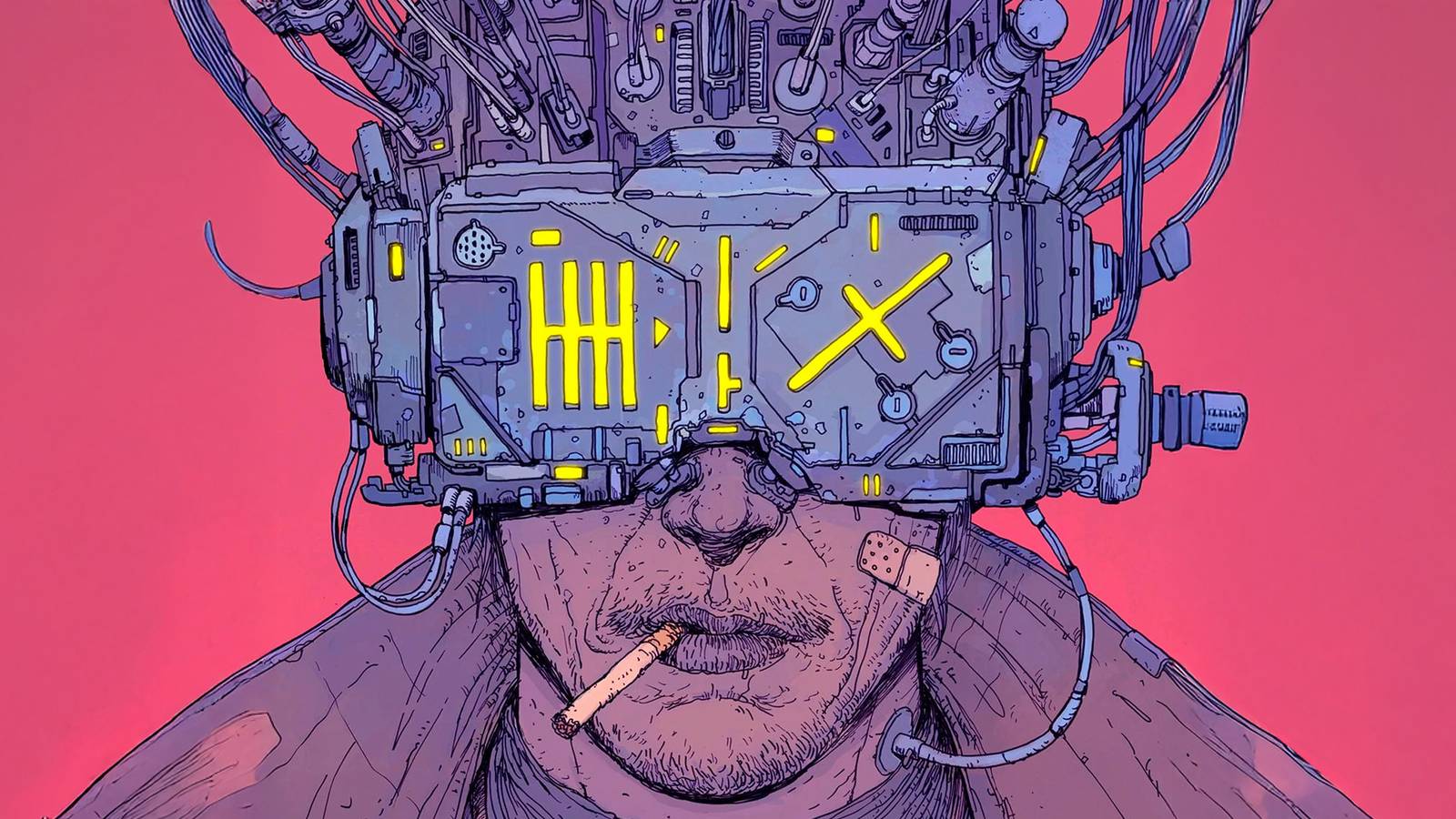
William Gibson's cyberpunk classic opens with one of the most iconic lines in sci-fi: "The sky above the port was the color of television, tuned to a dead channel." The novel follows washed-up hacker Case, who is hired for one last job in a world of artificial intelligences, corporate espionage, and virtual reality. Gibson's vision of cyberspace and his gritty, noir-influenced style redefined the genre. It's a dense, stylish, and prescient work that feels as fresh today as it did in the '80s.
4. The Three-Body Problem (2008)
Liu Cixin's epic begins during China's Cultural Revolution and spirals into a first-contact story of cosmic proportions. A secret military project sends signals into space, attracting the attention of an alien civilization on the brink of collapse. The science is mind-bending—three-body orbital mechanics, quantum entanglement, and the dark forest theory of the universe. But at its heart, it's a story about human folly, survival, and the terrifying scale of the cosmos.
3. Rendezvous with Rama (1973)
Arthur C. Clarke's novel is a masterclass in scientific wonder. A mysterious cylindrical object enters the solar system, and a team of astronauts explores its vast, empty interior. There are no aliens to talk to, no battles to fight—just the slow, methodical unraveling of an alien artifact's purpose. Clarke's prose is precise and evocative, capturing the awe of discovery. It's a pure, cerebral exploration of the unknown.
2. Dune (1965)
Frank Herbert's magnum opus is a sprawling epic of politics, religion, ecology, and human potential. Set on the desert planet Arrakis, it follows young Paul Atreides as he navigates betrayal, war, and his own destiny. The science is grounded in ecology and genetics, but the novel's true power lies in its exploration of power, messianic figures, and the consequences of human ambition. It's a dense, rewarding read that has influenced countless works since.
1. Blindsight (2006)
Peter Watts's novel is a harrowing first-contact story that questions the very nature of consciousness. A crew of augmented humans and a vampire (yes, a genetically resurrected vampire) investigates an alien signal at the edge of the solar system. The aliens they encounter are so alien that they may not even be conscious—and that's the terrifying part. Watts weaves neuroscience, evolutionary biology, and philosophy into a dark, challenging narrative that will leave you questioning what it means to be human. It's the pinnacle of hard sci-fi, where the science is as deep as the existential dread.
These novels prove that hard sci-fi can be just as affecting and poignant as any other genre. Whether you're a science buff or a story lover, these books offer something profound. For more mind-bending sci-fi, check out our list of best sci-fi shows about parallel universes.