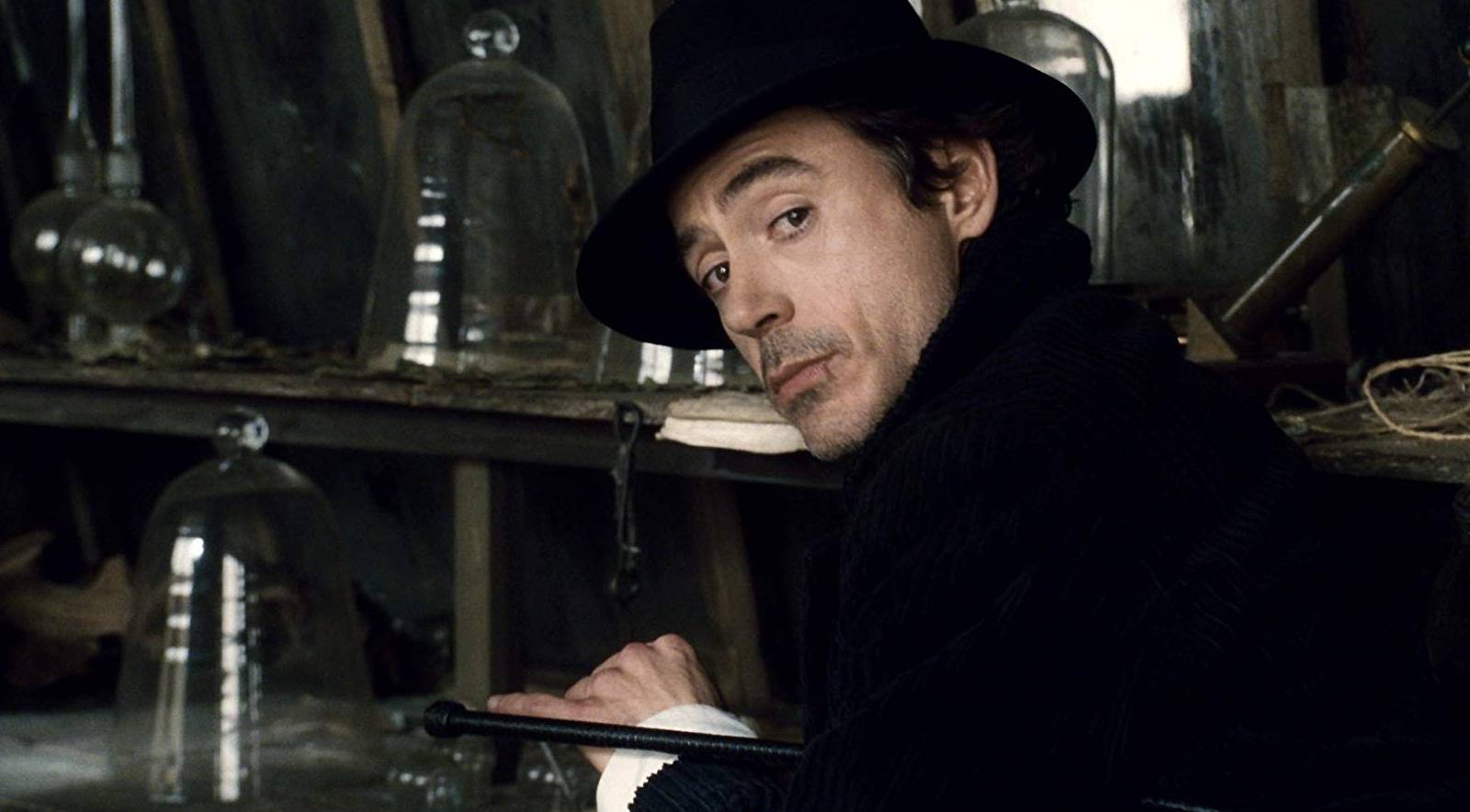
Guy Ritchie's Sherlock Holmes is a whirlwind of deductive brilliance, witty banter, and explosive action. Robert Downey Jr.'s portrayal of the iconic detective is defined by his razor-sharp intellect and his ability to outmaneuver anyone with a barrage of complex theories. Yet, the moment that truly captures the essence of this version of Sherlock Holmes is not a grand speech or a clever deduction—it's a quiet, two-word admission that exposes the heart beneath the genius.
In the climactic scenes of the 2009 film, Holmes confronts the villainous Lord Blackwood (Mark Strong) and saves the life of Irene Adler (Rachel McAdams), a cunning thief and his former flame. As the dust settles, Irene reveals that her mysterious employer is a man named Moriarty, who found her "weak spot." When Holmes asks what that weak spot is, she simply looks at him and smiles. The unspoken truth hangs in the air: Holmes himself is her vulnerability.

As Holmes turns to leave, Irene calls out, her voice cracking with emotion, "You'll miss me, Sherlock." He pauses, looks back, and delivers the line that would come to define his character: "Sadly, yes." It's a moment of raw honesty, a crack in the armor of a man who prides himself on emotional detachment. In that brief exchange, we see the real Sherlock Holmes—a man who feels deeply but fears the consequences of showing it.
A Weak Spot for the World's Greatest Detective
Throughout the film, Holmes maintains control by keeping people at arm's length. He never reveals his true thoughts, never lets anyone get too close. But Irene is different. She challenges him, surprises him, and makes him feel vulnerable in a way no one else can. She's a mystery he can't solve, and that's both fascinating and terrifying for a man who thrives on predictability. His admission of missing her is not just a romantic confession; it's an acknowledgment that he has a weakness—a vulnerability that his enemies could exploit.
This moment is a masterstroke of character development. It humanizes a figure who often seems larger than life, reminding us that even the greatest minds have hearts that can be broken. The line also sets the stage for the tragedy that unfolds in the sequel, Sherlock Holmes: A Game of Shadows.
The Cost of Love in 'A Game of Shadows'
In the 2011 follow-up, the connection between Holmes and Irene becomes the catalyst for one of the most devastating moments in the franchise. Moriarty, recognizing Holmes's feelings for Irene, uses her as a pawn in his game. When she betrays him to help Holmes, Moriarty poisons her, delivering a chilling monologue about her "succumbing to her feelings." Her death is sudden and brutal, leaving Holmes with no chance to reconcile or say goodbye.
Holmes's grief is palpable, even if he rarely shows it. When asked what he sees in the aftermath, he replies, "Everything. That is my curse." It's a line that echoes the "Sadly, yes" from the first film, underscoring the tragic irony of his brilliance: he sees everything, including the consequences of his own love.
The two-word confession in Sherlock Holmes is more than just a memorable quote—it's the key to understanding the character. It reveals the emotional core of a man who hides behind his intellect, and it sets the stage for a story about love, loss, and the price of genius. For fans of the franchise, it's a moment that resonates long after the credits roll.
For more on the detective's legacy, check out our look at TV detectives who outsmart Sherlock Holmes and Reacher's Sherlock Holmes connection. And if you're a fan of iconic quotes, don't miss Dexter's most memorable quote.