War movies often stumble when the battlefield looks too polished. Real fear is messier. It's the dread of a senseless order, the shared silence of two terrified soldiers in the dark, or the unsettling realization that courage and foolishness can be indistinguishable from a distance. That's why shows like Game of Thrones resonate so deeply.
The eight films below understand that war isn't a single experience. It's machinery, bureaucracy, madness, occupation, cowardice, obedience, boredom, terror, or a field of men dying because someone with cleaner boots decided the map needed redrawing. If you're a fan of war films, these are essential viewing.

8. 1917 (2019)
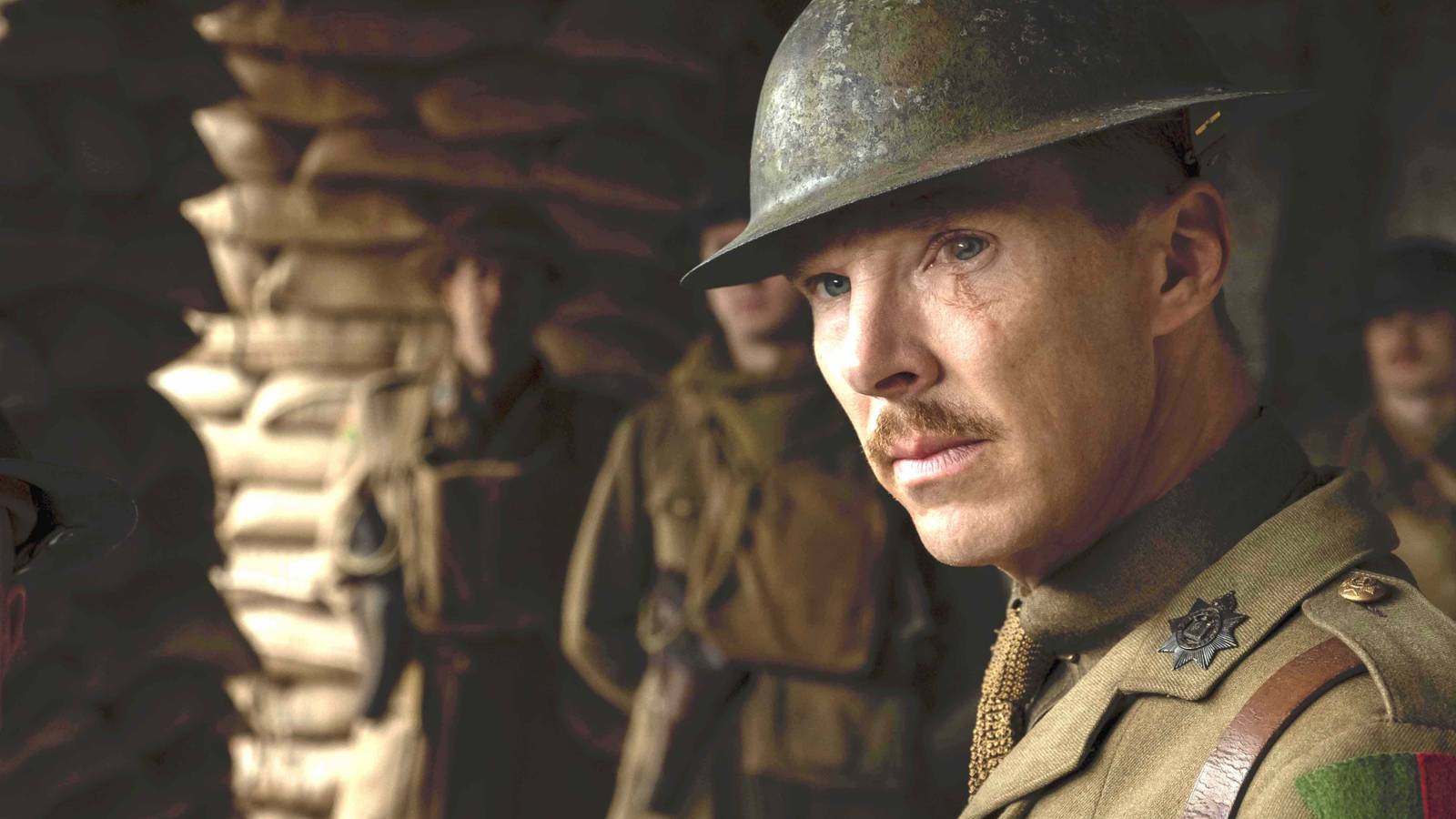
Sam Mendes's 1917 follows British soldiers Will Schofield (George MacKay) and Tom Blake (Dean-Charles Chapman) as they're ordered to cross enemy territory during World War I to deliver a message that could prevent an attack sending 1,600 men into a German trap. Blake's brother is among those men, making the mission deeply personal.
The film feels as if the camera is physically attached to the soldiers, a choice that could have been a gimmick in lesser hands. Instead, it becomes suffocating. There's no comfortable cut away from a corpse floating in mud, a collapsing building, or Schofield waking in darkness, realizing he still has miles to go. The sprint across the battlefield, his body looking finished, is breathtaking. Men charge perpendicular to him, explosions throw dirt everywhere, and he keeps running because the message matters more than his own survival. It's a brilliant war film.
7. The Thin Red Line (1998)
Terrence Malick's The Thin Red Line follows an American Army unit fighting Japanese forces during the Guadalcanal campaign, moving among soldiers whose private thoughts reveal radically different relationships with fear, violence, nature, duty, and death. There's no single conventional hero holding the film together. Instead, men appear, vanish, die, endure, and think.
That's exactly what Malick wanted. A soldier can be crawling through grass toward a machine-gun nest while sunlight moves beautifully across leaves. Birds keep singing. Water keeps flowing. Nature is unimpressed by human conflict. Witt (Jim Caviezel) searches for spiritual order, while Welsh (Sean Penn) sees the world more brutally. Their disagreement never resolves because the film doesn't believe war offers philosophical answers. It gives you violence beside beauty and lets the contradiction sit until it becomes unbearable.
6. Saving Private Ryan (1998)
The mission in Saving Private Ryan sounds almost absurd when Captain John Miller (Tom Hanks) first receives it. He and a small squad must cross Nazi-occupied France after D-Day, find Private James Ryan (Matt Damon), whose three brothers have been killed, and send him home before his mother loses every son she has.
Before that mission even begins, though, Steven Spielberg makes you survive Omaha Beach with them. Men drown because their packs are too heavy. A soldier picks up his severed arm. Miller briefly loses his hearing and watches the beach move around him like a broken silent film. There's nothing triumphant in it. Later, when the squad starts questioning whether one man is worth the lives being spent to retrieve him, the movie becomes morally uncomfortable in exactly the right way. And then old Ryan stands at Miller's grave decades later, asking his wife if he's been a good man. That question is the entire movie. How do you live a life large enough to justify people dying so you could have it?
5. Das Boot (1981)
Wolfgang Petersen's Das Boot traps a German U-boat crew inside the Atlantic during World War II, following them from long stretches of boredom into attacks, depth charges, mechanical failure, and the growing realization that the steel tube protecting them could become their coffin at any moment.
The film has an almost sadistic respect for confined space. Pipes are everywhere. Men climb over one another. Sweat, diesel, food, machinery, and bodies occupy the same few feet. When depth charges start exploding outside the hull, nobody has anywhere heroic to run. They wait. Bolts shake loose. Water appears where water absolutely should not be. Faces turn upward whenever the boat makes a new sound. That's where Das Boot becomes terrifying. The enemy is often invisible. Death announces itself through pressure, metal, and noise. By the time the crew finally sees open air again, you understand why simply standing under the sky can feel luxurious.
4. The Battle of Algiers (1966)
Gillo Pontecorvo's The Battle of Algiers dramatizes the Algerian struggle against French colonial rule in the 1950s, moving between members of the National Liberation Front, French forces, civilians, bombings, arrests, torture, and the increasingly brutal methods used by both resistance and occupation. The film's documentary-style realism makes it feel like a newsreel from the front lines, and its unflinching portrayal of urban warfare and political violence remains as powerful today as it was upon release.
3. Apocalypse Now (1979)
Francis Ford Coppola's Apocalypse Now is a descent into madness, following Captain Willard (Martin Sheen) on a secret mission to assassinate Colonel Kurtz (Marlon Brando), a decorated officer who has gone rogue in the Cambodian jungle. The journey upriver becomes a surreal, hallucinatory trip through the heart of darkness, where the horrors of war are amplified by the jungle's oppressive atmosphere.
From the iconic helicopter attack set to Wagner's "Ride of the Valkyries" to the haunting final confrontation, the film is a relentless exploration of the psychological toll of combat. It's a war movie that's less about battles and more about the breakdown of the human mind under extreme pressure, and it remains a masterpiece of cinema.
2. Full Metal Jacket (1987)
Stanley Kubrick's Full Metal Jacket is a two-part examination of war's dehumanizing effects. The first half is set in boot camp, where a sadistic drill instructor (R. Lee Ermey) breaks down recruits, including the hapless Private Pyle (Vincent D'Onofrio), turning them into killers. The second half follows Private Joker (Matthew Modine) into the Vietnam War, where the absurdity and brutality of combat are on full display.
Kubrick's cold, precise direction contrasts sharply with the chaos of war, and the film's iconic lines and scenes have become part of cinematic history. It's a war movie that refuses to glorify anything, instead showing the dehumanization that occurs on both sides of the conflict.
1. Come and See (1985)
Elem Klimov's Come and See is not just a war movie; it's an experience that leaves you shaken. Set in Nazi-occupied Belarus, it follows a young boy named Florya (Alexei Kravchenko) who joins the resistance and witnesses unimaginable horrors. The film's unflinching depiction of the atrocities committed by the SS is almost unbearable to watch, but it's essential viewing for anyone who wants to understand the true cost of war.
Klimov's use of surreal imagery and sound design creates a nightmarish atmosphere that stays with you long after the credits roll. Come and See is often cited as one of the greatest war films ever made, and for good reason. It's a raw, uncompromising masterpiece that strips away any romanticism and leaves you with the stark, horrifying reality of conflict.
For more flawless rankings, check out our lists of sci-fi movies that are absolutely flawless and psychological thrillers since 2010.