The steamy thriller has always been the genre that critics love to sneer at and audiences secretly crave. It's too sensual for the arthouse, too dark for the multiplex, and too smart to be dismissed as mere exploitation. Most of these films deserve the bad rap, but a rare few transcend the label. These four use heat—the suffocating closeness of a room with no breeze, the sticky discomfort of clothes clinging to skin, the feverish exhaustion of a sleepless summer night—to turn the thriller inside out and create something that has never been replicated. They are uncomfortable to watch, yet they belong on any honest list of the greatest films ever made.
Body Heat (1981)
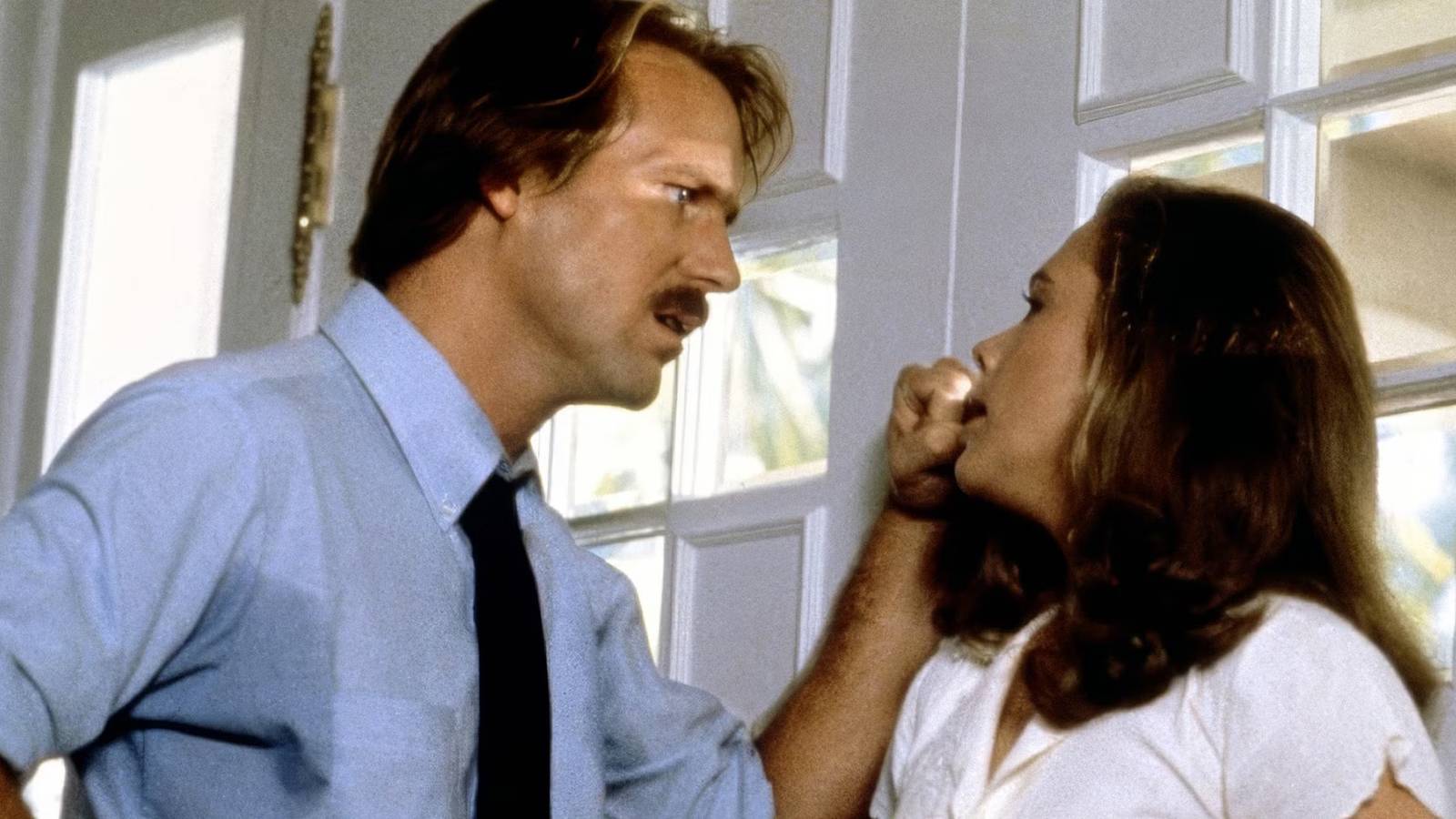
The femme fatale and the mark are noir's oldest equation. Body Heat acknowledges that immediately but doesn't care, because it has Kathleen Turner. Her perfect target, Ned Racine (William Hurt), is a sweating, small-town Florida lawyer with not enough ambition and too much ego. The moment Matty Walker (Turner) drifts into his orbit during a heatwave, he is already finished—he just doesn't know it yet. The film traps you in the same Florida humidity, with the clinking of ice in glasses, the eerie chime of wind chimes, and the constant uncomfortable sheen of sweat on everyone's skin.
Inevitably, the murder plot—targeting Matty's husband, Edmund Walker (Richard Crenna)—is where the film gets its teeth. Ned's meticulous, doomed scheme to make a death look like an accident while dodging his own friends in the local police force is a masterclass in watching someone walk into a trap they built with their own hands. It's the reason Body Heat perfectly walks the tightrope between scorching erotic romance and razor-sharp legal paranoia, with both tracks running at full intensity simultaneously. Turner is the engine of both.
Crash (1996)
Car crashes kill people. This masterpiece immediately strips away that fear and makes you watch what happens next. It doesn't even try to warm you up first. It follows James Ballard (James Spader) and his wife Catherine (Deborah Kara Unger), who exist in a marriage that has become an open, permissive, and wholly numb performance. Then a head-on collision throws him into a hospital room with Helen Remington (Holly Hunter), and through her, into Vaughan (Elias Koteas)'s underground world where survivors seek the wreckage out again, deliberately.
The real magic is the atmosphere. Cronenberg constructs a world of chrome, scar tissue, and orthopedic braces worn like lingerie. Fingers trace surgical incisions. Knuckles go white on a steering wheel at speed. The cold, mechanical eroticism is so precisely calibrated that the film builds its own airtight logic. These people are damaged, detached, and the only sensation that breaks through the numbness is velocity and impact. Crash remains wholly unreplicable because this exact blend of clinical detachment and transgression only works once, at this temperature, in this light.
Don't Look Now (1973)
Don't Look Now is the absolute blueprint for the grief thriller, establishing the rules before anyone else had thought to break them. The story starts with John Baxter (Donald Sutherland) and Laura Baxter (Julie Christie), who arrive in winter Venice, already gutted by the drowning of their daughter. The city gets into the wound. Off-season Venice is the right location for grief: the canals are gray, the alleys dead-end, the damp gets into everything. And that is before things even get weird.
The blind psychic Heather (Hilary Mason) and her sister are an intrusion. The red coat flashing in the murky canal water is a torment. What makes this film unbearable and holds it above everything it influenced is how completely it grounds its supernatural machinery in the reality of a marriage under the strain of child loss. John and Laura are not functioning people; they are two individuals processing devastation in completely incompatible directions, and the ghost story runs right through that crack. When that final image arrives, fear is the least of your problems—it destroys everything.
Mulholland Drive (2001)
Neo-noir gives you hardened detectives, dead-end bars, and men who have seen too much. But Mulholland Drive hands you Betty Elms (Naomi Watts), a bright-eyed actress fresh off the bus from Canada, and a terrified woman calling herself Rita (Laura Harring). Rita is hiding in Betty's aunt's Hollywood apartment with no memory and a purse full of cash. The mystery should feel reassuring—it does not.
What completely separates Mulholland Drive from every film that orbits it is the slow drip-feed of information. The script withholds the nature of reality itself, giving you just enough coherence to follow the story while systematically dismantling your trust in what you are watching. It is pure psychological torture. Club Silencio, the blue key, the box—the film patiently builds an entire emotional world just to completely shatter it. When the movie finally pulls the rug out, it reveals that the dream was the escape and the waking truth is infinitely worse. For those who crave more mind-bending mysteries, check out our list of clever whodunits that will keep you guessing.
These four films prove that the steamy thriller can be as artistically significant as any drama or epic. They use heat and desire not as cheap thrills but as the very fabric of their narratives, creating suspense that is both visceral and intellectual. If you're looking for more edge-of-your-seat excitement, our ranking of nerve-shredding thrillers since 2020 offers a modern take on the genre. And for those who appreciate the slow burn, our piece on why slow-burn mysteries deliver the best payoffs explains the craft behind the tension.