Thrillers work best when they make you question every quiet moment. You think the danger has passed because the room is still. You think the voice on the phone sounds reassuring. You think there's probably a logical reason for the figure across the street. Then one tiny detail shifts, and your gut reacts before your brain catches up.
The six films below are wildly different in style, but they all share a core understanding: fear intensifies when certainty evaporates. A voice can deceive. A camera can miss something crucial. A building can become a trap. A person can be right next to you and still impossible to prove. That's the kind of suspense that lingers long after the credits roll, because these movies teach you to distrust the ordinary.
6. The Guilty (2021)
Jake Gyllenhaal stars as Joe Baylor, a suspended LAPD officer working emergency dispatch. He answers a call from a woman he believes has been abducted and spends the night trying to save her without ever leaving the call center. Gyllenhaal carries nearly the entire film through voice, facial reactions, and a growing, desperate certainty that he knows what's happening.
The hook is brutal because Joe is working with fragments. He hears traffic, breathing, partial answers, background noise. He starts constructing a mental picture and then treats it as fact. The more invested he becomes, the more you realize how dangerous that is. This is a thriller that makes information itself the weapon, turning a simple headset into something lethal.
5. Watcher (2022)
Maika Monroe plays Julia, an American woman who moves to Bucharest with her husband and becomes convinced that a man in the apartment building across from theirs is watching her—just as reports spread about a serial killer targeting women in the city. Monroe makes Julia's fear painfully believable because everyone around her thinks the problem is her imagination.
What gets under your skin is how ordinary the threat looks. A silhouette in a window. A man in a supermarket aisle. Someone sitting too close in a theater. Nothing is dramatic enough to justify panic on its own, which means Julia keeps getting pushed into the humiliating position of defending her instincts. The suspense comes from waiting for proof, and slowly realizing that proof may arrive much later than safety requires.
4. The Call (2020)
This South Korean thriller follows Seo-yeon (Park Shin-hye), who returns to her childhood home and discovers that the landline can somehow connect her to Young-sook (Jeon Jong-seo), another woman living in the same house twenty years earlier. Their conversations begin as an impossible friendship until changing events in the past start rewriting Seo-yeon's present in increasingly terrifying ways.
This is where the movie gets nasty in a really fun way. A phone call can save someone, erase someone, change a family, change a room, change who is alive. And because Young-sook understands the power of the connection faster than Seo-yeon understands the danger, every conversation starts feeling like negotiation with somebody holding reality hostage. Time travel here is not wondrous—it's leverage.
3. Missing (2023)
Storm Reid stars as teenager June, whose mother disappears while vacationing in Colombia. Forced to investigate from home, June uses search engines, account logins, video calls, location data, and every digital trace she can access. The entire film unfolds through screens, yet it never feels visually trapped.
The reason it works is that June is constantly interpreting partial evidence. She finds a clue, builds a theory, gets emotionally attached to that theory, then discovers she misunderstood the clue. That cycle becomes addictive because the audience is solving alongside her. Directors Will Merrick and Nick Johnson are incredibly good at making normal digital behavior feel urgent. Password resets, cached photos, old messages, security footage—suddenly all of it feels like detective work. The thriller is basically asking how well you know someone if most of what you know came through a screen.
2. Fall (2022)
Grace Caroline Currey and Virginia Gardner play Becky and Hunter, two friends who climb a 2,000-foot abandoned radio tower as a way of confronting Becky's grief and fear after her husband's death. But the ladder beneath them collapses, leaving both women stranded at the top with almost no way down.
This movie is pure evil if you're even slightly afraid of heights. There's barely anywhere to hide from the premise. No villain is needed—gravity is enough. The women have limited water, unreliable phones, and increasingly desperate ideas for reaching the ground. What makes it more than a stunt is how quickly every tiny object becomes valuable. A rope. A drone. A shoe. At that height, everything becomes survival equipment.
1. The Invisible Man (2020)
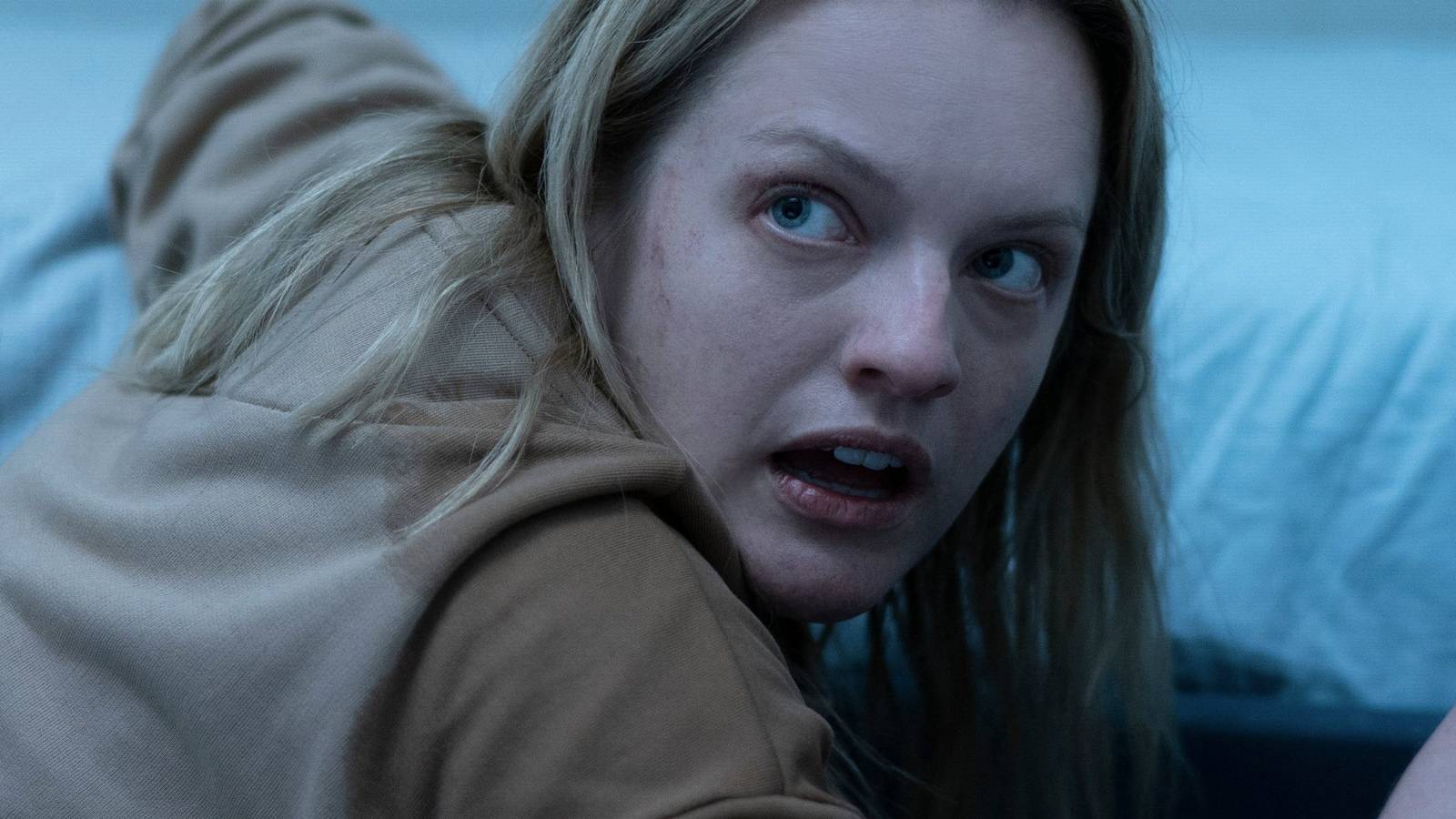
Leigh Whannell's The Invisible Man follows Cecilia Kass (Elisabeth Moss) after she escapes an abusive relationship with a wealthy tech genius. When she learns he has died by suicide, she begins to believe he's actually still alive—and invisible. The film masterfully uses empty space and sound design to create a constant sense of dread, as Cecilia's reality is gaslit by everyone around her.
Moss delivers a tour-de-force performance, making you feel every ounce of her paranoia and terror. The movie's genius is in making you question what's real, just like Cecilia does. Is she losing her mind, or is there truly an unseen predator lurking? The suspense is relentless, and the film's climax is both cathartic and chilling. It's a modern horror-thriller classic that redefines the genre.
These six films prove that the most effective suspense doesn't rely on jump scares or gore. It thrives on uncertainty, on the fear that the ordinary world can turn against you at any moment. Whether it's a phone call, a window, a screen, or a radio tower, they all remind us that danger often hides in plain sight.