For nearly two decades, The Big Bang Theory has proven remarkably adaptable. What started as a traditional multi-camera sitcom about four socially awkward scientists grew into one of television's biggest comedy franchises, spawning the prequel Young Sheldon and its successor, Georgie & Mandy's First Marriage. Now, Stuart Fails to Save the Universe is preparing to take the franchise somewhere it has never gone before, swapping apartment banter for a multiversal sci-fi adventure led by comic book store owner Stuart Bloom (Kevin Sussman).
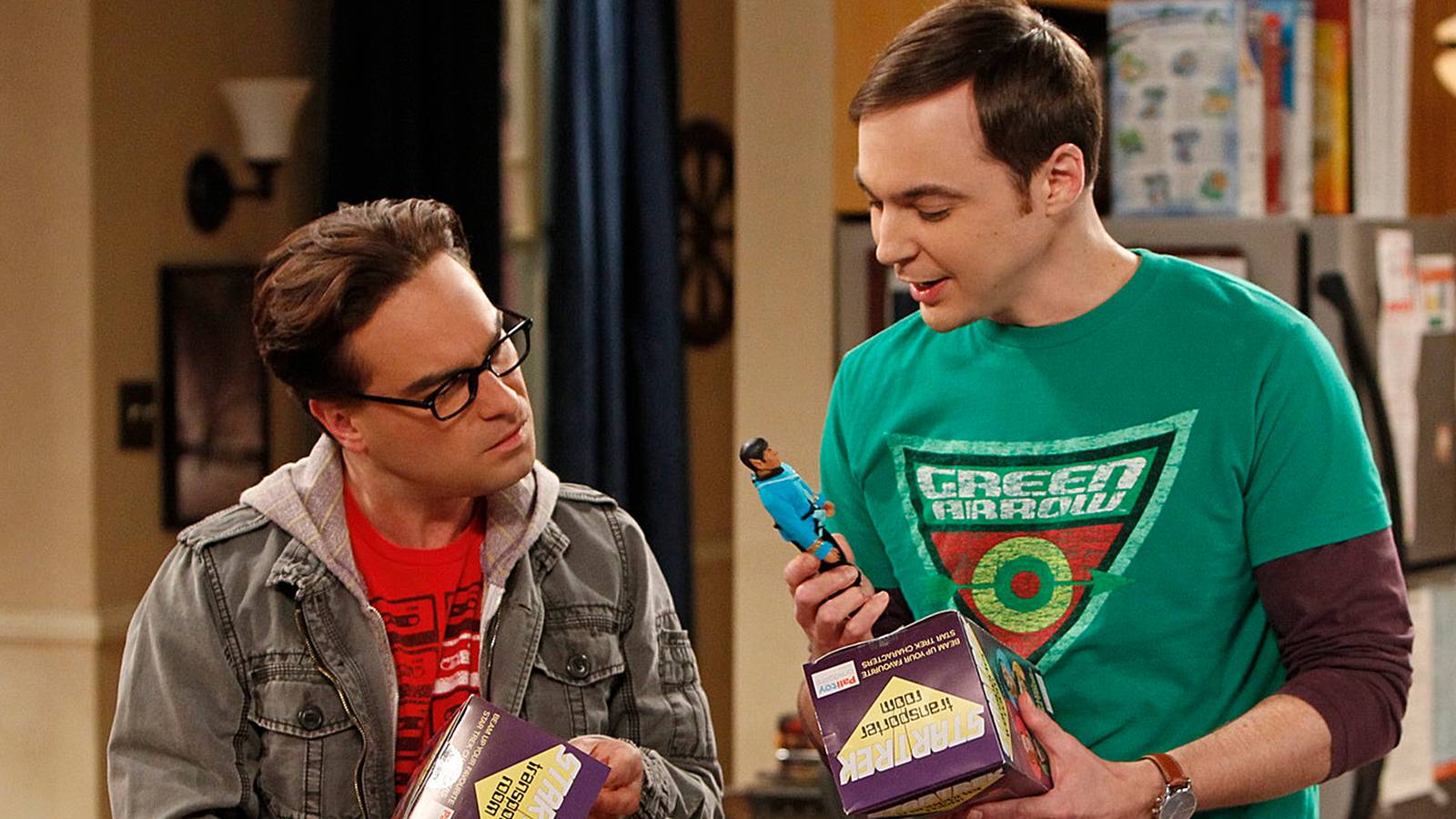
As Stuart Fails to Save the Universe carves out its own unique identity, it also reminds the audience of how The Big Bang Theory is primarily about Sheldon Cooper (Jim Parsons) and Leonard Hofstadter (Johnny Galecki). These two characters continue to serve as the gravitational pull of this overall franchise, even though they do not have leading or supporting parts in this production. Creating an act outside the gravitational pull of two characters like this is going to be a very difficult task for any sequel to achieve.
What Is 'Stuart Fails to Save the Universe' About?
Unlike every previous installment in The Big Bang Theory universe, Stuart Fails to Save the Universe embraces science fiction in a way the original comedy only ever referenced through conversations about comic books, Star Trek, and superhero movies. The story follows Stuart (Sussman), Denise (Lauren Lapkus), Bert (Brian Posehn), and Barry Kripke (John Ross Bowie) after Stuart accidentally breaks a quantum device originally built by Sheldon, Leonard, and Howard (Simon Helberg). The resulting catastrophe tears apart reality itself, forcing the unlikely team into a multiversal adventure populated by alternate versions of familiar characters, strange new worlds, and increasingly absurd situations.
It's a dramatic tonal shift, but one that appears intentional. Co-creator Chuck Lorre has openly described the series as an opportunity to challenge himself after decades of producing dialogue-driven sitcoms, while comic book movie veteran Zak Penn brings blockbuster science-fiction experience to a franchise that's largely stayed grounded despite its scientifically minded cast. The concept alone distinguishes Stuart Fails to Save the Universe from Young Sheldon and Georgie & Mandy's First Marriage. Rather than expanding familiar family dynamics, this series asks what happens when the comic book fantasies the original gang spent years debating suddenly become reality. It's exactly the kind of creative swing the franchise arguably needs. After nearly 20 years, simply repeating The Big Bang Theory's formula would have risked diminishing what made the original so successful.
Sheldon and Leonard Are Still the Foundation of 'The Big Bang Theory'
Ironically, that's also where the new show's biggest challenge emerges. For all its multiversal ambition, Stuart Fails to Save the Universe still begins with Sheldon and Leonard. Even as the series hands the spotlight to Stuart and his friends, its central conflict stems from inventions developed by the original protagonists. This is fitting because The Big Bang Theory itself always revolved around Sheldon and Leonard's friendship. Before Amy (Mayim Bialik), Bernadette (Melissa Rauch), or Stuart became fan favorites, the series began with two roommates navigating life together after Penny moved into the apartment across the hall. Nearly every major relationship eventually branched off from that core dynamic.
Howard and Raj (Kunal Nayyar) were introduced by Leonard and Sheldon. Stuart became part of the group through the comic book store they frequented, and Amy entered the story when Howard and Raj created a dating profile for Sheldon. Even the show's emotional finale centered on the group celebrating Sheldon and Amy's Nobel Prize after years of shared growth. This is why Sheldon and Leonard continue to loom so large over the franchise, regardless of whether Parsons or Galecki physically appears, as they're the framework on which every new story is built.
'Stuart Fails to Save the Universe' Has to Prove the Franchise Can Stand on Its Own
To the series' credit, it isn't pretending Sheldon and Leonard never existed. Instead, Stuart Fails to Save the Universe appears determined to acknowledge its roots while shifting attention toward characters who rarely received the spotlight during the original sitcom. Stuart spent years functioning as one of The Big Bang Theory's most lovable supporting players, while Barry and Bert frequently stole scenes despite limited screen time. Giving them the chance to lead a series feels like a natural next step for a franchise looking to broaden its world.
The move to HBO Max also gives the creative team more flexibility than a traditional network sitcom ever could. Without the constraints of a broadcast comedy, the series can lean into visual effects, serialized storytelling, and larger-scale science-fiction concepts that would have been difficult to sustain on CBS. Unlike Young Sheldon, which carved out its own identity by exploring Sheldon's childhood, Stuart Fails to Save the Universe exists after the events of The Big Bang Theory, meaning that every callback, returning character, and scientific reference carries extra weight. For more on how this spin-off pushes the franchise into new territory, check out our breakdown of How 'Stuart Saves the Universe' Gives The Big Bang Theory a Sci-Fi Edge.
Ultimately, Stuart Fails to Save the Universe faces a unique challenge: it must honor the legacy of Sheldon and Leonard while proving that the franchise can thrive without them. The series has the potential to be a bold new chapter, but only if it can escape the shadow of the two characters who made The Big Bang Theory a cultural phenomenon. As the show prepares to launch, fans will be watching closely to see if Stuart can finally save the universe—and the franchise—from its own history.