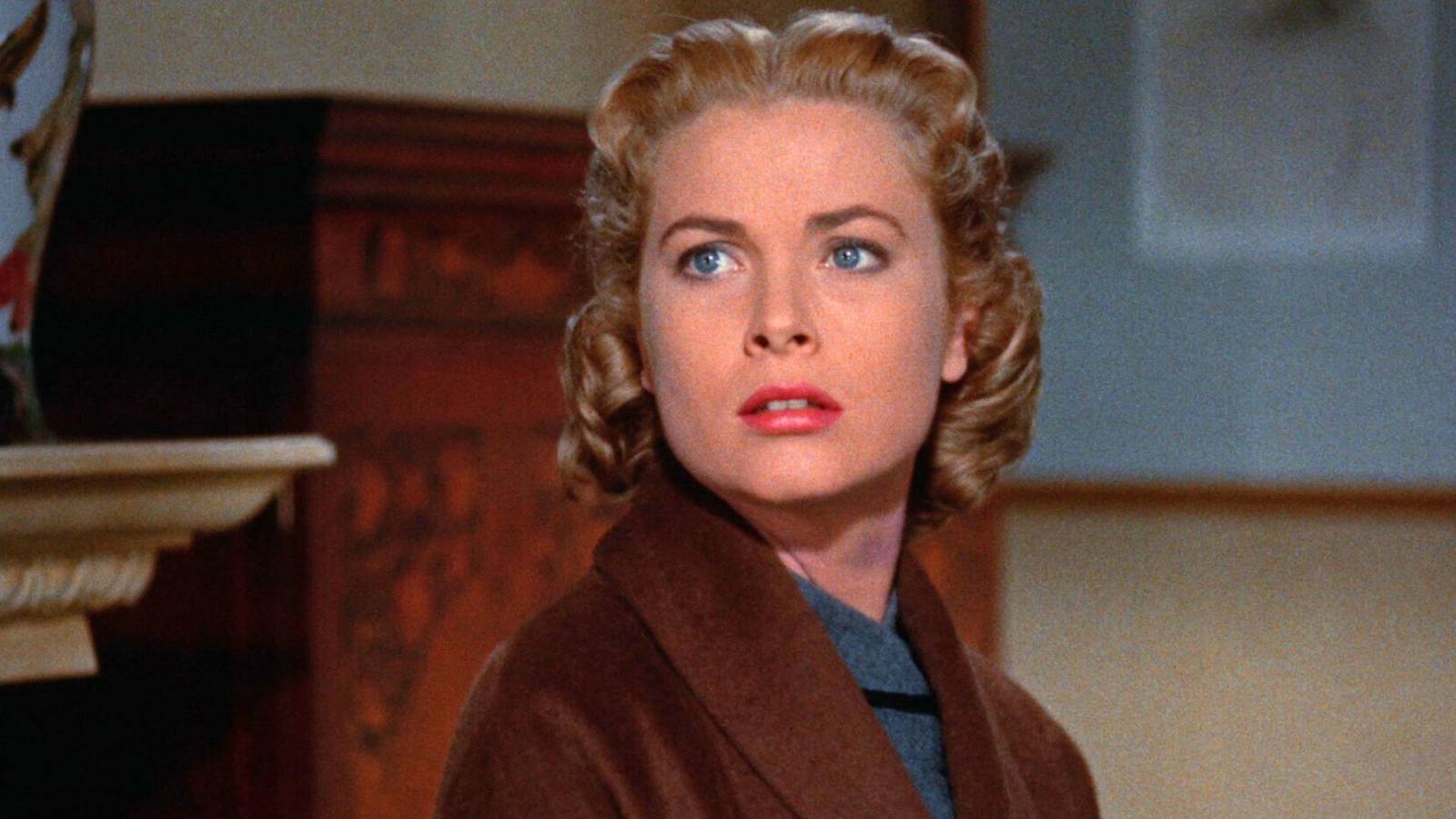
Before there was a golden age of television or a streaming boom, there was Alfred Hitchcock—the man who essentially wrote the rulebook for the modern thriller. Over six decades and more than 50 features, the British-born director moved from silent films to talkies, from crisp black-and-white to lush Technicolor, always pushing the medium forward. His signature techniques—subjective camera work that puts us inside a character's head, suspense built on dread rather than cheap scares, and a willingness to break taboos—didn't just shape a genre; they created a template that filmmakers still follow today.
With such a towering filmography, picking the best of the best is no easy task. But we've taken on the challenge, weighing each film's storytelling, direction, and its lasting footprint on cinema and pop culture. Here are Hitchcock's ten greatest thrillers, ranked.
10. The Birds (1963)
Nature turns on humanity in this unsettling blend of supernatural and natural horror. Wealthy socialite Melanie Daniels (Tippi Hedren) follows a potential romantic interest, Mitch Brenner (Rod Taylor), to the coastal town of Bodega Bay, only to find the skies filling with ordinary birds that begin attacking without warning. What starts as a flirtation becomes a siege, and Hitchcock masterfully strips away any comforting explanation. The lack of a traditional score—replaced by an eerie electronic soundscape of squawks and flutters—only amplifies the dread. The Birds remains a chilling reminder that the familiar can become terrifying in an instant.
9. Dial M for Murder (1954)
This crime thriller flips the whodunit formula on its head. Tony Wendice (Ray Milland) discovers his wealthy wife Margot (Grace Kelly) is having an affair, and rather than divorce her, he plots to have her killed to inherit her fortune. But when the hired hit goes wrong, the film becomes a tense howdunit, with Hitchcock turning a single London apartment into a claustrophobic trap. Milland is chillingly polite as the villain, while Kelly shines in her first of three collaborations with the director. It's a must-watch for fans of clever, twisty crime stories.
8. Shadow of a Doubt (1943)
Hitchcock's personal favorite, this psychological thriller finds terror in the heart of small-town America. Young Charlie Newton (Teresa Wright) is thrilled when her beloved Uncle Charlie (Joseph Cotten) comes to visit, but she soon suspects he may be the notorious "Merry Widow Murderer" preying on wealthy widows. The film's genius lies in its duality—the sunny California setting contrasts with the cold, charismatic evil that Uncle Charlie embodies. It's a story about the darkness that can hide behind a friendly face, and its influence on suburban thrillers is undeniable.
7. Rebecca (1940)
Hitchcock's first American film and his only Best Picture Oscar winner, Rebecca adapts Daphne du Maurier's novel with gothic grandeur. A shy young woman (Joan Fontaine) marries the brooding widower Maxim de Winter (Laurence Olivier) and moves into his grand estate, Manderley, where the memory of his first wife, Rebecca, looms large. The housekeeper, Mrs. Danvers (Judith Anderson), is a chilling presence, and the film's psychological tension is built on insecurity and the inability to escape the past. With its stark lighting and ghostly atmosphere, Rebecca set the stage for Hitchcock's later masterpieces.
6. The 39 Steps (1935)
This early Hitchcock gem is a prototype for the wrong-man thriller. Richard Hannay (Robert Donat) is a Canadian visitor in London who gets caught up in a spy ring after a woman is murdered in his flat. On the run, he must clear his name while trying to stop a secret agent from leaving the country. The film is a breakneck chase across Scotland, filled with witty dialogue and inventive set pieces. It's a testament to Hitchcock's ability to blend suspense with humor, and it remains a landmark of British cinema.
5. Notorious (1946)
Spy thriller meets love story in this elegant, tense film. Alicia Huberman (Ingrid Bergman) is recruited by American agent Devlin (Cary Grant) to infiltrate a Nazi ring in Rio de Janeiro, where she must marry a former lover, Alexander Sebastian (Claude Rains). The film is famous for its long, unbroken kiss between Grant and Bergman, but it's the moral complexity that makes it great. Bergman's character is forced into a dangerous situation, and the film's exploration of loyalty, sacrifice, and guilt is as gripping as any action sequence. Notorious is a masterclass in building suspense through emotion.
4. Rear Window (1954)
Confined to a wheelchair, photographer L.B. Jefferies (James Stewart) spends his time spying on his neighbors from his apartment window. When he becomes convinced that one of them has murdered his wife, he drags his girlfriend (Grace Kelly) into his amateur investigation. The film is a brilliant meditation on voyeurism, with Hitchcock turning the audience into accomplices. The single set—a courtyard of apartments—becomes a stage for multiple mini-dramas, and the tension ratchets up as Jefferies gets closer to the truth. It's a thriller that's as intellectually stimulating as it is suspenseful.
3. North by Northwest (1959)
Often called the first James Bond film, North by Northwest is a rollicking adventure that never lets up. Ad executive Roger Thornhill (Cary Grant) is mistaken for a government agent and pursued across the country by a mysterious organization. The film is famous for its iconic set pieces—the crop-duster attack, the chase across Mount Rushmore—but it's also a witty, stylish ride. Grant's charm and Eva Marie Saint's cool elegance make it a quintessential Hitchcock entertainment, blending suspense with humor in a way that has influenced countless action films since.
2. Psycho (1960)
No list of Hitchcock's best is complete without Psycho, the film that changed horror forever. Marion Crane (Janet Leigh) embezzles money and checks into the Bates Motel, where she meets the shy, awkward Norman Bates (Anthony Perkins). The infamous shower scene is just one of many shocks in a film that subverts expectations at every turn. Hitchcock's decision to kill off his leading lady early was revolutionary, and the film's exploration of madness and duality remains unsettling. Psycho proved that a low-budget black-and-white horror could be both a critical and commercial triumph, and its influence is still felt in every slasher film that followed.
1. Vertigo (1958)
At the top of the list is Vertigo, a film that was initially misunderstood but is now hailed as Hitchcock's masterpiece. Retired detective Scottie Ferguson (James Stewart) is hired to follow a friend's wife, Madeleine (Kim Novak), who seems possessed by a ghost from the past. Scottie's obsession with her leads him down a path of obsession, manipulation, and ultimately, tragedy. The film is a deep dive into the psychology of desire and control, with Hitchcock using his camera to mimic Scottie's dizzying point of view. The famous dolly zoom effect, the haunting score by Bernard Herrmann, and the tragic ending make Vertigo a work of art that transcends the thriller genre. It's a film that rewards repeated viewing, and it remains the definitive statement from the Master of Suspense.
From the claustrophobic dread of Rebecca to the paranoid chase of North by Northwest, Hitchcock's thrillers continue to captivate audiences. They are not just movies; they are lessons in how to build tension, how to play with audience expectations, and how to explore the darkest corners of the human psyche. For those looking to dive deeper into the genre, check out our list of Tarantino's favorite thriller, or explore other flawless sci-fi films that owe a debt to Hitchcock's innovations.