When we stepped onto the set of Supergirl: Woman of Tomorrow at Warner Bros. Leavesden in April 2025, the production was just ten days from wrapping principal photography—but the energy was anything but winding down. Director Craig Gillespie likened the atmosphere to the last week of school: everyone knew the finish line was near, yet the crew remained fiercely committed to making every remaining moment count. On the backlot, the team was filming a flashback sequence set on Krypton—an emotional funeral for Kara’s mother, with the cast dressed in cream against a Romanesque colonnade beside a lake. It was a scene that captured the film’s blend of intimate grief and epic scale.
The sheer ambition of Supergirl was immediately apparent. Over the course of production, the team had occupied the entire backlot, five sound stages, and countless smaller sets. But what truly stood out was the meticulous coordination between departments. From DC Studios co-heads James Gunn and Peter Safran working closely with Gillespie to the craftspeople building every detail, this was a deeply collaborative effort. Creative decisions were made collectively, resulting in a wealth of thoughtful visual choices that audiences may not consciously notice but will undoubtedly feel.

A Deliberate Departure from Superman
While Gunn and Safran oversee the broader DCU, Gillespie brought his signature blend of quirky humor and emotional depth to Supergirl, with Ana Nogueira making her feature screenwriting debut. Unlike the optimism of Superman’s story, this film reflects Kara’s trauma and cynicism, shaped by the destruction of Krypton and the loss of her family. Gillespie set out to craft an unconventional coming-of-age tale: Kara has already fought crime on Earth, so her journey isn’t about becoming a superhero—it’s about fully embracing the role with her whole self. As executive Chantal Nong Vo put it, the film asks: what do you do with a loss so profound that it defines your life?
The film draws inspiration from Tom King’s acclaimed miniseries Supergirl: Woman of Tomorrow, described as a space western wrapped in a superhero adventure. Kara Zor-El embarks on an interplanetary journey alongside Krypto and a young girl named Ruthye Marye Knoll (Eve Ridley), who seeks justice for her father’s murder at the hands of Krem of the Yellow Hills (Matthias Schoenaerts). While the comic is told from Ruthye’s perspective, the film keeps their relationship central while remaining fundamentally Kara’s story. Another key relationship comes from King’s original unrealized pitch: a team-up between Supergirl and Lobo, with the pair occupying roles similar to Mattie Ross and Rooster Cogburn in True Grit. Jason Momoa, who had long expressed interest in playing the character, brings Lobo to life as a bounty hunter whose goals align with Kara and Ruthye’s—but only when it benefits him. Nong Vo described his presence as a very high-impact 15% of the film.
Milly Alcock: A Breakout Star with Punk-Rock Energy
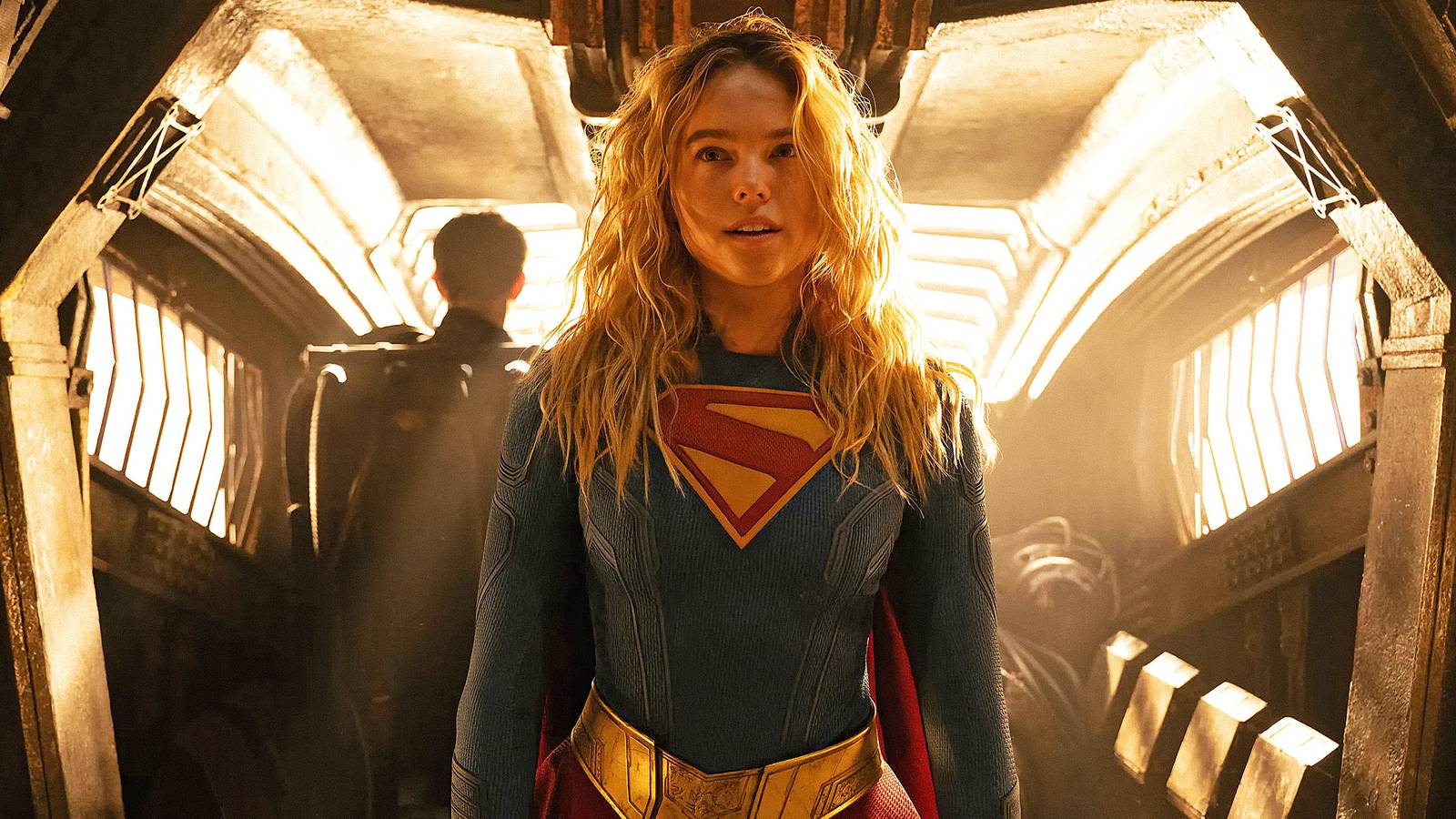
Throughout our visit, it was Milly Alcock who received the most praise—and she met it with a bashful look. Although this is her first feature film, nobody on the production spoke about her like a newcomer. Present for approximately 95% of the shoot, Alcock tackled extensive stunt work, emotionally demanding material, and dialogue in multiple languages. Nong Vo shared that she brings a free-spirited, punk-rock energy to Kara, creating a heroine who feels delightfully messy in all the ways your twenties are supposed to be. “You would think it was her 10th movie,” Nong Vo said.
Building a Galaxy the Old-Fashioned Way
One of the most striking aspects of the Supergirl set was how much of the film physically existed. While visual effects will undoubtedly expand the scale of the finished movie, the production’s approach was firmly rooted in practical filmmaking—a choice that is sure to generate significant buzz with fans. Production designer Neil Lamont drew inspiration from architecture around the world, while set decorator Lee Sandales, fresh from winning an Academy Award for Wicked, helped create a vast network of fully realized environments. This allowed performers to naturally inhabit the worlds, lending an authenticity to Kara’s space exploration that would have been difficult to achieve against empty blue screens. The result is a film that feels grounded even as it soars across the galaxy.
With its blend of sci-fi, western, and raw emotion, Supergirl: Woman of Tomorrow is shaping up to be one of the most anticipated blockbusters of the year. For more on what’s coming, check out our ranking of 8 upcoming blockbuster movies ranked by anticipation.