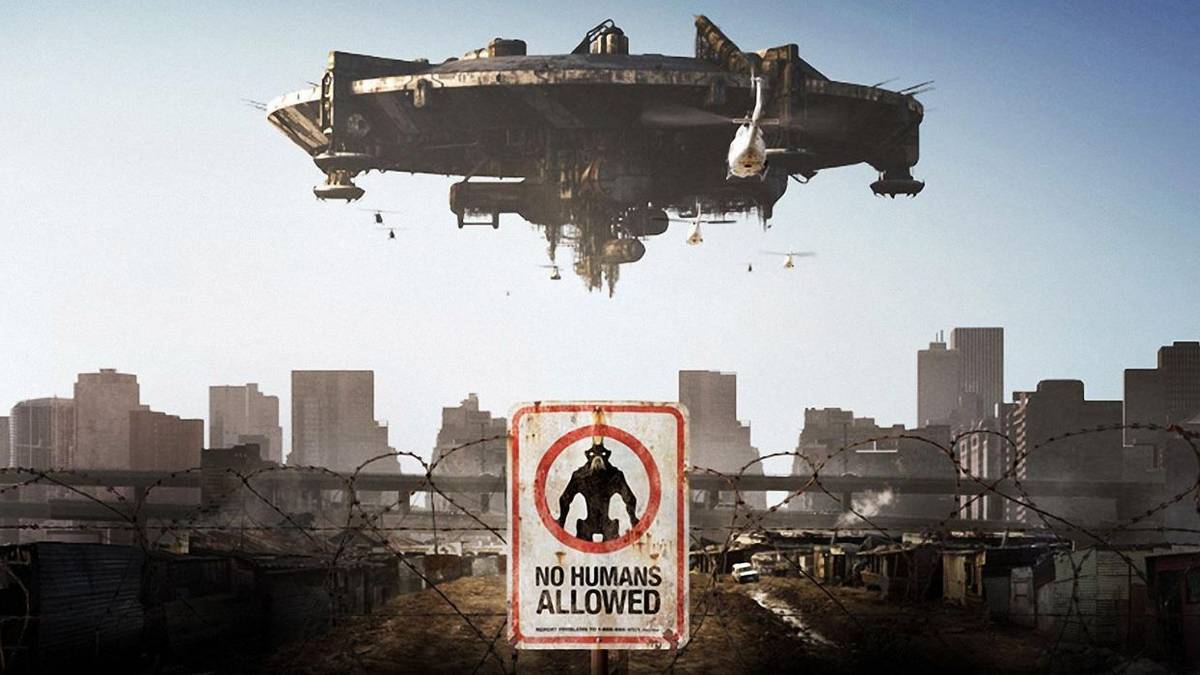
Some films don't just stand the test of time—they evolve with it. When Neill Blomkamp's debut feature District 9 arrived in 2009, produced by Peter Jackson, it stunned audiences and critics alike. The film earned a stellar 90% on Rotten Tomatoes and grossed over $210 million globally against a modest $30 million budget. While it appeared to be another alien invasion story on the surface, it quickly revealed itself as something far more substantial and politically charged.
More Than Just Aliens in Johannesburg
Set in South Africa, the film presents a scenario where a massive alien spacecraft arrives not to conquer, but out of desperation. The sick and starving extraterrestrials—derogatorily called "prawns" due to their insect-like appearance—are forced into a squalid, segregated camp called District 9. They become a forgotten underclass, trapped in a hostile land with nowhere else to go, surviving on scraps like canned cat food while facing constant hostility from the human population.

The protagonist, Wikus van der Merwe (played by Sharlto Copley), is a bureaucrat tasked with forcibly relocating the alien population. He represents the cold, systemic machinery of oppression, carrying out his duties with a nervous detachment. Blomkamp's setting was a direct parallel to South Africa's apartheid history, where racial segregation created generations of suffering. As the director noted in interviews, the film also drew from more contemporary tensions, like the influx of impoverished Zimbabwean immigrants into South Africa, who were often met with resentment by local communities.
A Message That Crossed Oceans
What was once viewed primarily as a sharp critique of a specific historical injustice has, over the past seventeen years, morphed into a mirror held up to global immigration crises. For audiences in the United States, the film's depiction of militarized forces rounding up a marginalized group, the dehumanizing rhetoric, and the stark segregation now resonate with domestic debates and policies. Scenes of armed personnel confronting vulnerable beings no longer feel like distant science fiction; they echo real headlines.
The film's power is amplified by its brutal twist. Wikus, after exposure to alien biotechnology, begins a horrifying physical transformation into a "prawn" himself. Instantly, he becomes the very thing he was employed to persecute—feared, hunted, and stripped of his humanity and privilege. His journey from oppressor to oppressed forms the film's emotional core, illustrating how empathy can be born from shared suffering.
Why a Rewatch Feels Essential Now
District 9 refuses to be a simple, feel-good alien adventure like the family-friendly classics we often revisit. It's a gritty, uncomfortable, and morally complex experience. Its enduring relevance proves that great science fiction acts as a societal diagnostic tool. The film challenges viewers to see themselves not in the heroic human saviors, but in the flawed systems and complicit individuals that allow injustice to flourish.
In an era where narratives about borders and belonging dominate political discourse, Blomkamp's vision feels prophetic. The film argues that the "alien" other is often a construct, a label used to justify fear and cruelty. Wikus's sacrifice—a privileged man choosing to side with the persecuted despite becoming one of them—parallels modern acts of solidarity, where individuals risk their own safety to protest the treatment of immigrants and refugees.
Like other genre works that have aged into new significance, such as Jimi Hendrix's potent anti-war anthems or the dark fantasy depth of AMC's 'Interview with the Vampire', District 9 demands to be seen through a contemporary lens. It's no longer just a lesson about South Africa's past. It's a stark, unsettling, and immensely powerful commentary on a present where the lines between "us" and "them" are weaponized daily. The film's final image—of a man fully transformed, waiting for a promise of return—lingers not as a cliffhanger, but as a poignant question about home, identity, and who we choose to be in the face of injustice.