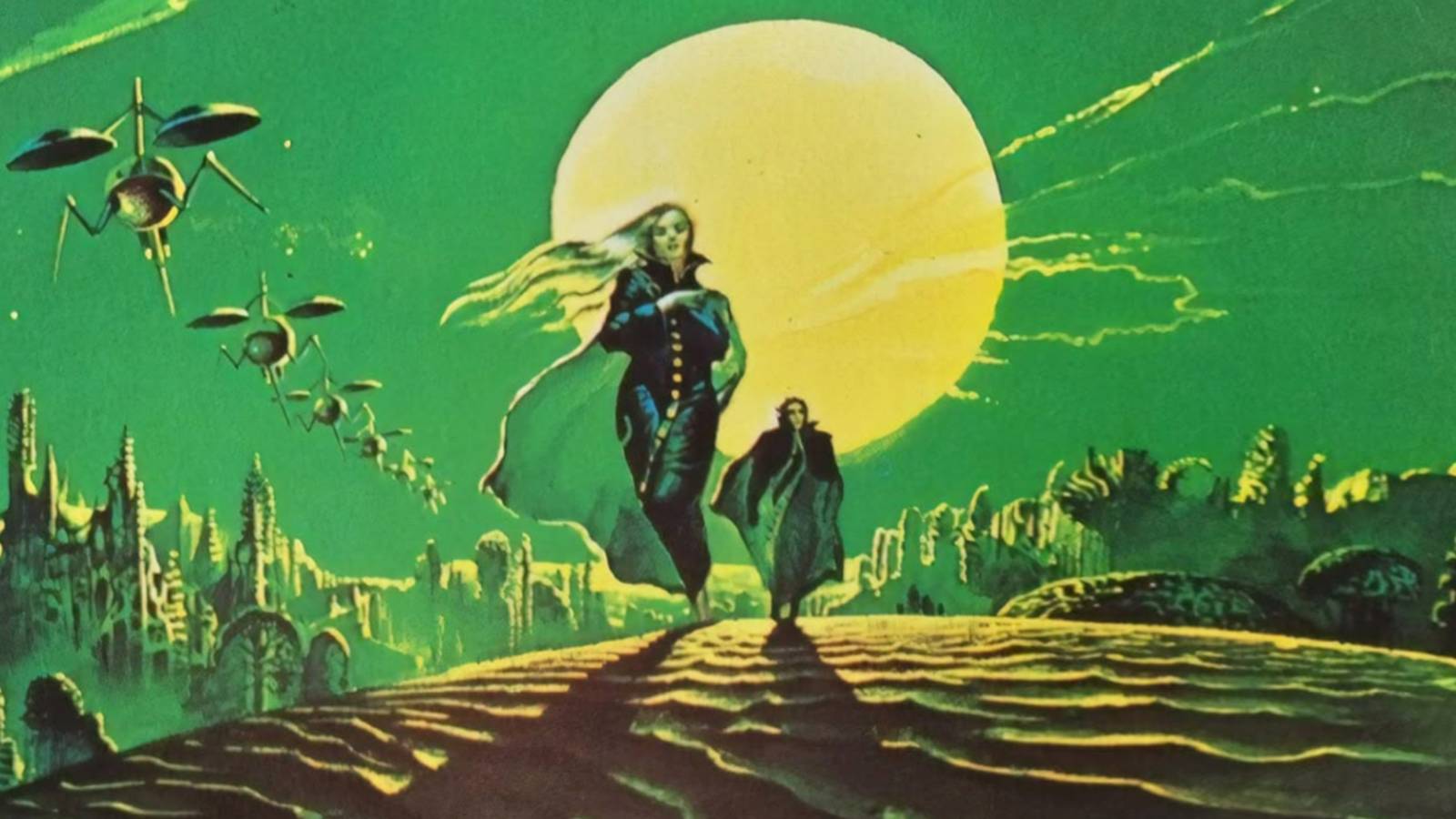
Science fiction has a way of expanding the mind, but with so many titles out there, it's easy to treat each one as a one-time journey. Yet some stories are so rich, so layered, that they practically demand a second (or third) visit. Whether it's the intricate politics of a desert planet or the gritty neon of a cyberpunk future, these classics offer something new each time you crack them open.
Here are ten sci-fi books that are not just worth reading—they're worth reading again and again.

1. Dune (1965)
Frank Herbert's Dune is a towering achievement, a sprawling epic that blends politics, religion, ecology, and philosophy. The first book alone is a dense, immersive experience, but the sequels—Dune Messiah and Children of Dune—deepen the mythos. Each reread reveals new layers of intrigue, from the subtle manipulations of the Bene Gesserit to the ecological lessons of Arrakis. It's a universe that rewards patience and attention, making it a perennial favorite for those who love to lose themselves in a fully realized world.
2. Neuromancer (1984)
William Gibson's Neuromancer is the quintessential cyberpunk novel, a dense, noir-infused trip through a future where technology and humanity are inextricably linked. The plot is famously convoluted, but that's part of its charm. On a first read, you're swept along by the atmosphere and style; on a second, you start to untangle the intricate threads. Gibson's vision of the digital age was prophetic, and his prose is so vivid that the book feels alive even decades later. For those who want to dive deeper into the genre, essential cyberpunk reads offer a great starting point.
3. Lucifer's Hammer (1977)
Larry Niven and Jerry Pournelle's Lucifer's Hammer is a post-apocalyptic epic that begins with a comet on a collision course with Earth. The first half is a meticulous, science-heavy setup; the second half is a brutal survival story. It's a book that balances hard science with human drama, and its themes of resilience and societal collapse remain relevant. The pacing might feel uneven to some, but the payoff is worth it, and rereading allows you to appreciate the foreshadowing and the intricate details of the world-building.
4. The Hitchhiker's Guide to the Galaxy (1979)
Douglas Adams's The Hitchhiker's Guide to the Galaxy is a comedic masterpiece that manages to be both hilarious and thought-provoking. It's the story of Arthur Dent, who is swept off Earth just before it's demolished to make way for a hyperspace bypass. The book is a whirlwind of absurdity, from the two-headed president of the galaxy to the answer to life, the universe, and everything. It's a quick, breezy read that never fails to lift your spirits, making it a perfect comfort read for any time.
5. Frankenstein (1818)
Mary Shelley's Frankenstein is often called the first true science fiction novel, and for good reason. It's a tale of creation and consequence, of ambition and horror. The story of Victor Frankenstein and his monster is so ingrained in popular culture that it's easy to forget how powerful the original text is. Shelley's prose is haunting, and her exploration of themes like isolation, responsibility, and the nature of humanity is as relevant today as it was two centuries ago. Each reread offers a deeper understanding of the characters and their motivations.
6. Gravity's Rainbow (1973)
Thomas Pynchon's Gravity's Rainbow is a dense, sprawling novel that defies easy categorization. Set during World War II, it weaves together elements of science fiction, history, and satire. The book is notoriously difficult, but those who persevere are rewarded with a unique and unforgettable experience. It's a novel that demands multiple readings, as each pass reveals new connections and hidden meanings. For the adventurous reader, it's a journey worth taking again and again.
7. The Left Hand of Darkness (1969)
Ursula K. Le Guin's The Left Hand of Darkness is a landmark of feminist science fiction, exploring a world where inhabitants are genderless except for brief periods of sexual activity. The novel follows an envoy from Earth as he navigates the politics and culture of this alien world. Le Guin's exploration of gender, identity, and loyalty is profound, and the book's themes resonate more deeply with each reread. It's a quiet, thoughtful novel that rewards careful attention.
8. Foundation (1951)
Isaac Asimov's Foundation is a cornerstone of science fiction, a saga that spans centuries and galaxies. It's a story about the rise and fall of civilizations, and the power of ideas to shape the future. Asimov's concept of psychohistory—a mathematical way to predict the future—is fascinating, and the book's structure as a series of interconnected stories makes it easy to dip in and out of. Each reread offers a fresh perspective on the grand sweep of history and the individuals who shape it.
9. The Martian (2011)
Andy Weir's The Martian is a modern classic, a survival story set on Mars that is as much about science as it is about human ingenuity. Mark Watney's journey from stranded astronaut to triumphant survivor is gripping, and the book's blend of humor and hard science makes it a joy to read. It's a fast-paced, engaging novel that you'll want to revisit, especially after watching the film adaptation. For more books that translate well to the screen, check out these must-reads before you watch.
10. Ender's Game (1985)
Orson Scott Card's Ender's Game is a military sci-fi classic that follows a young boy trained to lead Earth's forces against an alien threat. The book is a gripping tale of strategy, morality, and the cost of war. Ender's journey is both thrilling and heartbreaking, and the book's twists are even more impactful on a second read. It's a story that raises questions about empathy, manipulation, and the nature of heroism, making it a thought-provoking read every time.
These ten books are more than just stories; they're experiences that evolve with you. Whether you're in the mood for a light-hearted romp or a deep philosophical exploration, these classics have something to offer. So, the next time you're looking for a good book to revisit, consider one of these timeless tales. And if you're curious about other literary gems that stand the test of time, you might enjoy posthumous classics that outlived their authors or novels that surpass Moby-Dick.