There's a persistent myth about literary genius: that a masterpiece, once written, will inevitably find its way into the world. We imagine publishers recognizing brilliance instantly, readers embracing it, and history cementing its place. But the reality is far messier. Many of the books we now consider essential reading were rejected, suppressed, or simply forgotten for years—sometimes decades—after their authors died. These works survived not because of some cosmic guarantee of justice, but because of stubborn friends, lucky discoveries, or outright defiance of the author's wishes. Here are five classic novels that only reached readers posthumously, and the remarkable stories behind their survival.
Franz Kafka's 'The Trial' (1925)
Few words in modern language carry the weight of "Kafkaesque." It's used to describe any absurd, nightmarish bureaucracy—a lost form, an unhelpful clerk, a system that seems designed to confuse. But Franz Kafka's The Trial is far more sinister than a simple complaint about red tape. It tells the story of Josef K., a man arrested and prosecuted for a crime he's never told about. As he tries to defend himself, he becomes entangled in a labyrinth of rules and officials who all act as if everything makes perfect sense. The horror isn't that K. is guilty; it's that the system doesn't need to prove anything—it just needs to keep him occupied. By the time he realizes how much power he's surrendered, it's too late.
The irony is that Kafka had almost no control over his own novel's fate. Before dying in 1924, he instructed his friend Max Brod to burn his unpublished manuscripts. Brod refused. He took the unfinished novel, arranged the chapters as best he could, and published it in 1925. The version we know today isn't exactly what Kafka left behind—he hadn't even settled on the chapter order. A writer so obsessed with the helplessness of individuals against vast, incomprehensible forces ended up having his own work shaped by someone else. It's a twist that would fit perfectly into one of his own stories.
Jane Austen's 'Persuasion' (1817)
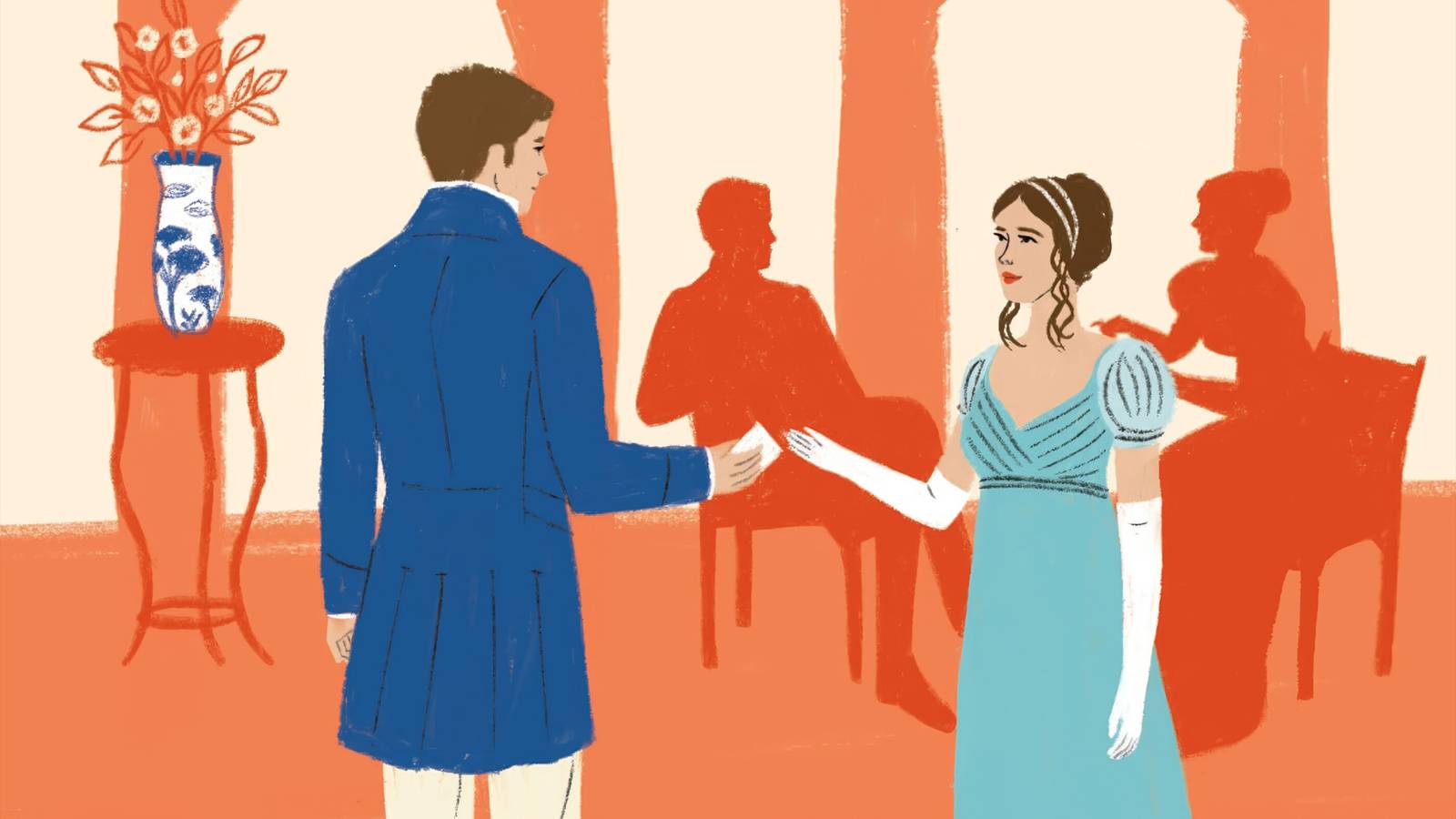
Jane Austen had a sharp eye for the folly of well-meaning advice. In Persuasion, her final completed novel, Anne Elliot is persuaded by her family to reject the man she loves because he lacks wealth and status. Eight years later, she's still unmarried, haunted by the decision. The novel is often considered Austen's most mature and melancholic work, exploring regret and the cost of sensible choices. It's a far cry from the sparkling wit of Pride and Prejudice, but it's just as incisive in its critique of a society obsessed with rank and reputation.
Austen finished Persuasion in 1816, but she died in July 1817 before seeing it in print. Her brother Henry published it later that year, alongside Northanger Abbey, another novel that had waited years for publication. But the real shock came in the biographical note Henry included, which finally revealed to the public that the anonymous author of Sense and Sensibility and Emma was a woman named Jane Austen. For years, Austen had published without her name, allowing her to skewer English society from the shadows. It was only after her death that readers learned who had been laughing at them all along. For more on Austen's world, check out our list of books to read before you watch the adaptations.
Mikhail Bulgakov's 'The Master and Margarita' (1966–1967)
Mikhail Bulgakov knew a thing or two about oppressive systems. He lived through the worst of Stalinist Russia, where a single misstep could land you in a labor camp. His masterpiece, The Master and Margarita, is a savage satire of Soviet bureaucracy, literary hypocrisy, and the petty tyrants who thrive in such environments. The devil himself arrives in Moscow with a talking cat and a retinue of grotesques, wreaking havoc on the city's smug elite. It's a wild, darkly comic, and deeply subversive novel that couldn't possibly have been published in its own time.
Bulgakov began writing it in the 1920s and continued revising it until his death in 1940. He knew it would never see the light of day in the Soviet Union, but he wrote it anyway, hiding the manuscript in a drawer. His wife, Elena, preserved it after his death, and it was finally published in censored form in the Soviet Union in 1966–67. The full, uncensored version didn't appear until 1973. It's now considered one of the greatest novels of the 20th century, a testament to the power of art to outlast tyranny. If you're drawn to such timeless tales, you might also enjoy our list of timeless fantasy classics worth revisiting.
John Kennedy Toole's 'A Confederacy of Dunces' (1980)
John Kennedy Toole's story is one of the most tragic in American letters. He wrote A Confederacy of Dunces in the early 1960s, a comic masterpiece set in New Orleans featuring the unforgettable Ignatius J. Reilly, a slothful, erudite, and utterly delusional medievalist who lives with his mother. Toole sent the manuscript to publishers, but it was rejected by every one. Despondent, he took his own life in 1969 at the age of 31.
His mother, Thelma, refused to let his work die. She carried the manuscript to writers and editors for years, until it finally reached Walker Percy, who was so impressed that he pushed for its publication. The novel was published in 1980 and won the Pulitzer Prize for Fiction in 1981. It's now a beloved classic, a hilarious and heartbreaking portrait of a man at odds with the modern world. Toole never knew his work would find an audience, but his mother's persistence ensured that it did.
Stieg Larsson's 'The Girl with the Dragon Tattoo' (2005)
Swedish journalist Stieg Larsson wrote the Millennium trilogy—The Girl with the Dragon Tattoo, The Girl Who Played with Fire, and The Girl Who Kicked the Hornet's Nest—as a work of fiction, but he didn't live to see any of them published. He died of a heart attack in 2004, just months before the first book hit shelves in Sweden. The novels became an international phenomenon, selling millions of copies and spawning films and a Hollywood adaptation.
Larsson's partner, Eva Gabrielsson, was not legally entitled to his estate, and the rights to the books were controlled by his father and brother. The posthumous publication of the trilogy was a commercial triumph, but it also sparked a bitter legal battle over the author's legacy. It's a reminder that even when a book becomes a global sensation, the author's own story can be just as complicated as the plot of a thriller. For more on books that have been adapted, see our piece on recent books that grabbed me from the first page.
These five novels are proof that great literature doesn't always follow a straight path to the bookshelf. Sometimes it takes a friend's defiance, a mother's devotion, or a partner's fight to bring a masterpiece into the world. And sometimes, as with Kafka, the author's own wishes are overruled by someone who believes the work deserves to live. We're all the richer for it.