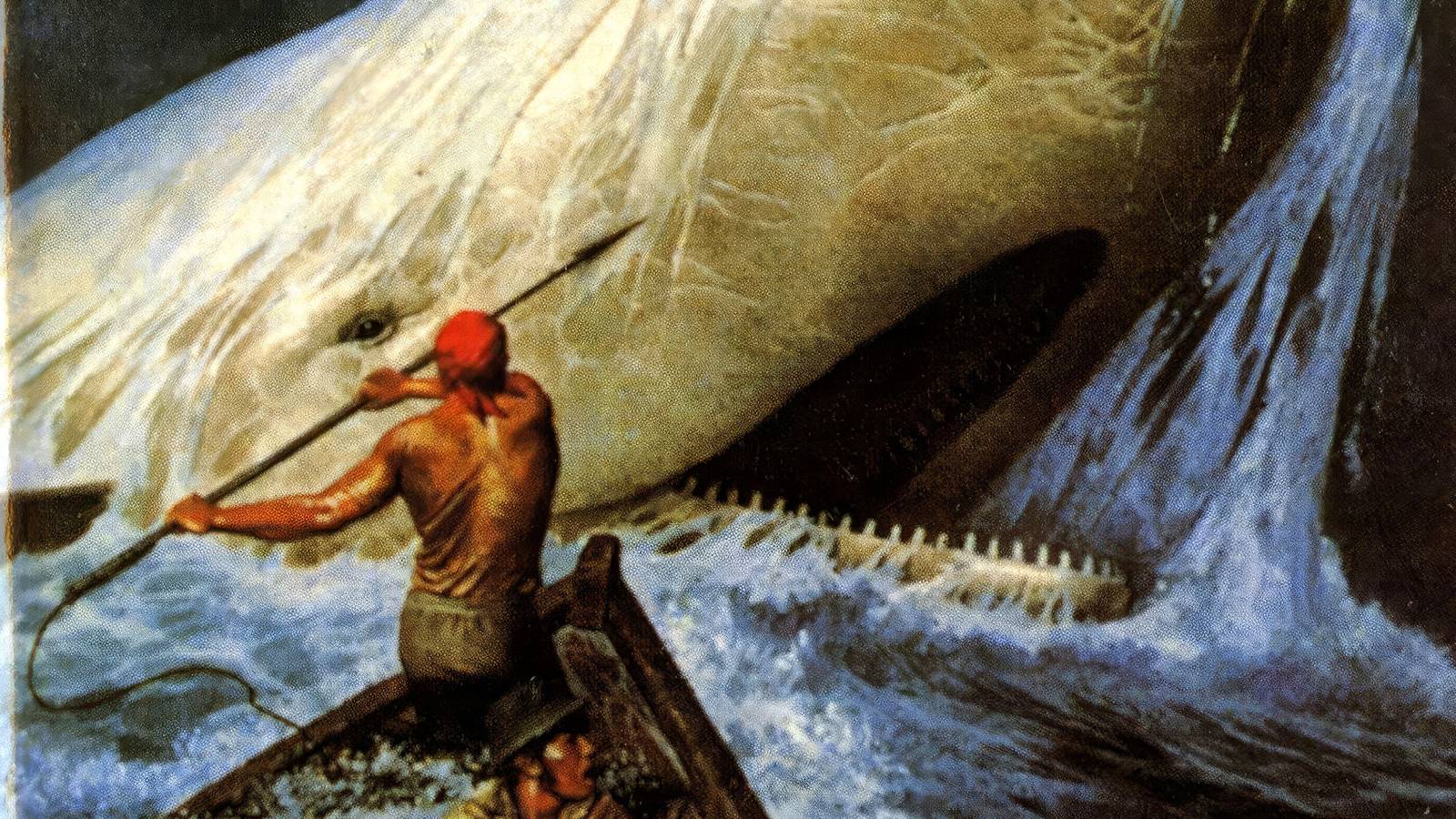
Herman Melville's Moby-Dick is a literary behemoth, a novel that defies easy categorization. On the surface, it's a revenge tale about a captain hunting the whale that maimed him, but it quickly becomes something far more complex. Chapters on whale anatomy and the whaling industry intermingle with philosophical digressions, including an entire chapter devoted to the color white. These detours can feel overwhelming, yet they're part of what makes the book so groundbreaking. Melville hooks readers with adventure, but it's his deep dive into obsession, fate, and humanity's relationship with nature that truly captivates. It's part adventure, part encyclopedia, part philosophical treatise—and somehow, it all works.
That's the hallmark of the greatest novels: they use a simple premise—a man, a family, a small corner of the world—to explore universal truths. They make us empathize with flawed characters, find tragedy in the absurd, and achieve extraordinary depth with minimal scope. Some novels sprawl across generations, while others stay rooted in one place. Moby-Dick certainly earns its place among the greats, but it's not the only novel to turn an improbable story into something transcendent. In fact, a few have done it even better.

Don Quixote (1615)
Miguel de Cervantes' Don Quixote has become shorthand for any quixotic pursuit, but the novel is far more than a joke. It follows an aging man who, after reading too many chivalric romances, decides to become a knight and sets off to battle windmills he mistakes for giants. It's absurd, yes, but the deluded knight exposes uncomfortable truths. Don Quixote may be out of touch with reality, yet he clings to ideals of honor and justice, defending those who need protection.
His squire, Sancho Panza, is supposedly the sensible one, but he follows Don Quixote from one ridiculous adventure to the next, lured by the promise of an island to govern. He argues with his master, but he also indulges him, often getting swept up in the madness himself. As the story unfolds, it becomes impossible to tell who the real fool is. The people who mock Don Quixote reveal a uglier worldview, and unlike Ahab's destructive obsession, Don Quixote's delusions produce something more complicated—a blend of comedy and tragedy that still resonates.
Crime and Punishment (1866)
Fyodor Dostoevsky's Crime and Punishment centers on Rodion Raskolnikov, a penniless former student who believes he's above conventional morality. He tests his theory by murdering a pawnbroker and her sister, but the novel isn't about the crime itself—it's about the aftermath. Raskolnikov spirals into feverish paranoia, alienating those who care about him and panicking at innocent conversations. His encounters with the investigating magistrate, Porfiry Petrovich, are tense psychological duels, as Raskolnikov teeters between confession and delusion.
Like Ahab, Raskolnikov sees himself as exceptional, but his obsession destroys only himself, not an entire crew. Dostoevsky's exploration of guilt, redemption, and the limits of rationality makes this a more intimate and harrowing study of human nature than Melville's epic.
Middlemarch (1872)
George Eliot's Middlemarch might sound like a tough sell: nearly 800 pages about the gossip and marriages in a provincial English town. But it's a masterclass in character and consequence. Dorothea Brooke, desperate to make a difference, marries the elderly scholar Edward Casaubon, only to discover he's not the genius she imagined. Her well-intentioned decision leads to misery, while other characters' choices—unpaid debts, whispered rumors—ripple outward with unforeseen consequences.
Eliot paints a town full of people pursuing happiness, often at others' expense, and she makes even the most infuriating characters understandable. Melville sends Ahab around the world to examine fate and obsession; Eliot finds the same depth in a single town. It's a quieter novel, but no less profound.
War and Peace (1869)
Leo Tolstoy's War and Peace is often cited as the pinnacle of the novel form, and for good reason. It spans decades, following multiple aristocratic families through the Napoleonic Wars, weaving together personal dramas with historical events. Tolstoy doesn't just tell a story; he creates a world. Characters like Pierre Bezukhov and Natasha Rostova grapple with love, loss, and meaning against a backdrop of war and social change.
What sets it apart from Moby-Dick is its sheer humanity. While Melville's obsession is with abstract forces, Tolstoy's focus is on the messy, contradictory lives of his characters. He shows how history is shaped not by great men but by countless small decisions. It's a sprawling, ambitious work that manages to feel intimate, and it's arguably a greater achievement than Melville's single-minded pursuit.
The Brothers Karamazov (1880)
Dostoevsky's final novel, The Brothers Karamazov, is a philosophical tour de force. It centers on the murder of a debauched father and the three sons who each embody different aspects of Russian society: the sensualist Dmitri, the intellectual Ivan, and the spiritual Alyosha. Through their conflicts, Dostoevsky explores faith, doubt, free will, and the nature of evil.
The novel's famous Grand Inquisitor passage alone is worth the price of admission, but it's the way Dostoevsky weaves philosophy into a gripping family drama that makes it superior to Moby-Dick. Where Melville's digressions can feel like interruptions, Dostoevsky's are integral to the story. It's a novel that doesn't just ask big questions—it forces readers to confront them.
These five classics—Don Quixote, Crime and Punishment, Middlemarch, War and Peace, and The Brothers Karamazov—each take the novel to places Melville never imagined. They're not just great books; they're essential reading for anyone who wants to understand the human condition. And if you're looking for more literary challenges, check out our list of tough books worth the effort or explore timeless fantasy classics that offer their own brand of depth.