Science fiction has a reputation for stretching the imagination, but some authors take it a step further—they stretch the reader's brain to its breaking point. While many sci-fi tales use technology as a backdrop for human drama, the purest form of the genre dives headfirst into complex theories, unconventional narratives, and prose that demands your full attention. For even the most devoted fans, these books can feel like a puzzle wrapped in an enigma, where simply finishing a chapter is a triumph.
From fragmented storytelling that blurs reality to mathematical concepts that make your head spin, these are the most confusing sci-fi books ever published, ranked by their ability to leave you scratching your head.

5. Dhalgren (1975)
Samuel R. Delany's Dhalgren drops readers into the fictional city of Bellona, where a young man with no memories—known only as The Kid—wanders through a landscape of eccentric locals and surreal events. The city itself seems to warp time and identity, and the narrative mirrors that disorientation with its fragmented, stream-of-consciousness style. You're never quite sure what's real and what's happening inside The Kid's mind, making it a challenging but rewarding read for those who appreciate literary experimentation.
4. Gravity's Rainbow (1973)
Thomas Pynchon's Gravity's Rainbow is a sprawling World War II epic that follows Tyrone Slothrop, an American soldier whose sexual encounters seem to predict German V2 rocket strikes. The novel is packed with hundreds of characters, military conspiracies, and bizarre tangents—like Americans being forced to eat British candy. Keeping track of who's who and what matters is a Herculean task, but the sheer weirdness and dark humor keep you turning pages, even when you're utterly lost.
3. The Peripheral (2014)
William Gibson's The Peripheral jumps between two timelines: one in the near future, where gamer Flynne Fisher witnesses a murder during a virtual-reality job, and another in a distant future, where publicist Wilf Netherton investigates that same crime. The novel throws you into a world of unexplained technology and shifting perspectives, expecting you to keep up. If you loved the mind-bending twists of Netflix's Bodies, this book takes that confusion to a whole new level.
2. The Book of the New Sun (1980–1987)
Gene Wolfe's The Book of the New Sun is set on a dying Earth under a red sun, following Severian, an exiled torturer with a magical sword. The prose is deliberately archaic, filled with obscure words and descriptions of futuristic tech in ancient terms. To make matters more confusing, the book includes fictional translator's notes claiming the story was translated from a language that doesn't exist yet. It's a masterpiece of world-building, but you'll need a dictionary and a lot of patience.
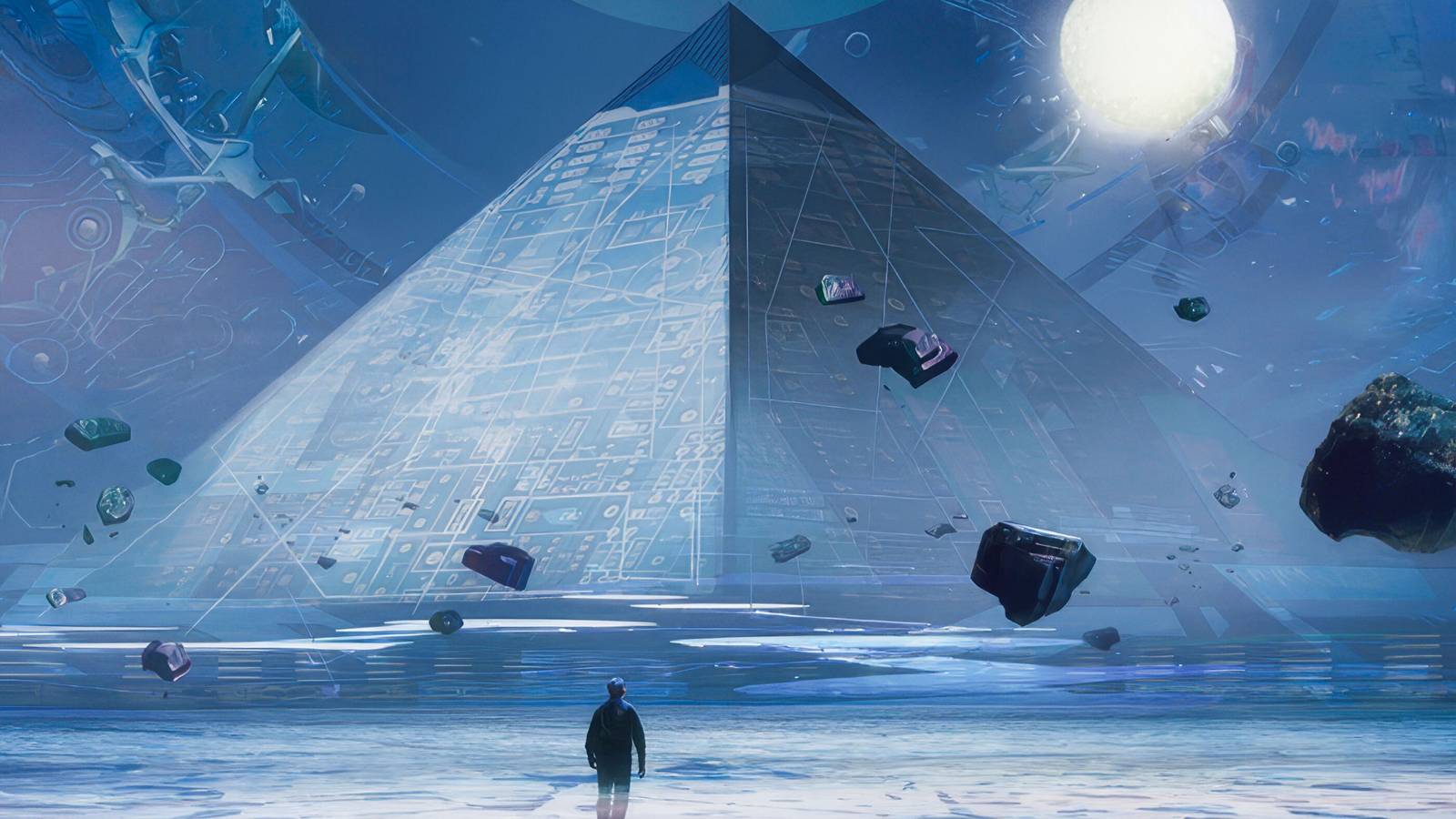
1. The Three-Body Problem (2008)
Liu Cixin's The Three-Body Problem is a modern sci-fi classic that blends hard physics with a gripping narrative. But don't let its popularity fool you—the book dives deep into astrophysics, game theory, and the three-body problem itself, a real mathematical conundrum. Readers are expected to grasp concepts like quantum entanglement and stellar mechanics while following a complex plot that spans decades and continents. It's brilliant, but it's also a workout for your brain.
These novels aren't for the faint of heart. They demand your full attention and reward you with stories that linger long after you've turned the last page. If you're looking for more mind-bending entertainment, check out our list of unresolved movie finales or dive into fantasy series that will blow your mind. And if you're in the mood for something less confusing, maybe stick to neo-noir classics.