There's a special magic in a movie that lingers in your mind long after the screen goes dark. While some films wrap everything up with a neat bow, others choose a different path—one that leaves questions unanswered and interpretations wide open. These open endings can be just as impactful, sometimes even more so, because they invite us to keep thinking, debating, and revisiting the story. Here are ten of the best open endings in film history, ranked for their ability to provoke, unsettle, and inspire.
10. Shutter Island (2010)
Martin Scorsese's neo-noir psychological thriller follows U.S. Marshal Teddy Daniels (Leonardo DiCaprio) as he investigates a patient's disappearance at a remote asylum for the criminally insane. But as the storm closes in, Teddy's own sanity begins to unravel. The film's twist reveals that Teddy is actually Andrew Laeddis, a patient who murdered his wife after she drowned their children. In the final scene, Andrew slips back into his delusion, asking his doctor, "Which would be worse: to live as a monster, or to die as a good man?"
The ending is a masterclass in ambiguity. Is Andrew truly relapsing, or is he choosing a lobotomy to escape his guilt? Scorsese leaves it open, forcing us to re-examine every clue and performance. It's a conclusion that turns a simple twist into a profound moral dilemma, and it's one of the reasons the film remains so discussable.
9. Mulholland Drive (2001)
David Lynch's surreal masterpiece is a puzzle that defies easy answers. The film follows Betty Elms (Naomi Watts), an aspiring actress, and Rita (Laura Harring), an amnesiac, as they navigate a dreamlike Hollywood. But the narrative fractures, revealing a darker reality where Betty is actually Diane, a failed actress who has ordered a hit on her lover. The film ends with Diane's suicide and a cryptic whisper of "Silencio."
Lynch never offers a definitive interpretation, and that's precisely the point. The ending reframes the entire story as a wish-fulfillment dream, blurring the lines between illusion and reality. It's a film that rewards multiple viewings, each one offering new insights into its themes of ambition, jealousy, and the dark side of Hollywood. For those who appreciate gritty, thought-provoking cinema, this is a must-see.
8. Lost in Translation (2003)
Sofia Coppola's delicate romance between Bob (Bill Murray) and Charlotte (Scarlett Johansson) is a study in quiet connection. Two lonely Americans in Tokyo find solace in each other's company, but their time together is fleeting. In the final scene, Bob whispers something inaudible to Charlotte before they part. She simply replies, "Okay."
What did he say? We'll never know. That mystery is the heart of the film's open ending. It's a moment that captures the intimacy and ambiguity of their relationship, leaving us to imagine the possibilities. It's a perfect conclusion to a film about the transient nature of human connection.
7. Inception (2010)
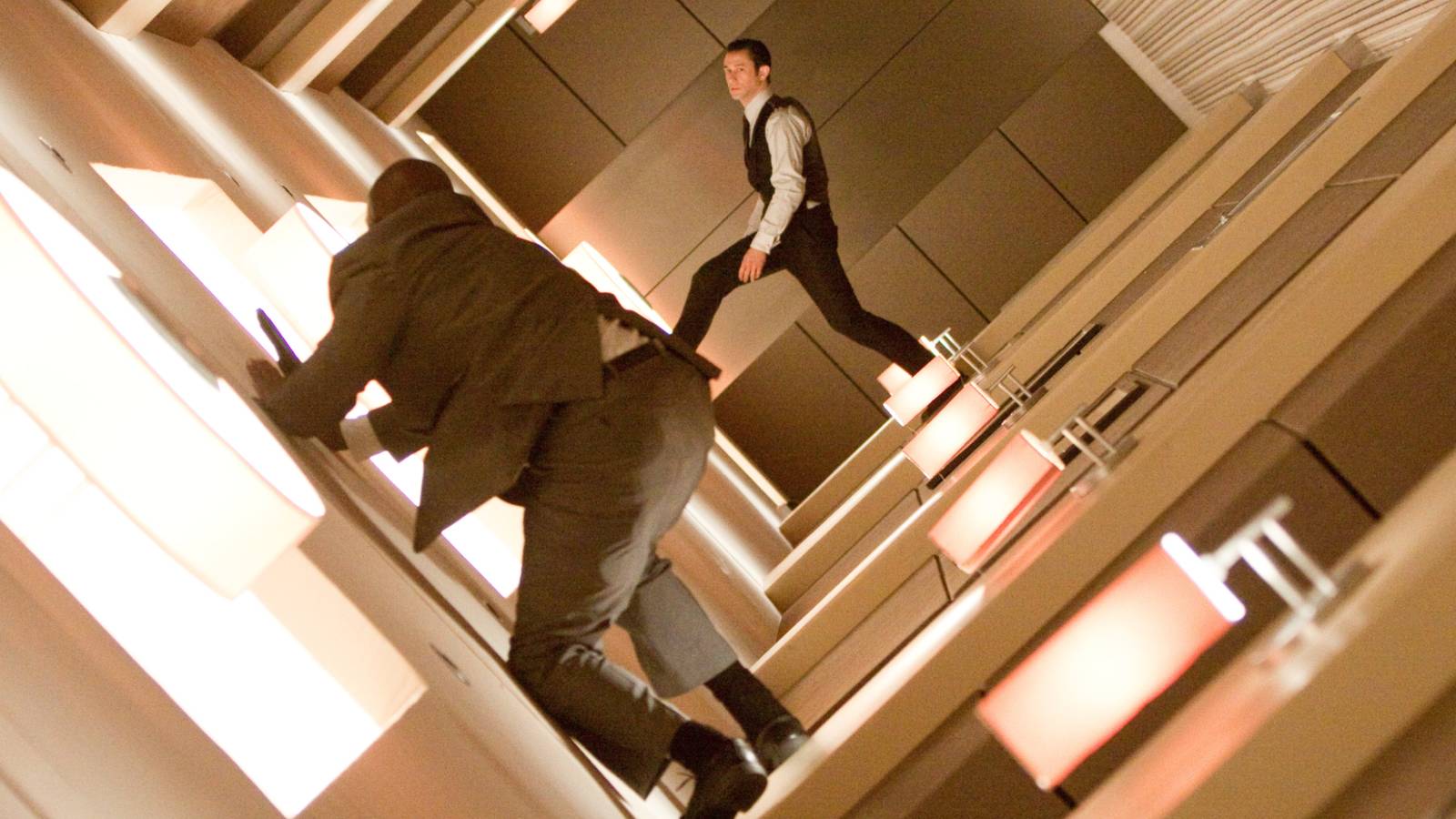
Christopher Nolan's mind-bending heist film ends with the iconic spinning top. Dom Cobb (Leonardo DiCaprio) finally returns home to his children, but the top—his totem—keeps spinning. Does it fall? We never see it. The camera cuts to black before we know if Cobb is still dreaming.
That single shot has sparked endless debate. Is Cobb trapped in a dream, or has he finally found reality? Nolan has said the ambiguity is intentional, and it's a testament to the film's power that we're still arguing about it years later. It's a rare blockbuster that trusts its audience to grapple with big ideas.
6. The Graduate (1967)
Mike Nichols' classic ends with Benjamin (Dustin Hoffman) and Elaine (Katharine Ross) escaping her wedding, jumping onto a bus, and then... silence. The triumphant smiles slowly fade as they realize the uncertainty of what comes next. The famous Simon & Garfunkel song "The Sound of Silence" underscores the moment.
It's a brilliant subversion of the romantic comedy ending. Instead of a fairy-tale conclusion, we get a glimpse of two people who have no idea what they're doing. The open ending is a commentary on the uncertainty of youth and the choices we make. It's a conclusion that feels both hopeful and terrifying.
5. No Country for Old Men (2007)
The Coen Brothers' neo-Western is a bleak meditation on fate and violence. After the villain Anton Chigurh (Javier Bardem) escapes, Sheriff Bell (Tommy Lee Jones) reflects on his dreams and the changing world. The film ends with him saying, "And then I woke up."
There's no final showdown, no resolution. Chigurh is still out there, and Bell is retiring, haunted by the senseless violence he's witnessed. The ending is a philosophical statement about the impossibility of understanding evil. It's a conclusion that stays with you, echoing the film's themes of moral decay and the passage of time.
4. The French Connection (1971)
William Friedkin's gritty crime thriller ends with a shocking twist. After a relentless pursuit, detective Popeye Doyle (Gene Hackman) finally corners the drug smuggler Alain Charnier. But instead of a dramatic arrest, the screen cuts to a title card revealing that Charnier was later found murdered in France, and Doyle was transferred to a desk job.
The abrupt, anticlimactic ending is a deliberate choice. It denies the audience the catharsis of a traditional cop movie, instead highlighting the futility of Doyle's obsession. It's a bold, realistic conclusion that subverts expectations and leaves us questioning the cost of justice.
3. 2001: A Space Odyssey (1968)
Stanley Kubrick's epic ends with astronaut Dave Bowman (Keir Dullea) aging rapidly in a strange room, then transforming into a star child. The final image is a fetus floating in space, gazing at Earth. What does it mean? Kubrick never explains.
The ending is a cosmic riddle, open to countless interpretations—evolution, rebirth, the next stage of humanity. It's a conclusion that transcends narrative and becomes pure visual poetry. It's a film that demands to be experienced, not just understood.
2. The Sopranos (2007)
While not a film, the series finale of The Sopranos is a landmark in open endings. The final scene in the diner cuts to black mid-bite, leaving Tony's fate ambiguous. Did he die? Did he survive? The debate has raged for years.
David Chase has said the ending is about the uncertainty of life, and that Tony's fate is less important than the moment itself. It's a daring choice that divided audiences but cemented the show's legacy. For fans of Sopranos-inspired storytelling, this is the ultimate cliffhanger.
1. The Third Man (1949)
Carol Reed's noir masterpiece ends with one of cinema's most iconic shots. Holly Martins (Joseph Cotten) waits for Anna (Alida Valli) after Harry Lime's funeral. She walks past him without a word, and the camera holds on her as she disappears into the trees. The film ends without a resolution.
It's a perfect ending because it's so emotionally honest. Holly's love for Anna is unrequited, and she's grieving for Harry. There's nothing left to say. The open ending captures the melancholy and moral ambiguity of the entire film. It's a conclusion that feels both inevitable and haunting.
These films prove that an open ending isn't a cop-out—it's an art form. They trust us to find our own meaning, and in doing so, they become more than just movies. They become experiences that stay with us forever.