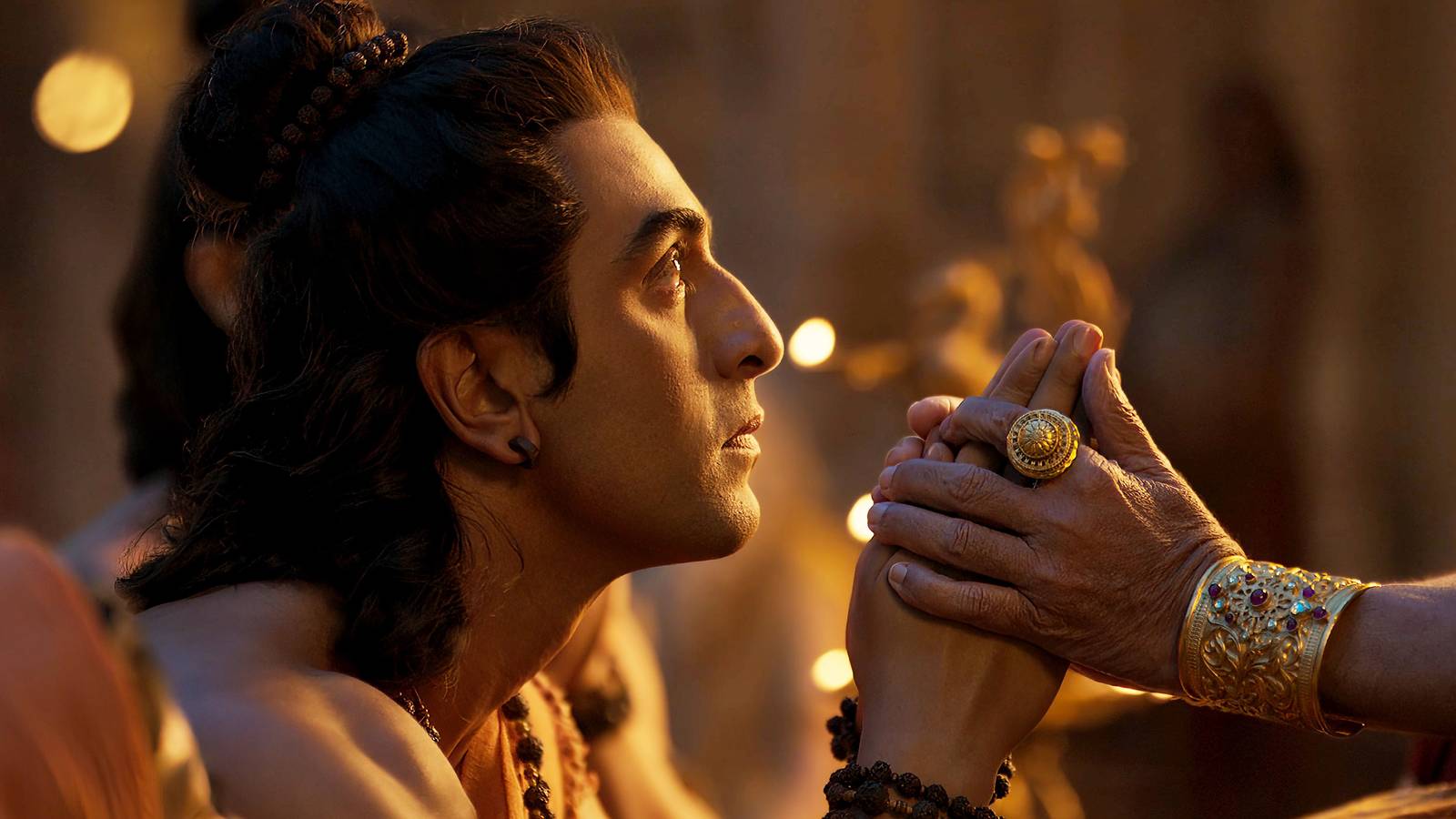
India's grand mythological spectacle, Ramayana: Rise of a Legend, is facing a tough battle at the domestic box office. The film, which holds the title of the most expensive Indian production ever, has been pulled from nearly 800 theaters in its third week, a clear sign that its theatrical run is losing steam. With a reported budget of $200 million, the epic now faces an uphill climb to break even, a feat that typically requires grossing at least double its production costs.
The movie, directed by Nitesh Tiwari, brings to life the ancient Hindu epic with a star-studded cast, including Ranbir Kapoor as Lord Rama and Yash as the formidable Ravana. The story follows the classic tale of Ravana's abduction of Sita and Rama's quest to rescue her, a narrative that holds deep cultural significance for millions. The film was strategically released ahead of Diwali, a move that initially paid off, boosting its early box office numbers and helping it cross the $100 million mark worldwide before Godzilla Minus Zero did.

Despite its strong start, the film's momentum has faltered. After debuting in over 1,400 theaters domestically, it lost more than 300 screens in its second week. Now, in its third week, the theater count is expected to plummet to just 681, a staggering drop of over 700 from its opening. This decline mirrors the fate of other big-budget releases that struggle to sustain audience interest, such as Brad Pitt's Heart of the Beast, which also saw a significant reduction in screens.
Financially, Ramayana: Rise of a Legend has grossed over $150 million worldwide, surpassing the lifetime earnings of 2023's RRR and this year's Supergirl and Mortal Kombat II. However, with a budget that high, the film still has a long way to go to reach profitability. Industry analysts note that the economics of Indian films differ from Hollywood blockbusters, but the sheer scale of this production makes the break-even point a daunting target.
The film's performance is particularly notable when compared to Godzilla Minus Zero, which has become a surprise hit with a modest $15 million budget. That Japanese monster movie has already grossed over $100 million worldwide and is expected to surpass the domestic haul of its predecessor, Godzilla Minus One, in the coming weeks. Its success highlights the contrast between a frugal production that resonates with audiences and a lavish epic that struggles to maintain its theatrical footprint.
Despite the box office challenges, Ramayana: Rise of a Legend is still playing in theaters, and fans can catch it on the big screen while it lasts. The film's fate may also be influenced by its planned sequel, as the two-part saga reportedly cost over $400 million combined. Whether the first installment can find a second life in streaming or international markets remains to be seen, but for now, its theatrical run is a cautionary tale about the risks of mega-budget filmmaking.
As the industry watches closely, the question remains: can Ramayana recover its investment? With its theater count shrinking and competition from other releases, the odds seem stacked against it. But in the world of cinema, surprises are always possible, and the epic's cultural resonance might still draw audiences in the weeks ahead.