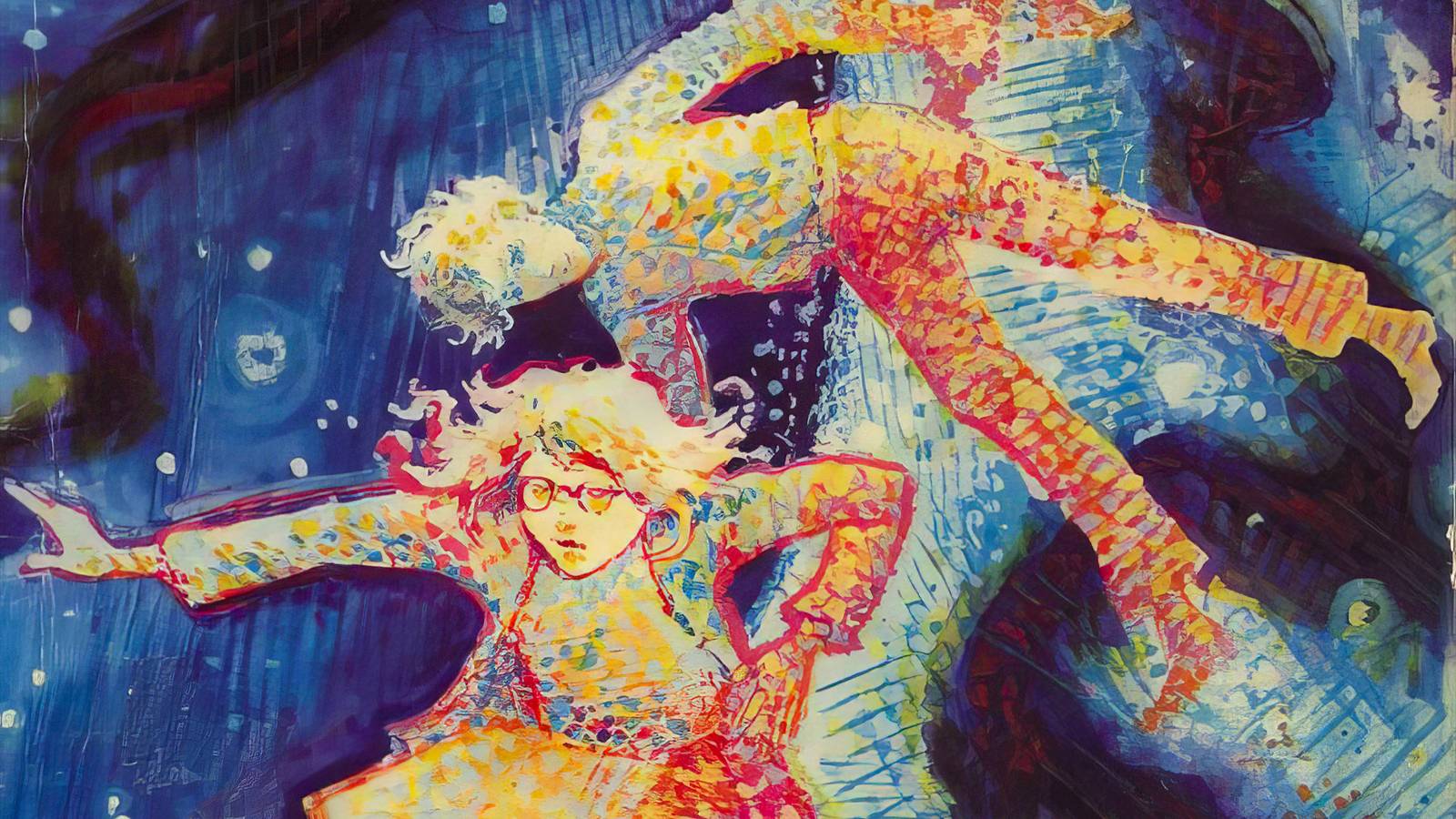
Time travel is a tricky narrative device. Done poorly, it's a mess of paradoxes and exposition that loses readers fast. But when it's done right, it can reshape how we think about love, history, and even our own identities. These seven fantasy books nail it, using time travel to ask questions that linear storytelling can't, while keeping you utterly hooked. From a love story told through letters across timelines to a murder mystery solved in eight different bodies, these are the best of the best.
This Is How You Lose the Time War (2019)
Red and Blue are agents on opposite sides of a war fought across timelines. Red works for the Agency, a tech-driven faction, while Blue serves Garden, an organic, sprawling consciousness. Their mission: nudge history in their side's favor, slipping through battlefields, plagues, and dying civilizations. They're masters of their craft. But somewhere along the way, they start leaving each other letters—taunts that evolve into something far more intimate and reckless.
Authors Amal El-Mohtar and Max Gladstone wrote alternating chapters, each voicing one half of the correspondence. The result is a novella so lyrically wild you might forget it's about a temporal Cold War. It's a quick read, perfect for an afternoon, but it lingers for weeks. The time travel here isn't about paradoxes or fixing the past; it's about two beings choosing each other across every possible world, consequences be damned.
Outlander (1991)
In 1945, Claire Randall, a former combat nurse, is on a second honeymoon in the Scottish Highlands with her husband Frank. She touches the standing stones at Craigh na Dun and wakes up in 1743, where she's nearly killed, then rescued by a wounded young Highlander named Jamie Fraser. What follows is 850 pages of Claire navigating 18th-century Scotland with 20th-century medical knowledge, a sharp tongue, and a growing attachment to a man she was never supposed to meet.
Diana Gabaldon's world-building is what makes this book—and its sequels—so compelling. The historical detail is dense and lived-in, from Jacobite clan politics to the grim realities of Highland medicine. Claire is thrown into it all with zero preparation, and Gabaldon never romanticizes the past. The time travel works because it bridges eras in a way that feels believable, even when it's fantastical.
Kindred (1979)
Octavia Butler was a trailblazer: the first published Black woman in science fiction, a two-time Hugo and Nebula winner, and the first sci-fi author to receive a MacArthur Fellowship. Kindred, her most widely read novel, tells the story of Dana, a Black woman in 1976 Los Angeles who is inexplicably dragged to a Maryland plantation in the antebellum South. She arrives just in time to save a drowning white boy named Rufus Weylin—the son of a slaveholder and, as she discovers, her own ancestor. Every time his life is in danger, she's pulled back.
The time travel is involuntary and brutal. Dana has no control over when she goes or how long she stays, and each visit plunges her deeper into a system designed to treat her as property. There's no comfort here. Butler forces Dana—and the reader—to confront the machinery of American slavery from the perspective of someone who knows how it ends but can't escape it. The mechanism behind the trips is never explained, but it doesn't need to be.
The Midnight Library (2020)
Somewhere between life and death, there's a library. It's infinite, and every book on its shelves holds a life you could have lived if you'd made a different choice. That's where Nora Seed finds herself on the worst night of her life, after years of abandoned careers, a canceled wedding, and a best friend she let move to Australia. The librarian, Mrs. Elm—who was also her childhood school librarian—is waiting with a vast catalog. Nora can open any book and step into that version of herself: the Olympic swimmer, the married one, the glaciologist in the Arctic. If she finds a life she wants to keep, she stays. If disappointment hits, she snaps back to the library.
Matt Haig uses this setup to do something clever with the multiverse concept. It starts as a choose-your-own-adventure, but the longer Nora browses, the clearer it becomes that no single life is the fix she's looking for. That realization is the point—and it's a powerful one.
These books prove that time travel, when handled with care, can be a vehicle for profound storytelling. For more fantasy reads that push boundaries, check out our list of fantasy novels that read like poetry or dive into the best science fantasy since 2020.