Science fantasy is where genre labels start feeling a little childish. You can spend ten minutes arguing over whether a book contains sufficiently rigorous technology to count as science fiction, then somebody summons a demon through an interstellar civilization and the whole conversation becomes wonderfully pointless. The books I love most in this space behave like they have better things to do than ask permission.
These six are exactly that kind of trouble. They throw necromancy into space, biotech into pirate cities, djinn into cyberpunk, Faustian bargains into violin lessons, and anthropology into what looks suspiciously like a medieval quest. Yet the weirdness comes with substance and doesn't ask for permission. It all fits just right in and so if that's your piece of cake, have at it with these 6 finest science fantasy books released since 2020.

6. Cyber Mage (2021)
Cyber Mage follows Marzuk, a teenage hacker in a climate-ravaged 2089 Dhaka, whose life in virtual worlds collides with mercenary Djibrel, powerful AIs, advanced nanotechnology, and ancient djinn as a much larger conspiracy begins closing around them. Marzuk is brilliant online and painfully less impressive whenever actual human beings enter the equation, which immediately gives the book more personality than the usual teenage-tech-prodigy fantasy.
Saad Z. Hossain's future is the real drug here. Dhaka survives extreme climate conditions partly because biological nanotech is embedded across millions of bodies, while nations have blurred into corporate entities and supernatural beings exist alongside absurdly advanced computation. The combination should feel overloaded. Somehow it feels gleefully alive. Djinn, hackers, gaming culture, feral AI, swords, satellites, and teenage arrogance all occupy the same world without politely separating into genres. Read this when you want a book that keeps pulling stranger ideas out of its pockets and somehow still has one more.
5. The Dawnhounds (2022)
The Dawnhounds follows Yat Jyn-Hok, a former thief turned police officer in the living biotech city of Hainak, who is murdered by fellow officers after discovering a corpse, resurrected by a mysterious power, and forced to flee with pirates while a deadly plague spreads through the city. That is a lot for one premise sentence, and the actual book gets weirder.
Hainak is the reason I would push this at somebody who complains fantasy cities all start resembling one another. Its buildings, weapons, and clothing are alive, the city carries the scars of an earlier war, and biology has basically become infrastructure. Yat's resurrection then turns the whole place uncanny from the inside because she starts manipulating life force while the institution she served is hunting her. The pirate crew gives the chaos warmth. The corruption gives it teeth. And beneath all that biotech strangeness is a woman discovering that surviving your own murder can seriously rearrange your opinion of authority.
4. Elder Race (2021)
Elder Race follows Lynesse, a young princess who seeks the help of an ancient “sorcerer” to stop what her people believe is a demon, unaware that the sorcerer is actually Nyr, an anthropologist from an advanced civilization who has been ordered to observe her society rather than interfere with it. That one misunderstanding is enough to power the entire book.
Lynesse sees relics, enchantment, and an immortal wizard. Nyr sees technology, fieldwork, and a civilization he is ethically prohibited from manipulating. Both descriptions can be accurate at the same time because knowledge changes the vocabulary, not the event. Adrian Tchaikovsky gets enormous mileage out of letting the same world exist as science fiction to one character and fantasy to another. Then he gives Nyr a depression-management system that literally helps him compartmentalize his emotions so he can function, which suddenly makes the supposedly godlike elder race feel painfully human. It is only around two hundred pages. I still wish I could make people read it by physically handing it to them.
3. Nona the Ninth (2022)
Nona the Ninth follows a cheerful young woman who woke six months ago inside somebody else's body, lives with Pyrrha, Camilla, and Palamedes in a city under siege, and would much rather attend school, love dogs, and celebrate her birthday than become the mysterious weapon several warring factions believe she might be. If you have read the earlier Locked Tomb books, that premise is immediately terrifying for reasons Nona herself barely understands.
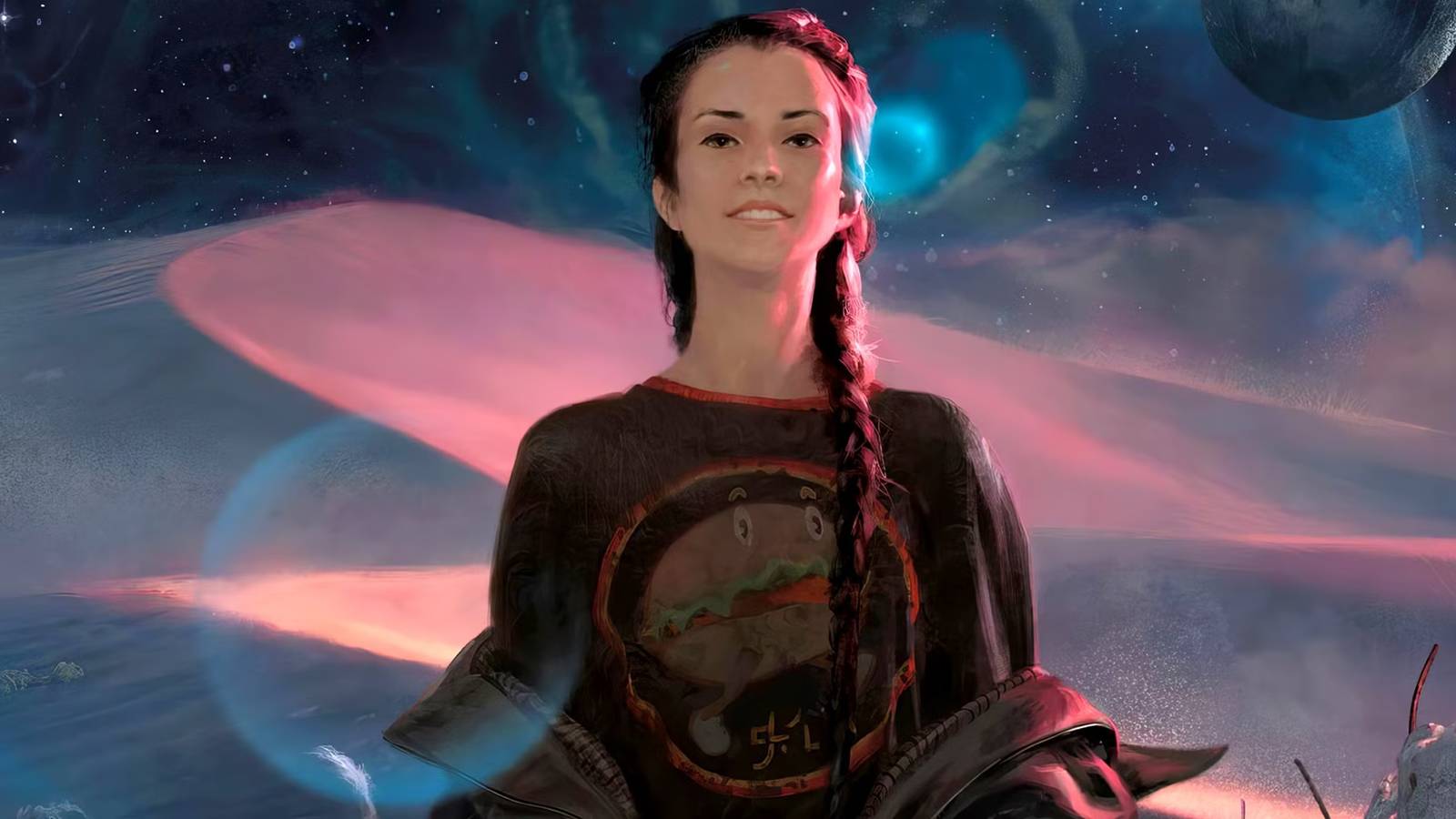
And Nona is a miracle. The book comes from Tamsyn Muir who surrounds her with necromantic politics, planetary catastrophe, body-sharing, resurrection, imperial war, and enough Locked Tomb lore to fuel several conspiracy boards. Nona mainly wants everyone she loves to stop being sad. That innocence changes the entire temperature of the series. The city is collapsing, a monstrous blue sphere hangs over the horizon, and Nona keeps noticing children, food, affection, language, and dogs. You begin by wondering who she really is. Eventually you become much more frightened by the possibility that finding out will mean losing the person she has become.
2. Light from Uncommon Stars (2021)
Light from Uncommon Stars follows violin teacher Shizuka Satomi, who must deliver one final prodigy's soul to a demon to escape her own damnation, teenage runaway violinist Katrina Nguyen, whom Shizuka chooses as that final student, and Lan Tran, a retired starship captain hiding on Earth with her family while running a donut shop. The novel weaves these three threads into a story about music, family, and redemption.
Ryka Aoki's book is a masterclass in blending the mundane with the cosmic. The violin lessons are intimate and heartbreaking, the donut shop is warm and funny, and the demonic bargain adds a layer of Faustian tension that keeps the pages turning. It's a story about finding hope in the most unexpected places, and it's one of the most original science fantasy novels of the decade.
1. The Locked Tomb Series (2019-2022)
While the series began in 2019, its most recent installment, Nona the Ninth, solidifies it as the pinnacle of science fantasy since 2020. Tamsyn Muir's saga of necromancers in space is a genre-defying masterpiece that combines swordplay, lesbian romance, and cosmic horror with a wit that's unmatched. The series has redefined what science fantasy can do, and its impact on the genre is undeniable.
From the gothic intrigue of Gideon the Ninth to the mind-bending revelations of Harrow the Ninth and the emotional gut-punch of Nona, Muir has crafted a world that is both deeply strange and profoundly human. It's a must-read for anyone who thinks they've seen everything the genre has to offer.
These six books are proof that science fantasy is one of the most exciting and innovative corners of literature. Whether you're a longtime fan or new to the genre, they're essential reading. And if you're looking for more great reads, check out our list of the scariest horror novels since 1990 or fall 2026's must-read books.