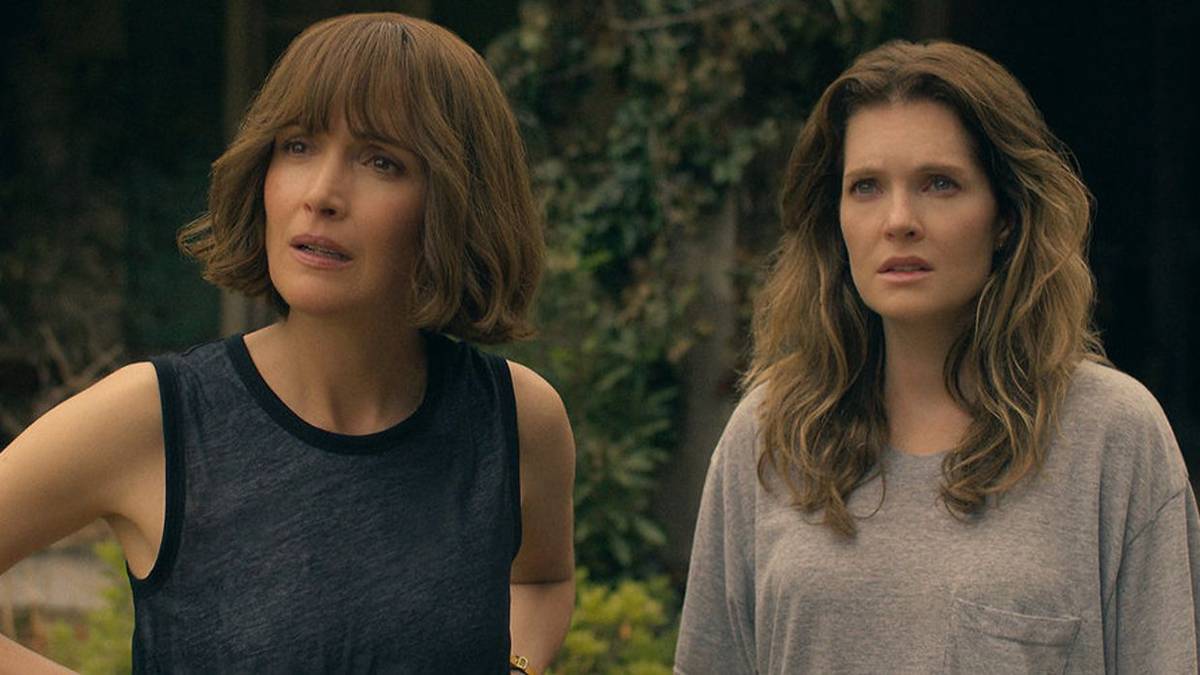
When author Karin Slaughter decided to adapt her own 2017 novel The Good Daughter for Peacock, she knew she couldn't just hand off the reins. As showrunner, she wrote every script, spent 71 days on set, and immersed herself in every detail—from budgeting to set design—to ensure the series captured the heart of her story. The result is a six-episode thriller that balances suspense with deep emotional resonance, centered on the shattered bond between sisters Charlotte and Samantha.
In a recent interview, Slaughter opened up about the challenges of translating her 500-page novel into a compact series, the importance of staying true to her characters, and how the finale's biggest twists ultimately lead to a place of catharsis and hope. She also shared her thoughts on working with the show's stellar cast, including Rose Byrne and Meghann Fahy, who bring estranged sisters Sam and Charlie back together after two decades apart.
Staying True to the Book's Spirit
Slaughter, who has seen her work adapted before—including Pieces of Her and the long-running Will Trent—was determined to keep The Good Daughter faithful to its source material. "The most common complaint is, 'The show changes things and it's not like the book,'" she said. "So, what was most important to me is that I capture the heart of these characters." While the plot had to be reshaped to fit six episodes, she ensured that the essence of Sam and Charlie remained intact.
Adapting a novel for television requires significant changes, Slaughter explained. In a book, she has hundreds of pages to explore characters' inner thoughts, but in a script, that must be conveyed through dialogue and action. "By necessity, things have to change," she noted, "but what I wanted to hold onto was the spirit of the book."
The Sister Bond at the Core
At the heart of The Good Daughter is the relationship between Sam and Charlie, two sisters who were torn apart by a traumatic event and have spent 20 years living separate lives. Slaughter emphasized that the series is as much about their reconciliation as it is about the mystery. "It was important to me to leave these sisters in a better place," she said, adding that the finale offers a sense of hope after all the tragedy.
Rose Byrne, who plays Sam, brought a warmth to the character that wasn't in the book, Slaughter revealed. "She balanced that tightrope of keeping true to the character, but also adding her own spin." Meghann Fahy, as Charlie, and Brendan Gleeson, as their father, also brought their own interpretations, making the family dynamic feel authentic and lived-in.
Unraveling the Twists
The series is packed with secrets and reveals, and Slaughter was careful about how much to show of the heaviest moments. "Figuring out exactly how much to show of the heaviest moments" was a key part of the process, she said. The goal was to keep viewers on the edge of their seats while also delivering an emotionally satisfying payoff.
For those who have read the book, Slaughter didn't want to simply repeat the same surprises. Instead, she focused on the emotional journey. "What I think of when I'm writing in my head is so different from readers think about because they're bringing their own experience and their own lives into the reading of the story."
A Collaborative Effort
Slaughter praised the collaborative nature of television, which contrasts sharply with the solitary act of writing a novel. "It's so collaborative," she said. "You give these lines to someone like Rose Byrne or Meghann Fahy or Brendan Gleeson and watch them put a different interpretation on it because they are incredible artists."
She also admitted that being an executive producer required a different mindset. "I had to think about budgeting and the logistics of things in such a different way," she said. "That was a real challenge and it was exciting to figure out those different puzzle pieces."
Fans of the show can also look forward to more from Slaughter, as she remains involved in the Will Trent series, which returns for Season 5 in 2027. But for now, The Good Daughter stands as a testament to her commitment to storytelling that doesn't shy away from darkness but ultimately finds a way to hope.