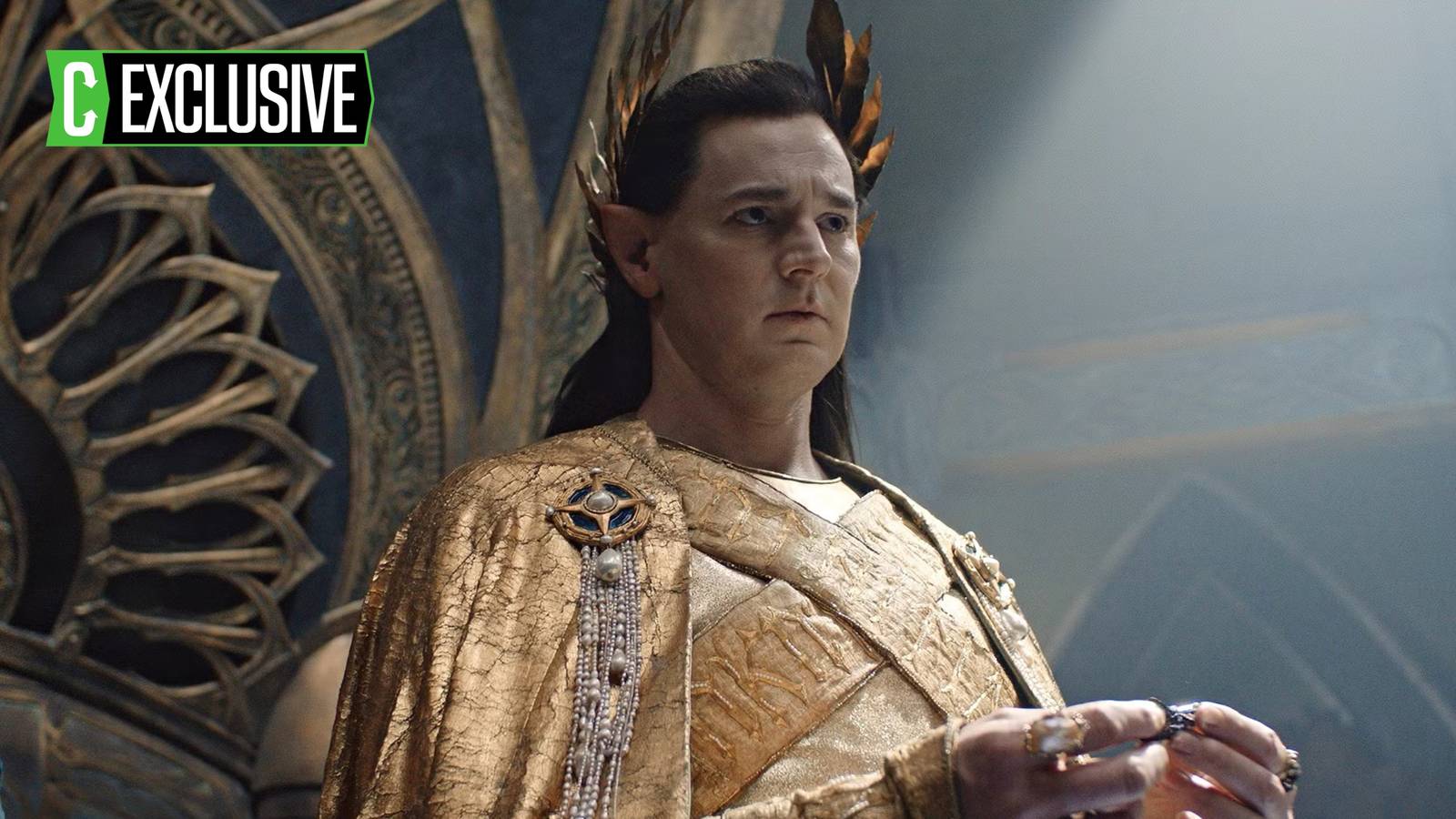
Adapting J.R.R. Tolkien's sprawling legendarium was never going to be a simple task. The Second Age alone spans thousands of years, introduces entire civilizations, and features enough characters to fill a dozen shows. That's the challenge The Lord of the Rings: The Rings of Power has wrestled with since its debut on Prime Video, as it tried to balance storylines involving Elves, Dwarves, Númenóreans, Harfoots, and the ever-looming threat of Sauron. While the series has always been ambitious, keeping all those plates spinning hasn't always been smooth. Now, one of the show's key architects has openly acknowledged that the early seasons may have asked too much of viewers.
In an exclusive interview with Collider's Maggie Lovitt for the Behind the Scenes series, co-showrunner Patrick McKay admitted that the first two seasons occasionally tried to juggle too many narrative threads. He revealed that Season 3 has been deliberately crafted to bring the story into sharper focus. Rather than continuing to expand the already vast ensemble, McKay and his fellow showrunner J.D. Payne have made Sauron's forging of the One Ring the central event around which everything else revolves.
“You would think that would be one of the real challenges of this show, but actually, the challenge is trying to keep it small,” McKay told Collider. “J.D., my co-showrunner, and I have imaginations that we don't know how to stop. They are these waterfalls of ideas, and really we're constantly trying to focus them and make sure we're not asking too much of an audience. I think there were times in prior seasons that, just being our own harshest critics, we realized looking back we were juggling too many balls. We were asking the audience to juggle too many balls. We're so close to it; it makes perfect sense to us. But one of the things this season we really tried to do is focus it. This is the season where Sauron makes the One Ring. Everything should tie into that. And if it doesn't, even if it delights us, maybe that's not the time for that story.”
It's a candid admission, but one that makes perfect sense. The One Ring is, after all, the titular artifact of the show, and it should be the centerpiece. The decision to narrow the focus also reflects the show's broader approach to adapting Tolkien's Second Age, which is filled with major historical events separated by vast stretches of time. McKay explained how they selected the key moments to build the season around.
“We looked at the text, we looked at the history of this particular era of the mythology, and there were these series of events that to us felt like they could lead one right into the next, right into the next, and build momentum with an audience the way that a serialized show should,” he said. “And then really the work that we do is taking those fixed points, whether it's the forging of the One Ring — that's a big moment this season — or it's Pharazôn bringing a massive Númenórean army to Middle-earth — that's a big moment this season — and there's others. And then it's about, 'How do we make those feel like earned emotional turns in a story rather than fixed historical events, if that makes sense?'”
McKay also emphasized the importance of making the story accessible to newcomers, not just Tolkien scholars. “We want to bring audiences to it who maybe aren't anticipating those moments or don't know that they're going to come. If you're a Tolkien superfan and a lover of the books and a scholar of the lore, in theory, there's all kinds of things in every episode that you're responding to and picking out that we're dangling there, whether it's an Easter egg or a huge historical moment, like you're saying. But also, for my mother, who's never really gotten Lord of the Rings, it's not her thing, it should play like a novel does, where it's an emotional experience even if it wasn't in Middle-earth.”
This new, more focused approach could be exactly what the series needs. Early reactions to Season 3 have been mixed, with some critics pointing to pacing issues, but the show's creative team is clearly listening to feedback. For fans who felt overwhelmed by the sprawling narrative of the first two seasons, this tighter focus on Sauron's rise is a welcome change. And for those who are just tuning in, it offers a more accessible entry point into the world of Middle-earth.
Season 3 of The Lord of the Rings: The Rings of Power is now streaming on Prime Video. If you're curious about how this season stacks up, check out our review of its Rotten Tomatoes score. And for more on the show's cast, including Ema Horvath's take on Eärien's tragic exit, see our interview with the actress. Plus, if you're looking for other Prime Video gems, don't miss our list of seven shows that never missed.