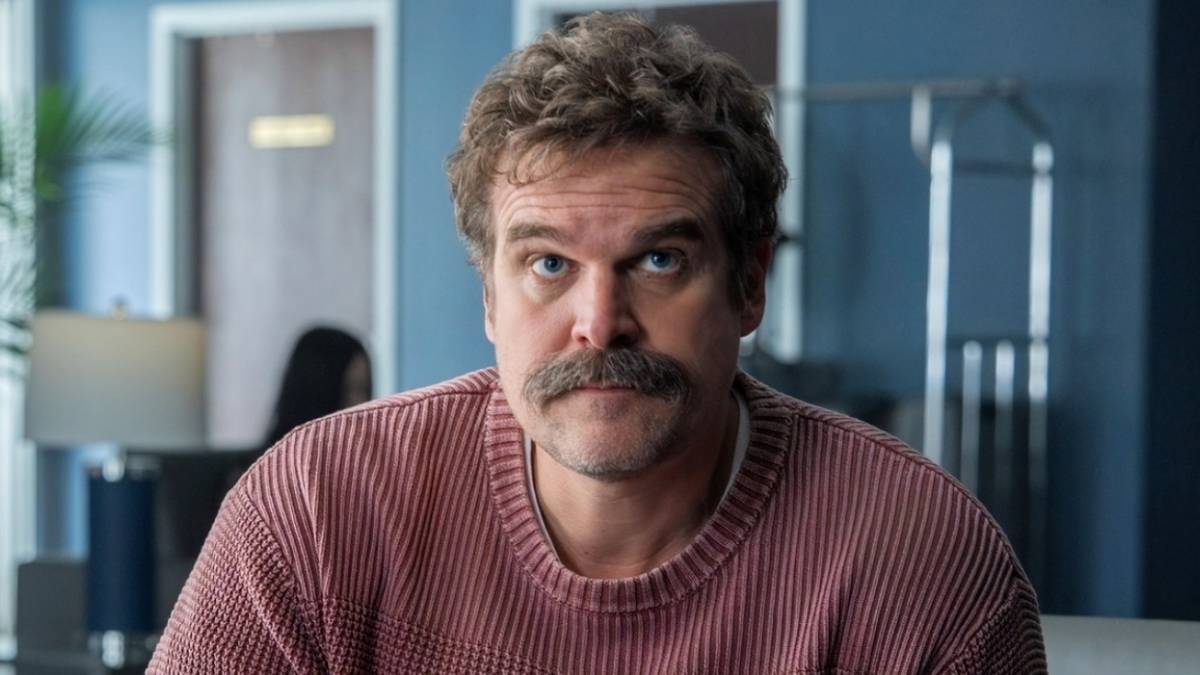
The haunting finale of HBO's limited series DTF St. Louis left viewers reeling, as the circumstances surrounding Floyd Smernitch's (David Harbour) death were finally revealed. In an exclusive interview, series creator Steven Conrad unpacked the emotional wreckage, explaining why Floyd's tragic fate was the only possible conclusion for a story about profound loneliness and misguided connections.
Conrad emphasized that the series was never a traditional mystery to be solved. Instead, it was an intimate character study of a messy love triangle between Floyd, Clark (Jason Bateman), and a third party, all desperately seeking validation in the wrong places. "It's about the collapse that happens when people try to shortcut real human fulfillment," Conrad explained, referencing the show's dating app premise. "Clark genuinely wanted to help his friend, but his methods were so flawed they ultimately trapped Floyd in an emotional black hole."
Jason Bateman's Defining Influence
A pivotal shift occurred when Jason Bateman joined the project. Conrad revealed that Bateman's interpretation of Clark Forrest became the series' emotional anchor. "Jason immediately understood that Clark's draw to Floyd was about safety," Conrad said. "He wanted to start from a place of genuine enjoyment and friendship. That gave us a clear starting point, and if you have a place to start, you have a place to go. Jason inherently knew how to dramatize a man who desperately needs a friend."
This foundation was crucial for a series built on lengthy, tension-filled conversations. Conrad admitted the challenge of making dialogue-driven scenes compelling but said the key was always maintaining underlying tension. "You can create tension with conversation the same way you can with a musical score," he noted, describing the show as a hybrid of psychological thriller and intimate drama.
Floyd's History of Bad Ideas
One of the series' more poignant details was Floyd's past as a Playgirl model in the 1990s. Conrad explained this was a deliberate character choice to establish a pattern. "It was a full commitment to a bad idea, a comically macho concept," he said. "Showing that earlier in his life, he was capable of that kind of commitment made it tragically believable that he would make the same kind of commitment to a middle-aged bad idea later on." This history painted Floyd as a man continually searching for identity and connection in all the wrong venues, a theme that echoed in the show's modern dating app setting.
Conrad was resolute about Floyd's ending, stating he had a very clear sense of the character's fate from the beginning. To protect that vision, he made a conscious decision to avoid all online fan theories during the show's run. "I couldn't look at them," he confessed. "The story had to follow its own emotional logic, not external speculation." This approach mirrors that of other showrunners who guard their narrative plans, like the creators of For All Mankind, who mapped out a major character's death years in advance.
The Finale's Emotional Aftermath
The finale's power, according to Conrad, lies in its heartbreaking inevitability. The characters' inability to communicate their true feelings and their reliance on digital validation instead of authentic vulnerability sealed their fates. It’s a stark commentary on modern isolation, wrapped in a gripping personal tragedy.
As for the future, Conrad's interview touched briefly on the possibility of another season, but the series was conceived and executed as a complete, self-contained limited series. The finale's impact is meant to linger, much like other definitive endings in television history. While not on the scale of M*A*S*H's record-breaking finale, DTF St. Louis aims for a similar emotional resonance, leaving viewers to ponder the high cost of loneliness in a connected world.