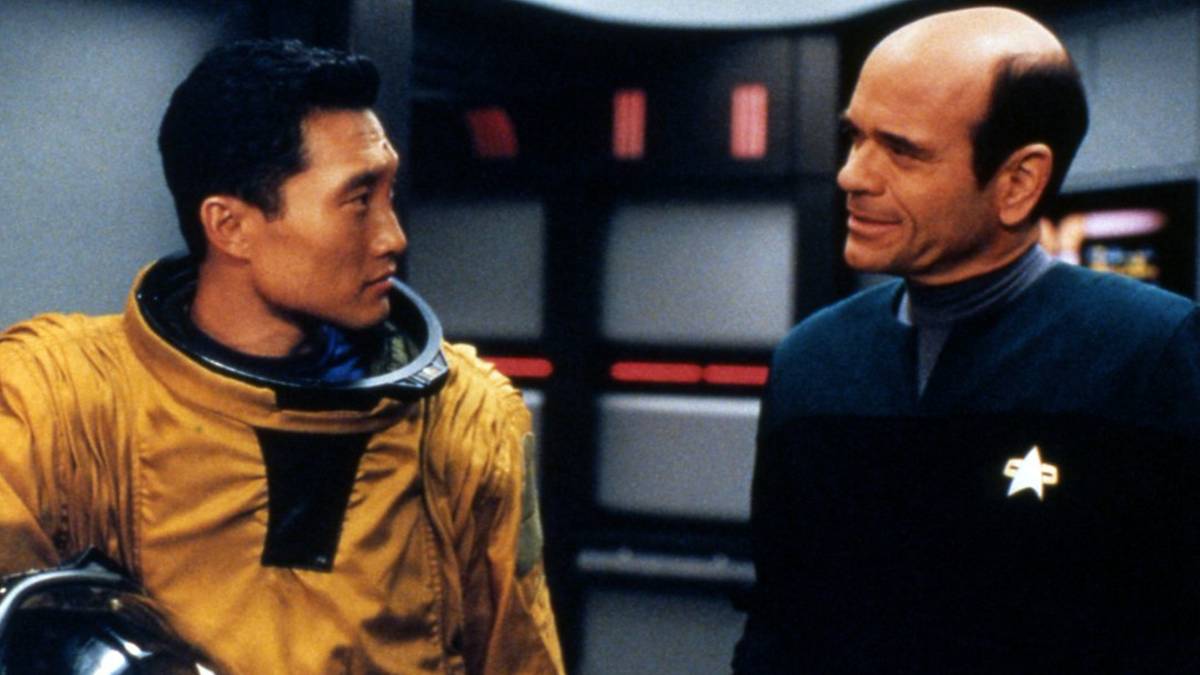
In the vast universe of Star Trek series, some shine immediately, while others take a longer journey to find their audience. Star Trek: Voyager, which premiered over three decades ago, is emphatically in the latter category. Once met with a mixed reception, the series about a starship stranded 70,000 light-years from home is now enjoying a remarkable second life, climbing into the top 10 on the Apple TV Store and captivating a new generation of late-night streamers.
From Divisive Debut to Streaming Staple
Launched in 1995 during Star Trek's television golden age, Voyager broke new ground with its premise and its cast. It was the first series to feature a female captain as the sole lead and presented a more diverse crew. Yet, it often lived in the shadow of its critically adored predecessors, The Next Generation and Deep Space Nine. Its reputation was that of an inconsistent, sometimes frustrating experiment. Today, that very experiment is being reassessed, with viewers discovering its unique strengths through streaming marathons.
The Relentless Pressure of the Delta Quadrant
What sets Voyager apart is its core, high-stakes scenario. Unlike other crews who could call Starfleet for backup, Captain Janeway and her team are utterly alone. The mission is no longer about exploration for its own sake, but about sheer survival and a desperate, decades-long voyage home. This premise created a persistent tension. The crew faced the grim reality of dwindling resources, hostile alien empires, and the psychological toll of knowing they might never see their families again. Even with the occasional technological shortcut, the show didn't shy away from showing their grief, ethical compromises, and mental strain.
A Legendary Ensemble Cast
The series truly soars because of its phenomenal cast, who turned their characters into franchise icons. Kate Mulgrew's Captain Kathryn Janeway became a defining figure—a leader of unwavering conviction, scientific passion, and empathetic strength, famously fueled by coffee. The dynamic was rounded out by a brilliant holographic Doctor (Robert Picardo) exploring his humanity, the logically profound Vulcan Tuvok (Tim Russ), and later, the liberated Borg drone Seven of Nine (Jeri Ryan). Together, they forged a compelling found-family dynamic under extreme duress.
This streaming revival mirrors the success of other sci-fi sleepers finding audiences after their initial run. Just as Apple TV+'s 'The Gorge' recently climbed the charts, Voyager is proving some stories just need time to find their home. Similarly, the enduring appeal of character-driven sci-fi is evident in shows like 'For All Mankind,' which holds strong on Apple TV+.
Flawed But Fondly Remembered
Critiques of Voyager are well-known. Its episodic nature sometimes relied on a 'reset button,' undermining serialized growth, and certain characterizations haven't aged perfectly. However, at its best, the series delivered powerful episodes that challenged Star Trek's own formula. It presented stark moral dilemmas, asked what happens when ideals meet impossible choices, and celebrated curiosity and compassion against overwhelming odds.
Its current streaming success speaks to a timeless quality. In an era of prestige serialized storytelling, there's a comforting, discoverable magic in Voyager's standalone adventures and its crew's resilient optimism. It’s the perfect show for a late-night binge, offering both nostalgic comfort and the thrill of a crew perpetually on the edge. The USS Voyager's long journey home is finally reaching a whole new audience, securing its legacy not as a footnote, but as a beloved, enduring sleeper hit.