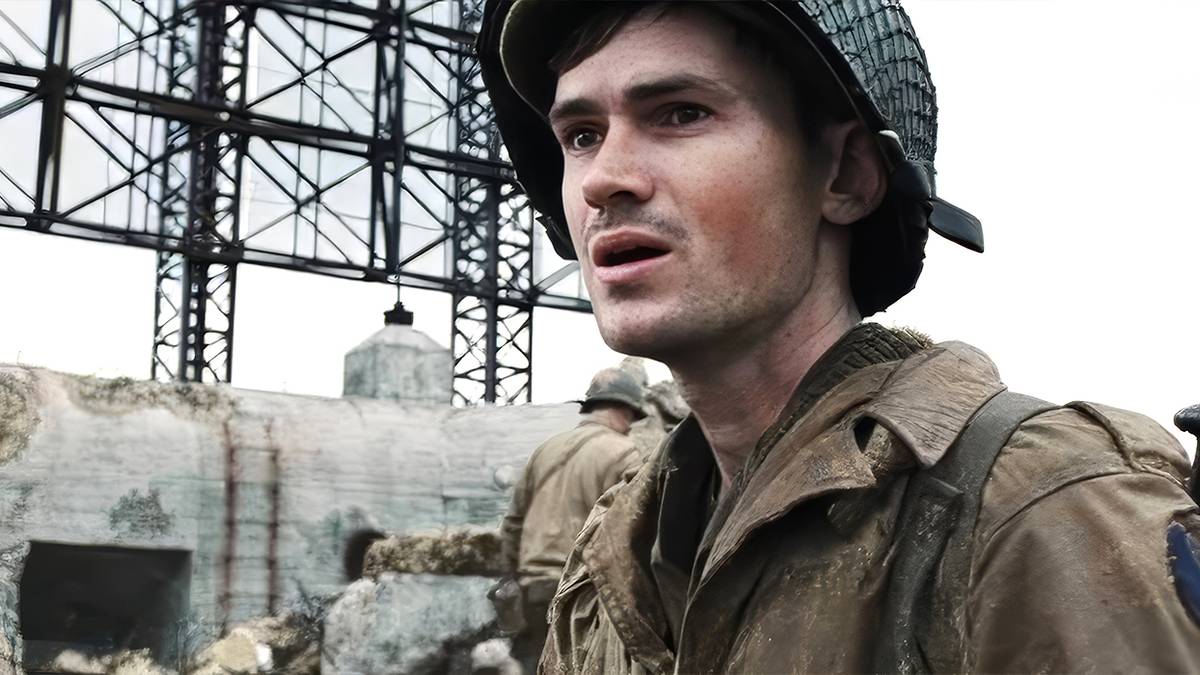
When discussing the greatest war films ever made, Saving Private Ryan inevitably tops the list. Steven Spielberg's 1998 masterpiece not only redefined how we visualize World War II but also set a benchmark for emotional storytelling that few have matched. Its final line, delivered with trembling vulnerability, has become as iconic as the D-Day landing sequence itself.
The film's closing scene finds an elderly James Ryan (Harrison Young) standing at the grave of Captain John Miller (Tom Hanks), the man who sacrificed his life to save him. In a moment that could easily tip into sentimentality, Ryan turns to his wife and asks, "Tell me I'm a good man." It's a line that has sparked debate for decades—some see it as Spielberg's trademark emotional manipulation, while others recognize a profound truth about the human cost of war.
To understand the weight of that request, we must revisit the film's central mission. Captain Miller and his squad are sent to pull Private Ryan (Matt Damon) from the front lines after his three brothers are killed in action. The mission is controversial within the squad, who question why they should risk their lives for one soldier. But as they push deeper into enemy territory, they come to embody the very values they fight for—sacrifice, duty, and the belief that every life matters.
Miller's dying words to Ryan—"Earn this"—are a burden and a gift. They demand that Ryan live a life worthy of the sacrifice made for him. Decades later, that burden still weighs heavily. Ryan's plea for validation is not just about his own worth; it's a reflection of an entire generation's struggle to reconcile their experiences with the heroic narrative society has constructed around them.
Spielberg, along with cinematographer Janusz Kamiński and composer John Williams, crafts this moment with devastating precision. The soft focus, the swelling score, and the tearful delivery all combine to create a scene that is both deeply personal and universally resonant. It's a moment that acknowledges the trauma of war without diminishing the courage of those who fought.
Critics have often accused Spielberg of being overly sentimental, but this ending is more complex than it appears. It's not just a patriotic bow; it's a raw look at the psychological scars carried by veterans. Ryan's need for reassurance speaks to a broader American male experience—one that values stoicism but secretly craves emotional affirmation. In a culture that celebrates WWII as a clear-cut victory of good over evil, Ryan's uncertainty reminds us that for the soldiers, the lines were never that clean.
The film's influence can be seen in countless war movies that followed, but its final line remains uniquely powerful. It's a testament to Spielberg's ability to blend spectacle with intimacy, and it's why Saving Private Ryan continues to be the gold standard for the genre. For those who have served, and for those who have only watched from afar, that simple question—"Tell me I'm a good man"—captures the eternal search for meaning in the face of unimaginable horror.
As we look back on the film's legacy, it's clear that this closing moment is more than just a tearjerker. It's a profound meditation on honor, memory, and the human need for validation. Whether you find it saccharine or sublime, there's no denying its impact. Saving Private Ryan doesn't just show us war; it shows us the men who fought it, and the questions that haunt them long after the guns fall silent.