Stanley Kubrick stands as one of cinema's most revered auteurs, a filmmaker whose meticulous vision and uncompromising standards produced a body of work that continues to be studied and celebrated. While his entire filmography is dotted with masterpieces, the 1960s stand out as a particularly fertile and transformative period. During this decade, Kubrick delivered four films that not only showcased his incredible range but also pushed the boundaries of what cinema could achieve. Each project was a bold departure from the last, demonstrating a restless creativity that refused to be pigeonholed.
From a sprawling historical epic to a provocative literary adaptation, a razor-sharp political satire, and a mind-bending science fiction odyssey, Kubrick's '60s output is a testament to his genius. These films not only defined an era but also set new standards for their respective genres. Let's take a closer look at these four cinematic landmarks, ranked from the merely great to the truly transcendent.

4. Lolita (1962)
Adapting Vladimir Nabokov's scandalous novel was a daunting task, especially under the restrictive Hays Code. Kubrick's Lolita is a clever, if imperfect, translation of the book's darkly comic and disturbing narrative. The film centers on Humbert Humbert (James Mason), a middle-aged professor who becomes infatuated with his landlady's teenage daughter, the titular Lolita (Sue Lyon). Mason is superb as the haughty yet pathetic Humbert, while Shelley Winters brings a desperate vulnerability to her role as Charlotte, and Peter Sellers delivers an unnerving performance as the predatory Clare Quilty.
While the film had to navigate censorship, it still manages to convey the unsettling obsession at its core. However, it's a work that feels compromised, and its legacy is further complicated by the tragic off-screen story of Sue Lyon. Despite these issues, Lolita remains a compelling and watchable film, a testament to Kubrick's ability to find intrigue even within the constraints of the era. It's a fascinating, if flawed, entry in his filmography.
3. Spartacus (1960)
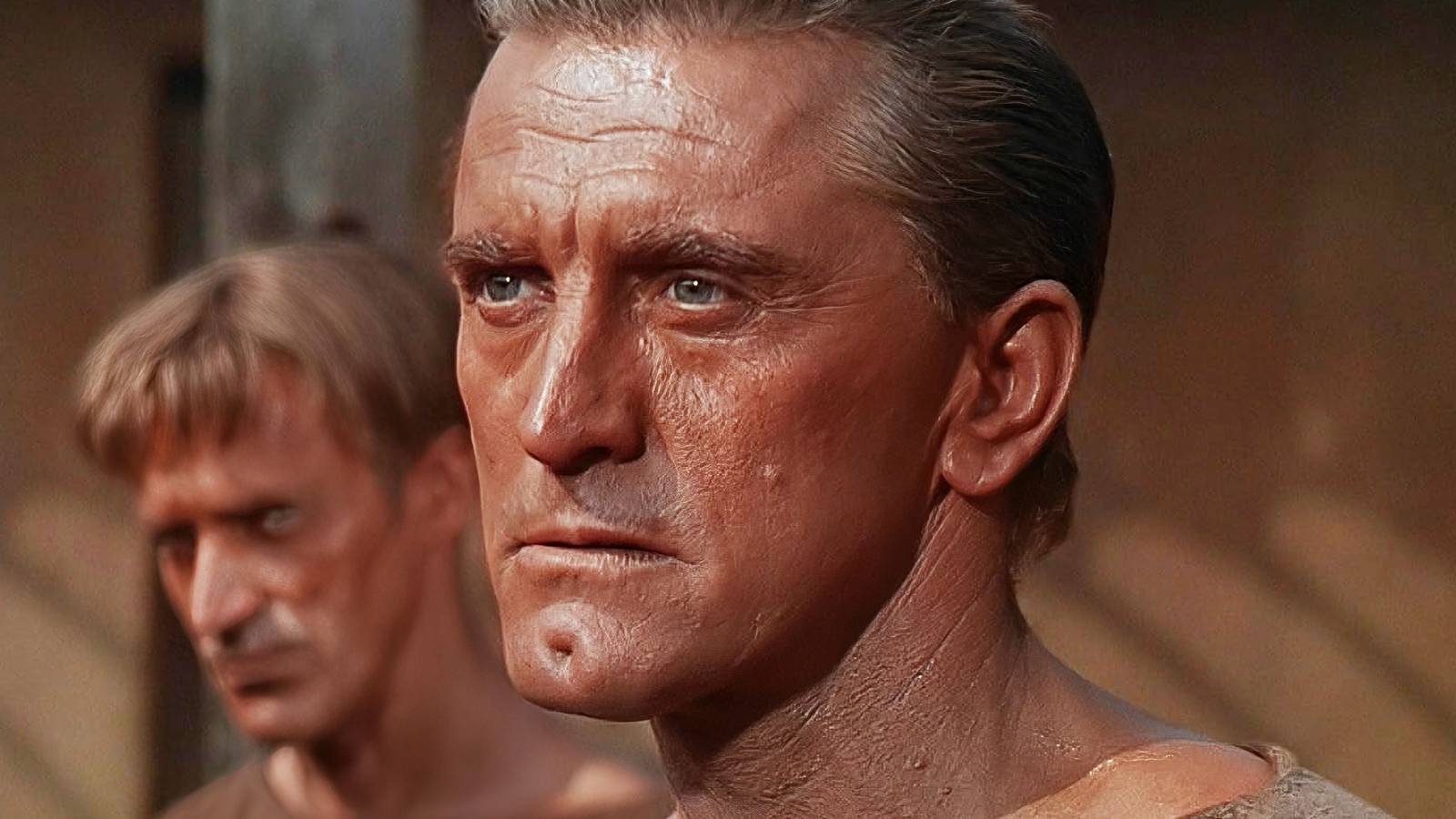
Kubrick's only true for-hire project, Spartacus, is a colossal historical epic that showcases his ability to handle massive scale. Taking over from Anthony Mann early in production, Kubrick clashed with star Kirk Douglas and the studio, yet still managed to craft a film that stands apart from other sword-and-sandals spectacles. The battle sequences are breathtaking, featuring thousands of extras in a way that feels far more visceral than modern CGI armies. The film's ensemble, including Douglas, Laurence Olivier, Charles Laughton, and Jean Simmons, is uniformly excellent.
While Kubrick himself later distanced himself from the film, Spartacus remains a powerful and entertaining epic. It was a massive commercial success and earned multiple Oscar nominations, solidifying Kubrick's reputation as a director who could handle big-budget productions. It may not have the personal stamp of his later work, but its sheer ambition and spectacle make it a must-watch for any fan of classic cinema.
2. Dr. Strangelove (1964)
With Dr. Strangelove: or How I Learned to Stop Worrying and Love the Bomb, Kubrick delivered one of the sharpest political satires ever put on film. This Cold War black comedy, starring Peter Sellers in three iconic roles, skewers the absurdity of nuclear brinkmanship with devastating wit. The film's tension is palpable, yet it's laced with a dark humor that makes it both hilarious and terrifying. Sellers is a revelation, whether as the bumbling President Muffley, the stiff British officer Mandrake, or the wheelchair-bound former Nazi scientist Dr. Strangelove.
The film's ending, with Slim Pickens riding the bomb like a rodeo cowboy, is one of cinema's most memorable and chilling images. Dr. Strangelove is a masterclass in using comedy to address serious themes, and its relevance has only grown in the decades since its release. It's a film that makes you laugh while simultaneously making you question the sanity of those in power.
1. 2001: A Space Odyssey (1968)
Topping this list is 2001: A Space Odyssey, a film that redefined science fiction and remains a monumental achievement in cinematic history. This ambitious and visually stunning epic takes viewers on a journey from the dawn of man to the far reaches of space and beyond. The film's slow, deliberate pacing and minimal dialogue are a bold choice, but they create an immersive and awe-inspiring experience. The special effects, which were groundbreaking for their time, still hold up remarkably well today.
From the iconic match cut of a bone to a spaceship to the haunting confrontation with the sentient computer HAL 9000, 2001 is filled with unforgettable moments. It's a film that invites interpretation and rewards repeated viewings, exploring themes of evolution, technology, and humanity's place in the universe. While some may find its ambiguity frustrating, it's precisely that open-endedness that has cemented its status as a masterpiece. For those who appreciate top-tier sci-fi, this is the gold standard. Kubrick's 2001 is not just a movie; it's an experience, and it stands as the crowning achievement of his incredible decade.
Kubrick's four films from the 1960s are a remarkable testament to his genius. Each one is a distinct and influential work that has left an indelible mark on cinema. Whether you prefer the epic scale of Spartacus, the dark humor of Dr. Strangelove, or the mind-bending vision of 2001, there's no denying the power of these films. They are essential viewing for anyone who loves the art of filmmaking.