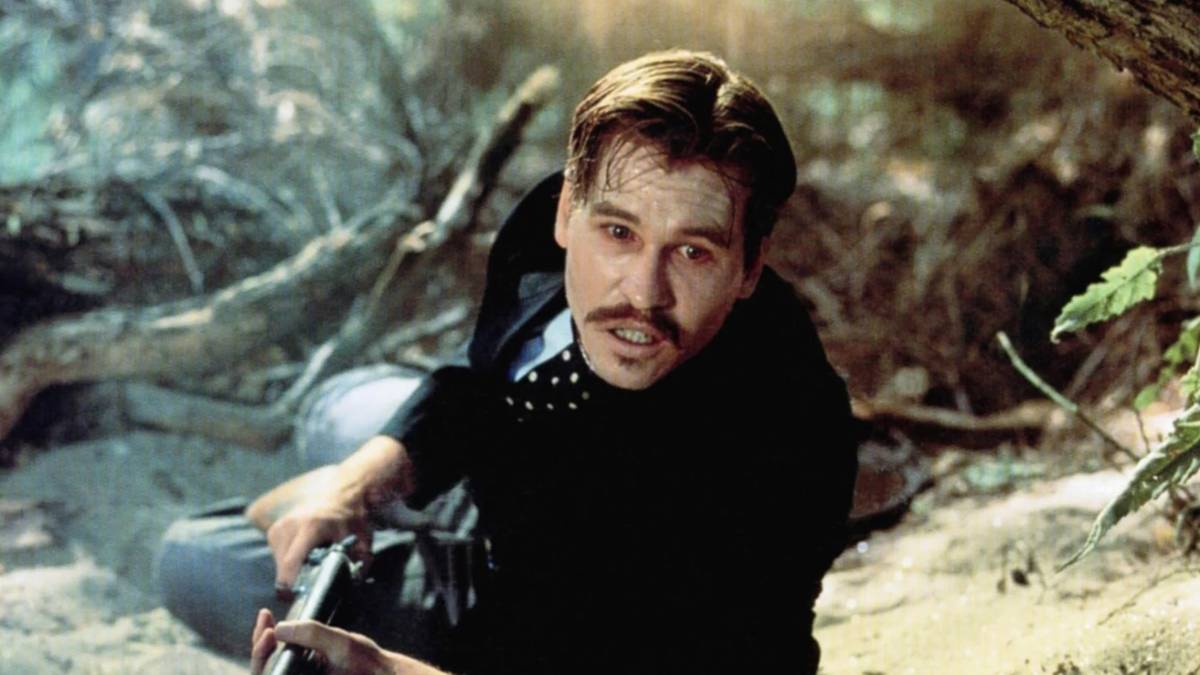
Val Kilmer's portrayal of the consumptive gambler Doc Holliday in the 1993 Western Tombstone stands as one of the genre's most iconic performances. The film, which arrived during a renaissance for Westerns following hits like Dances with Wolves and Unforgiven, has earned a massive and enduring fanbase. While the movie is packed with memorable characters and sharp dialogue, Kilmer's scene-stealing turn is frequently cited as its beating heart. Surprisingly, this career-defining role almost didn't come to pass, and we have the legendary Marlon Brando to thank for changing Kilmer's mind.
The Brando Mandate: An Actor's Western Rite of Passage
Marlon Brando may not be the first name associated with cowboy flicks, but he held the genre in profound esteem. In his later years, he shared this reverence with his friend, Val Kilmer. According to Kilmer's memoir, I'm Your Huckleberry, Brando once insisted that every serious actor must make at least one Western. When a surprised Kilmer asked why, Brando simply replied, "You know damn well why."

Kilmer later reflected that Brando saw the Western as essential for American actors because it forces a confrontation with the nation's complex history—a past that is both gloriously mythic and brutally sordid. This tension between romantic legend and harsh reality, Brando believed, creates uniquely compelling drama. This perspective deeply influenced Kilmer, shaping how he viewed the opportunity to step into the boots of a legendary figure like Doc Holliday. For more on films that have reshaped the genre, explore our feature on essential modern Westerns.
Kilmer Answers the Call as Doc Holliday
Armed with Brando's wisdom, Kilmer saw the role in Tombstone as an unmissable chance to engage with a foundational American archetype. "I could never give up the chance to play such a character," Kilmer wrote. "That's why when I had the chance to play Doc Holliday, I grabbed it." He was drawn to the project's potential to say something enduring about the American experience, using history as an anchor while remaining relevant to contemporary audiences.
Watching his performance, it's easy to detect a hint of Brando's own naturalistic command. Even amidst a stellar cast led by Kurt Russell, Kilmer dominates the screen with a magnetic, languid intensity. His Holliday is a mesmerizing blend of Southern charm, lethal skill, and gallows humor—a portrayal so definitive it has become the benchmark for all subsequent interpretations of the character. For another look at Kilmer's work in the genre, check out his forgotten Wyatt Earp reunion project.
A Career-Defining Performance in a Perfect Western
Many consider Tombstone to be Val Kilmer's finest cinematic achievement. He didn't just play Doc Holliday; he embodied him with such depth and charisma that he arguably delivered one of the defining performances in Western film history. His ability to oscillate between witty banter and deadly seriousness created a layered character that audiences continue to celebrate decades later.
The film's legacy is a testament to the power of the genre Brando championed. While Tombstone wasn't a sweeping directorial vision like some contemporaries, its sharp script, memorable quotes, and powerhouse performances—spearheaded by Kilmer—have cemented its status as a beloved classic. It proves that the Western's ability to explore themes of justice, legend, and identity remains potent. Fans of the genre's tense showdowns shouldn't miss our ranking of the most satisfying revenge Westerns ever made.
So, while Marlon Brando's name isn't in the credits of Tombstone, his philosophical fingerprint is all over Val Kilmer's legendary performance. His insistence on the Western's importance provided the final nudge Kilmer needed to accept a role that would forever link his name with one of cinema's greatest gunslingers. It's a powerful reminder of how artistic wisdom can be passed between generations, ultimately gifting audiences with an unforgettable piece of film history.