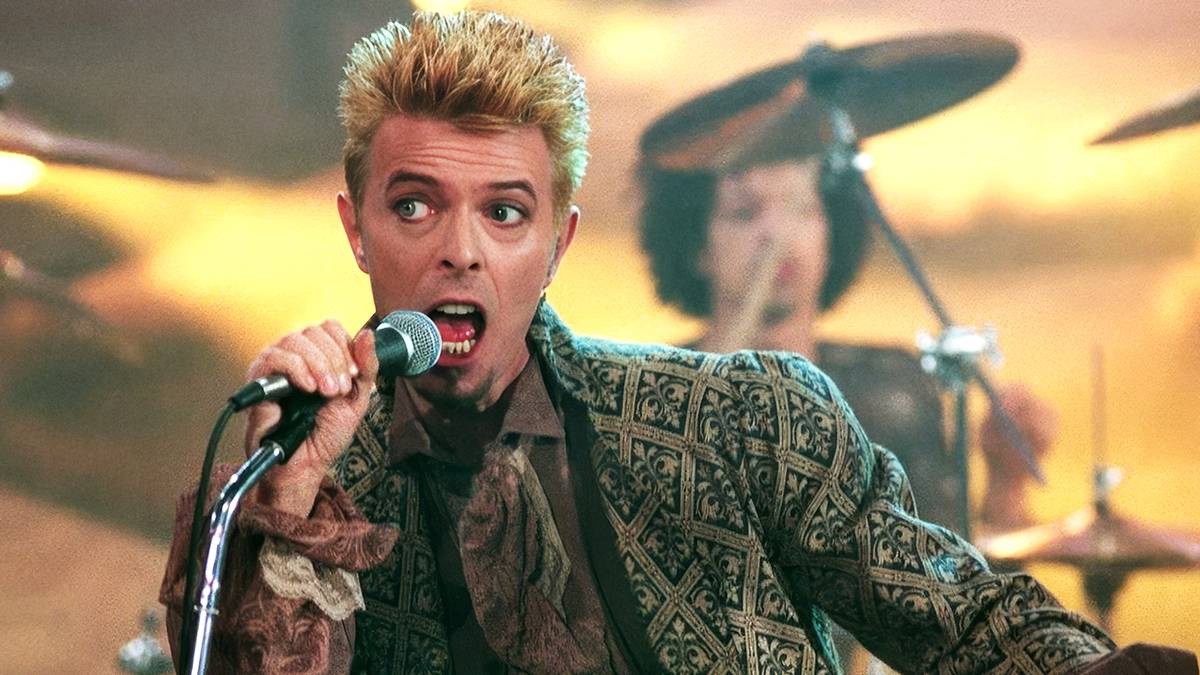
David Bowie spent his entire career shattering musical boundaries, but some of his most forward-thinking work wasn't recognized until decades later. While hits like 'Space Oddity' immediately signaled a new era, other tracks quietly planted seeds that would bloom into entire genres. One such song is 'The Man Who Sold the World,' a 1970 gem that essentially predicted alternative rock long before the term existed.
A Song Ahead of Its Time
Released on Bowie's third studio album of the same name, 'The Man Who Sold the World' initially slipped under the radar. It wasn't a single, and few paid it special attention. But as alternative rock exploded in the 1990s, the song was rediscovered and recognized as a blueprint for the genre. Its hypnotic riff, minor-key melody, and eerie atmosphere sounded like a prophecy of what was to come.

The Nightmare of Making It
Despite its eventual iconic status, the recording process was a struggle. Bowie worked with longtime producer Tony Visconti, who later recalled that the singer was undergoing a creative and personal transformation. 'This was the beginning of [Bowie’s] new style of writing—’I can’t be bothered until I have to’,' Visconti said. 'When it was finished, on the last day of the last mix, I remember telling David, ‘I’ve had it, I can’t work like this anymore—I’m through’.' Bowie himself admitted, 'It was a nightmare, that album. I hated the actual process of making it.'
The Sound of a Revolution
The track opens with a repetitive electric riff in a minor key, layered over Bowie's acoustic guitar. The riff loops throughout, paired with rushed bass scales and Bowie's almost sinister vocal delivery, creating a trance-like effect. Lyrically, the song is ambiguous—often interpreted as Bowie meeting his future, famous self. He sings, 'I laughed and shook his hand / And made my way back home / I searched for form and land / For years and years I roamed.' Bowie described the writing as 'a part of myself that I was looking for,' adding that he was in 'as near to a mystical state that a 19-year-old can get into.'
Nirvana's Unplugged Revival
In 1993, Nirvana performed 'The Man Who Sold the World' on MTV Unplugged, and their rendition became legendary. Kurt Cobain's raw, haunting delivery made the song feel like it was always meant for grunge. Bowie appreciated the cover but found it bittersweet after Cobain's death. 'It’s a very sad rendition, of course. Because it is so tied up with [Kurt Cobain’s] own life and death,' Bowie said. 'It really had two mystical states. The time I wrote it and recorded it, and the time when he recorded it.'
This David Bowie track was misunderstood in its day, but Nirvana's cover proved that the Thin White Duke was simply ahead of the curve. For more on how classic rock icons broke the mold, check out When Classic Rock Broke the Mold: Queen, Bowie, Led Zeppelin, and The Doors' Rule-Defying Masterpieces. And if you're curious about other artists who predicted future trends, see Why M. Night Shyamalan's Most Hated Film Is Actually His Favorite.