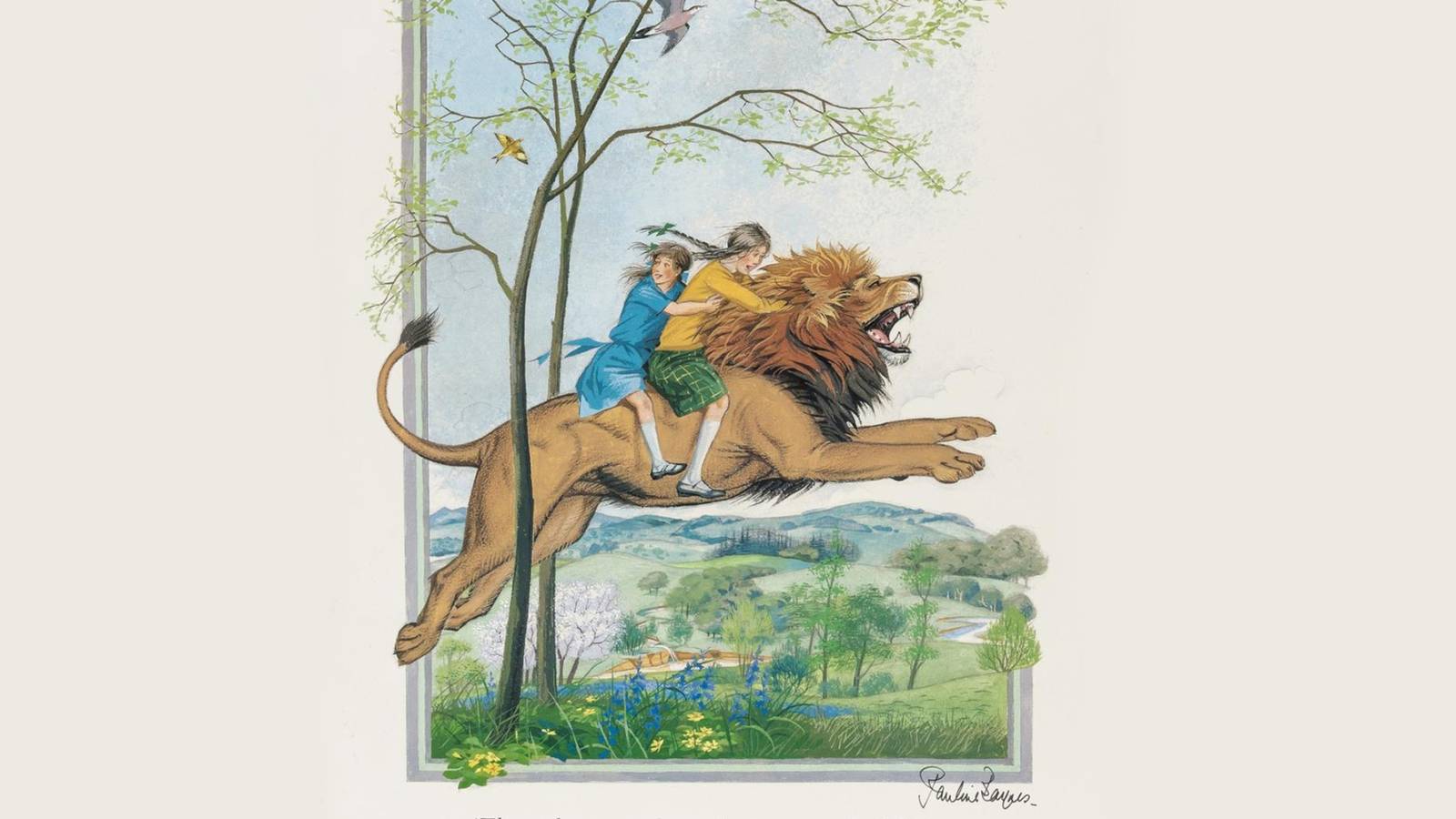
For decades, readers have returned to C.S. Lewis's The Chronicles of Narnia to uncover hidden layers of meaning. With Greta Gerwig's upcoming Netflix adaptation of The Magician's Nephew stirring up conversation, fans are diving back into the series with fresh eyes. And one tiny detail in the original books might just change everything we thought we knew about the saga's ultimate villain.
In The Last Battle, the final installment, we meet Tash—a monstrous, vulture-like deity worshiped by the Calormenes. This demonic figure emerges from the shadows to devour all in its path, and its influence ultimately contributes to Narnia's downfall. But where did Tash come from? The answer may lie in an illustration from The Magician's Nephew, the prequel that chronicles Narnia's creation.
Pauline Baynes, the original illustrator for the series, created artwork that Lewis himself approved. In one of her drawings for The Magician's Nephew, we see Digory Kirke and Polly Plummer exploring the ruined world of Charn, home of the future White Witch, Jadis. Among the ancient symbols carved into a doorframe, there's a face that bears an uncanny resemblance to Tash as depicted in The Last Battle. This visual clue suggests that Tash may have been worshiped in Charn long before Narnia existed.
This theory, first floated on Tumblr and later popularized by Stuart Hunt on his YouTube channel Into the Wardrobe, posits that Tash could have been the dark force behind Jadis's rise to power. Perhaps it was Tash who inspired her to use the Deplorable Word, the forbidden spell that wiped out all life on Charn. The "great price" she paid might have been her very soul, explaining her unyielding evil and her later hatred of Aslan.
Even more intriguing, The Lion, the Witch and the Wardrobe reveals that Jadis has Jinn and giant blood—a detail that some scholars connect to the biblical Nephilim, beings born from the union of demons and humans. If that's true, Jadis might have been tied to Tash from birth, making her not just a conqueror but a vessel for demonic power. When she followed Digory and Polly into the Wood Between the Worlds and eventually into Narnia, she may have brought Tash with her, seeding evil into a world that Aslan had just created.
Aslan's warning to Digory that he has "brought evil into Narnia" takes on a deeper meaning if Tash arrived alongside Jadis. While the obvious reference is to the White Witch herself, the presence of Tash would mean that the demonic god has been lurking in Narnia from the very beginning, growing in influence over the centuries until it finally manifests in The Last Battle.
This revelation reframes the entire series. Aslan represents all that is good and pure—Lewis himself described him as a "supposal" of Christ in another world. Tash, by contrast, is the embodiment of evil, the polar opposite of everything Aslan stands for. If Tash has been present since Narnia's dawn, then the battle between good and evil is not just a late-stage conflict but a foundational struggle woven into the very fabric of the world.
While this theory is speculative, it's a testament to the depth of Lewis's world-building and the enduring power of his imagination. For fans who love to explore cult fantasy classics, this hidden detail offers a fresh lens through which to appreciate the series. And with Gerwig's adaptation on the horizon, it's the perfect time to revisit the books and see if you can spot the clues yourself.
Whether or not this theory becomes canon, it's a fascinating reminder that even the smallest details in a beloved series can hold the key to a much larger story. So the next time you pick up The Magician's Nephew, take a closer look at the illustrations—you might just find a demon hiding in plain sight.