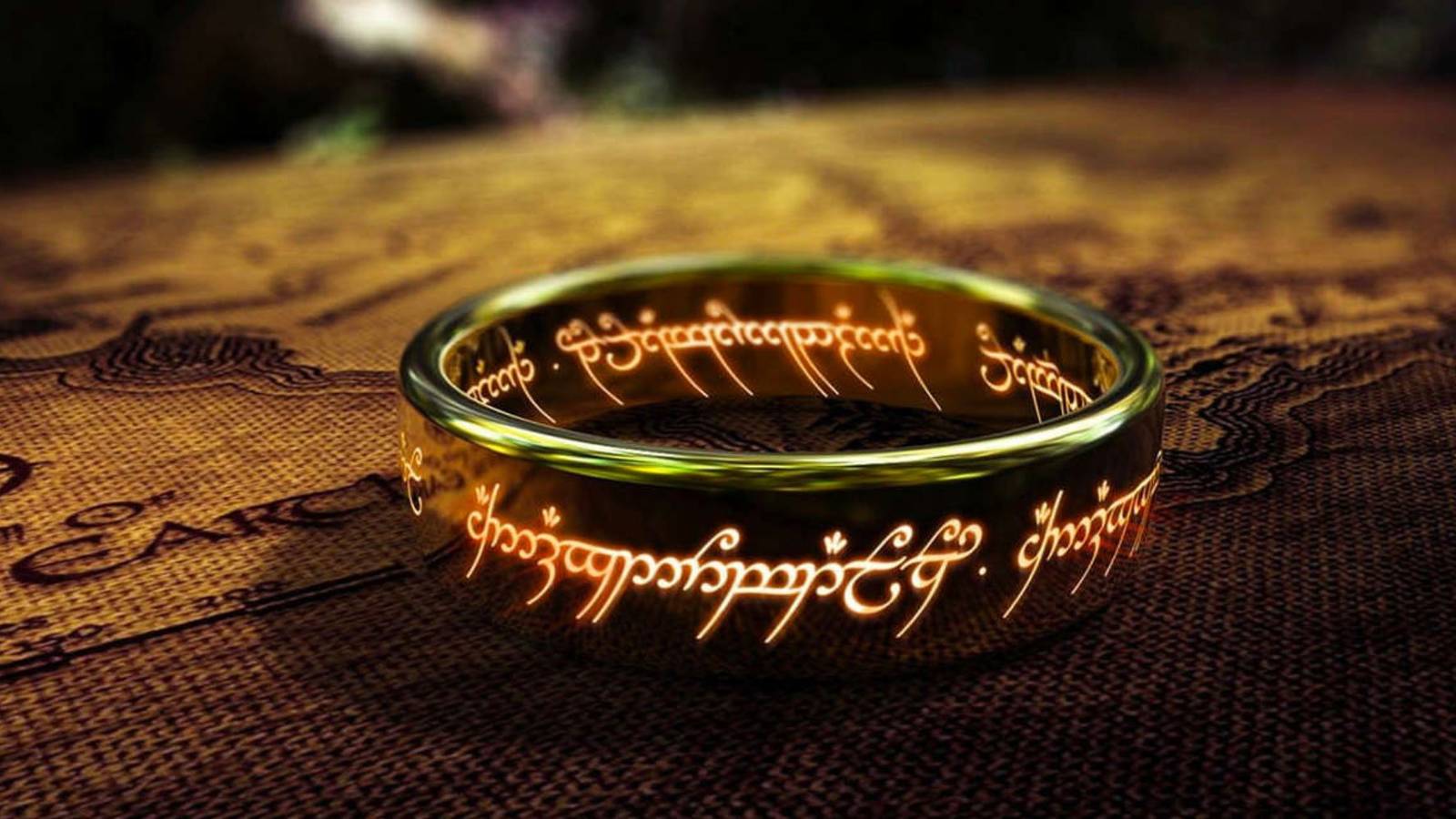
When audiences first heard the ominous chant—"One Ring to rule them all, One Ring to find them"—they knew they were in for an epic tale of power and corruption. But as Galadriel explains in The Fellowship of the Ring, there are actually 20 Rings of Power: three for Elves, seven for Dwarves, nine for Men, and the One. Yet even that isn't the whole story. J.R.R. Tolkien's Legendarium is filled with rings, some magical, some merely symbolic, and each holds a unique place in Middle-earth's history. Here's every ring, ranked by power.
7. The Ring of Barahir
Though it grants no magical abilities, the Ring of Barahir is one of the most cherished heirlooms in Middle-earth. Worn by Aragorn throughout Peter Jackson's trilogy, this ring symbolizes the ancient bond between Elves and Men. Originally given by Finrod Felagund to the mortal Barahir as a token of gratitude, it passed to Beren and eventually to Aragorn, connecting his human and Elvish lineage. In the extended edition, Grima Wormtongue even mentions it to Saruman, confirming Aragorn's identity. It's a ring of legacy, not power.

6. Saruman's Lesser Ring of Power
In the novel, Gandalf notices Saruman wearing a ring and hears him boast as "Saruman Ring-maker." Yes, the White Wizard attempted to forge his own Ring of Power, but his creation was a pale imitation of Sauron's. Its true capabilities remain unknown, suggesting it was a failure. More than a magical artifact, it's a symbol of Saruman's pride and his fall from grace—a wizard trying to copy the Dark Lord and failing miserably.
5. The Lesser Rings
Before Celebrimbor and Sauron (disguised as Annatar) perfected the craft, they forged "lesser rings"—essays in ring-making. Gandalf describes them as "trifles" to the Elven-smiths but still dangerous for mortals. Their powers and fates are largely unknown in canon, though they appear in some non-canonical games. They rank low because they were never meant to be powerful.
4. The Dwarven Rings of Power (The Seven)
Seven rings were given to the Dwarf-lords, but the Dwarves proved more resistant to Sauron's control than he expected. The rings did amplify their greed and wrath, leading to ruin for some. In the books, only Thráin II kept his ring until Sauron took it; two others were recovered by Sauron, and four were consumed by dragons. While not as potent as the Elven or Human rings, they still held considerable power over wealth and corruption.
3. The Nine Rings of Men
These rings turned mortal kings into the Nazgûl, Sauron's most terrifying servants. The Nine granted immense power and extended life, but at the cost of the wearer's will. The Ringwraiths became wraiths, bound to the One Ring. Their power is undeniable, but it's a cursed power—one that serves the Dark Lord.
2. The Three Elven Rings
Forged by Celebrimbor alone, the Three—Narya, Nenya, and Vilya—were never touched by Sauron, making them pure. They preserve beauty, heal, and protect. Galadriel's Nenya, Elrond's Vilya, and Gandalf's Narya each hold immense power for good. They are the most powerful rings not directly under Sauron's control, but they still rely on the One's existence.
1. The One Ring
Forged by Sauron in the fires of Mount Doom, the One Ring is the master ring. It controls the other Rings of Power, amplifies the wearer's abilities, and corrupts all who possess it. Its power is absolute, but it comes with a fatal weakness: it can only be destroyed in the same fire that created it. No other ring comes close to its might.
For more on Middle-earth's treasures, check out our Lord of the Rings Deluxe Illustrated Box Set news. And if you're a fan of epic storytelling, don't miss our list of The 10 Best Epic Movies of the 1950s.