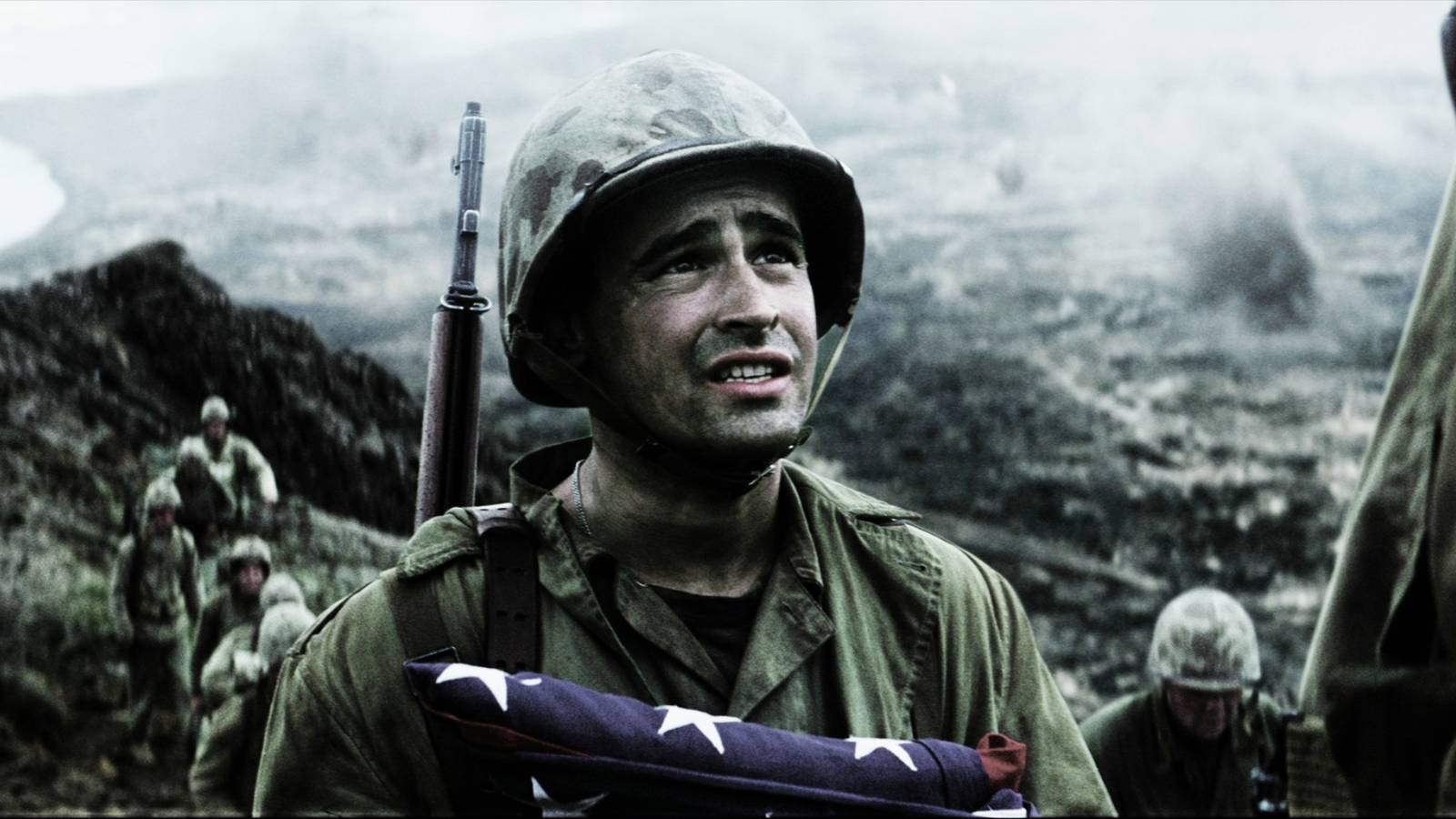
Clint Eastwood's Flags of Our Fathers (2006), a powerful and somber examination of World War II's Iwo Jima battle, is now available to stream for free on Pluto TV. This film, part of Eastwood's late-career exploration of American myths, offers a stark contrast to traditional war movies, focusing on the trauma and the manufactured heroism surrounding one of the war's most iconic images.
Eastwood, who had already deconstructed the Western genre in Unforgiven, turned his critical eye to the American war narrative. Flags of Our Fathers is the first of his two-part look at Iwo Jima, with Letters From Iwo Jima presenting the Japanese perspective. Together, they form a complex, dual-sided portrait of a brutal conflict, but Flags stands alone as a meditation on how nations build legends from the grit of reality.

The Story Behind the Iconic Photo
The film recounts the month-long battle for the island and the raising of the American flag on Mount Suribachi, captured by photographer Joe Rosenthal. Eastwood depicts the initial assault with a grim, matter-of-fact style, but the narrative quickly shifts to the aftermath. When Navy Secretary Forrestal (played with steely resolve) demands the first flag as a souvenir, a second, more photogenic flag is raised—a moment that would become a symbol of victory, even as the fighting continued to rage and claim lives, including that of a young private portrayed by Jamie Bell.
Once the surviving soldiers return home, they are thrust into a propaganda tour to sell war bonds, forced to relive their trauma while the government and media mold them into heroes. Eastwood contrasts the gritty reality of combat with the sanitized, patriotic narrative, creating a poignant and unsettling dissonance.
Eastwood's Ambivalent Vision
Visually, the film is drenched in desaturated, steely tones, a style Eastwood and cinematographer Tom Stern deliberately crafted to evoke melancholy rather than excitement. In interviews, Eastwood has spoken about the soldiers' experiences, noting that the battle, expected to last days, stretched into a month of relentless horror. This somber tone permeates every frame, making Flags of Our Fathers a unique entry in the WWII genre—one that questions the very notion of heroism.
The film's heart lies not in the battle sequences, though they are harrowing, but in the quiet, devastating moments of the survivors' struggles with PTSD, alcoholism, and the weight of a national narrative that doesn't match their memories. It's a film that resonates with the same skepticism Eastwood brought to other recent projects, and it remains one of his most powerful and thought-provoking works.
For those who appreciate cinema that challenges rather than comforts, Flags of Our Fathers is a must-watch. Its availability on Pluto TV makes it easier than ever to experience this masterpiece that continues to resonate. And if you're in the mood for more of Eastwood's directorial prowess, you might also explore other films that explore dark themes.
In a career filled with iconic roles and directorial achievements, Flags of Our Fathers stands as a testament to Eastwood's willingness to confront uncomfortable truths. It's a film that doesn't just show war; it makes you feel its lingering shadow, long after the credits roll.