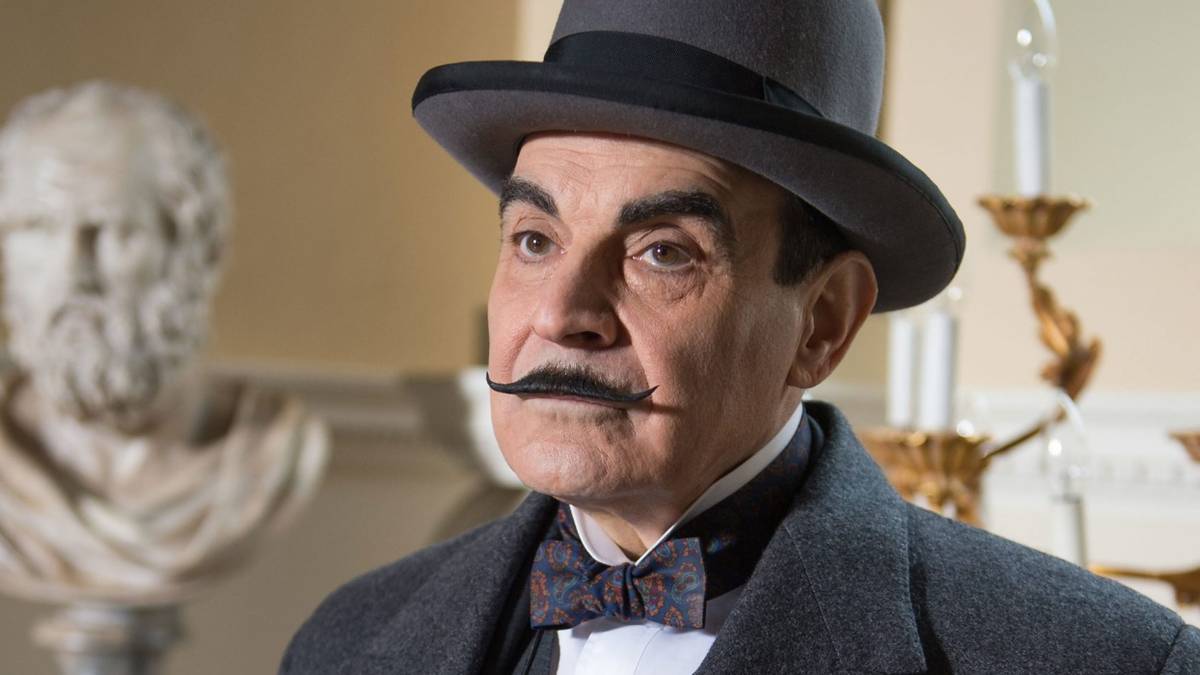
Agatha Christie's name is practically synonymous with the mystery genre. From Hercule Poirot's little grey cells to Miss Marple's sharp observations, her stories have been adapted countless times for film and television. Yet, tucked away in her vast bibliography is a singular anomaly: Death Comes as the End, a novel that has never made it to the screen. Published in 1944, it stands as Christie's only work set outside the 20th century, and it's high time it got its due.
The novel transports readers to ancient Egypt around 2000 BC, in the city of Thebes. This isn't just a change of scenery; it's a complete departure from the drawing-room mysteries Christie is known for. The cast is entirely Egyptian, with no Poirot or Marple in sight. Instead, we follow Renisenb, a young widow who returns to her family's estate after her husband's death. Her homecoming is disrupted when her father, Imhotep, brings home a beautiful and manipulative concubine named Nofret. Nofret's presence ignites long-simmering tensions, and when she turns up dead at the bottom of a cliff, the family's fragile peace shatters. Soon, other members start dying, and Renisenb realizes a killer is among them.
What makes Death Comes as the End so compelling is how Christie seamlessly blends her signature psychological insight with a historical setting. She didn't just slap an ancient backdrop onto a modern mystery; she immersed herself in the era. Christie's second husband, archaeologist Max Mallowan, took her on expeditions to the Middle East, and she drew inspiration from real ancient Egyptian letters and consultations with Egyptologist Stephen Glanville. The result is a story that feels authentic, where the customs and beliefs of the time are integral to the plot.
The novel is often cited as the first historical mystery, and it's a testament to Christie's versatility. She proves that human nature—its jealousies, fears, and capacity for violence—is timeless. The characters in Death Comes as the End are not so different from those in her contemporary works; they're driven by the same passions and flaws. This universality is what makes the story resonate even 4,000 years later.
Despite its merits, the novel has been largely overlooked by adapters. In 2019, the BBC announced a miniseries adaptation, with screenwriter Gwyneth Hughes attached. The project was described as "a very different proposition" from the channel's previous Christie adaptations, like the acclaimed And Then There Were None in 2015. But seven years have passed with no updates, and the project seems to have stalled. It's a shame, because Death Comes as the End has all the elements for a prestige drama: a unique setting, a complex family dynamic, and a murder mystery that keeps you guessing.
One of the most intriguing aspects of the novel is its structure. Unlike Christie's typical whodunits, where clues are laid out for the reader to piece together, Death Comes as the End relies more on process of elimination. Renisenb, our amateur detective, has no forensic tools or experienced investigators to rely on. She must use her instincts and her understanding of her family to survive. This makes for a more claustrophobic and tense read, as the danger feels immediate and personal.
The novel also offers a fascinating glimpse into ancient Egyptian culture, particularly their views on death and the afterlife. Christie's descriptions are vivid, and she weaves in mythology and history without ever feeling like a textbook. It's a rich tapestry that would translate beautifully to the screen, offering viewers a chance to see a side of Christie they've never seen before.
In an era where streaming platforms are hungry for content, and Christie's works continue to be adapted—from BritBox's new Poirot series to upcoming films—it's surprising that Death Comes as the End remains untouched. The novel's unique premise and historical setting could attract both Christie fans and newcomers alike. It's a story that deserves the same prestige treatment as her more famous titles.
As we celebrate the enduring legacy of the Queen of Crime, let's not forget this hidden gem. Death Comes as the End is a testament to Christie's genius, and it's long overdue for its moment in the spotlight. Whether it's a miniseries, a feature film, or even a limited series on a streaming platform, this ancient Egyptian mystery has the potential to be a standout adaptation. Let's hope someone picks up the phone and makes it happen.