The early 2000s marked a turning point for the sitcom. As beloved '90s staples like Friends and Frasier wrapped up, networks took bigger swings, hoping to capture lightning in a bottle with edgier, quirkier concepts. Shows like Arrested Development and It's Always Sunny in Philadelphia proved that risk-taking could pay off—but for every success, there were dozens of misfires that were simply too odd to find an audience.
Some of these failures were ill-conceived adaptations of commercials, while others pushed dark or surreal premises that clashed with network sensibilities. From a talking infant to a family plagued by supernatural misfortune, these five sitcoms tried to reinvent the genre but ended up as cautionary tales.
5. Cavemen (2007)
Turning a series of GEICO commercials into a primetime sitcom was a gamble from the start, and ABC's Cavemen quickly proved why. The show imagined a world where cavemen never went extinct but instead live as a marginalized minority alongside modern humans. Nick Kroll, Bill English, and Sam Huntington starred as three roommates navigating prejudice and everyday life.
Despite the absurd premise, there was potential for sharp social satire—moments where the cavemen try to pass as "sapes" or "smoothies" hinted at something smarter. But the one-note joke wore thin, and the original pilot was overhauled after backlash over its clumsy handling of race metaphors. ABC ordered 13 episodes but pulled the plug after just six aired; the rest were relegated to international markets. The GEICO slogan claimed "it's so easy a caveman could do it," but making a sitcom out of it was anything but.
4. The Pitts (2003)
Created by The Simpsons veterans Mike Scully and Julie Thacker, The Pitts centered on the unluckiest family on Earth. Parents Bob (Dylan Baker) and Liz (Kellie Waymire) faced a never-ending stream of bizarre disasters—exorcisms, a car that falls in love with their daughter, a werewolf curse—yet somehow maintained a relentlessly sunny outlook.
The show felt more like a mid-'90s Nickelodeon cartoon than a primetime live-action sitcom, which makes sense given its creators' pedigree. At its best, it approached absurdist satire, but the dark undertones and corny jokes made for an uneven watch. Fox canceled it after five episodes, leaving two unaired in the U.S. Ironically, a 2007 animated revival was planned with most of the original cast, but it never materialized—perhaps because The Pitts was always better suited to animation.
3. Cracking Up (2004)
Jason Schwartzman starred as Ben, a psychology grad student hired as a live-in therapist for the wealthy Shackleton family. The ostensible patient was youngest son Tanner (Bret Loehr), grieving the loss of the family dog, but it quickly became clear that the entire household was in need of serious help. Ben stuck around to study their bizarre behavior—lying about dead pets, withholding immigration papers, and believing Tobey Maguire was in love with them.
Series creator Mike White later found acclaim with The White Lotus, but Cracking Up was a misfire. The dark humor felt diluted, and serious issues like alcoholism and bipolar disorder were reduced to cheap punchlines. White himself called it "a total disaster" and said Fox's meddling made him relieved when it was canceled after only six of twelve episodes aired.
2. Baby Bob (2002–2003)
What if a six-month-old baby suddenly started talking like a middle-aged man? That was the premise of CBS's Baby Bob, which originated as a FreeInternet commercial before being stretched into a family sitcom. Joely Fisher and Adam Arkin played suburban parents raising the unnervingly verbose infant, brought to life with early-2000s CGI.
While films like Look Who's Talking had explored babies' inner thoughts, hearing full conversations from an infant was more creepy than comedic. The show never explained Bob's condition and relied on dated jokes. Despite the talents of Elliott Gould and Holland Taylor, Baby Bob was canceled after two shortened seasons.
1. The Knights of Prosperity (2007)
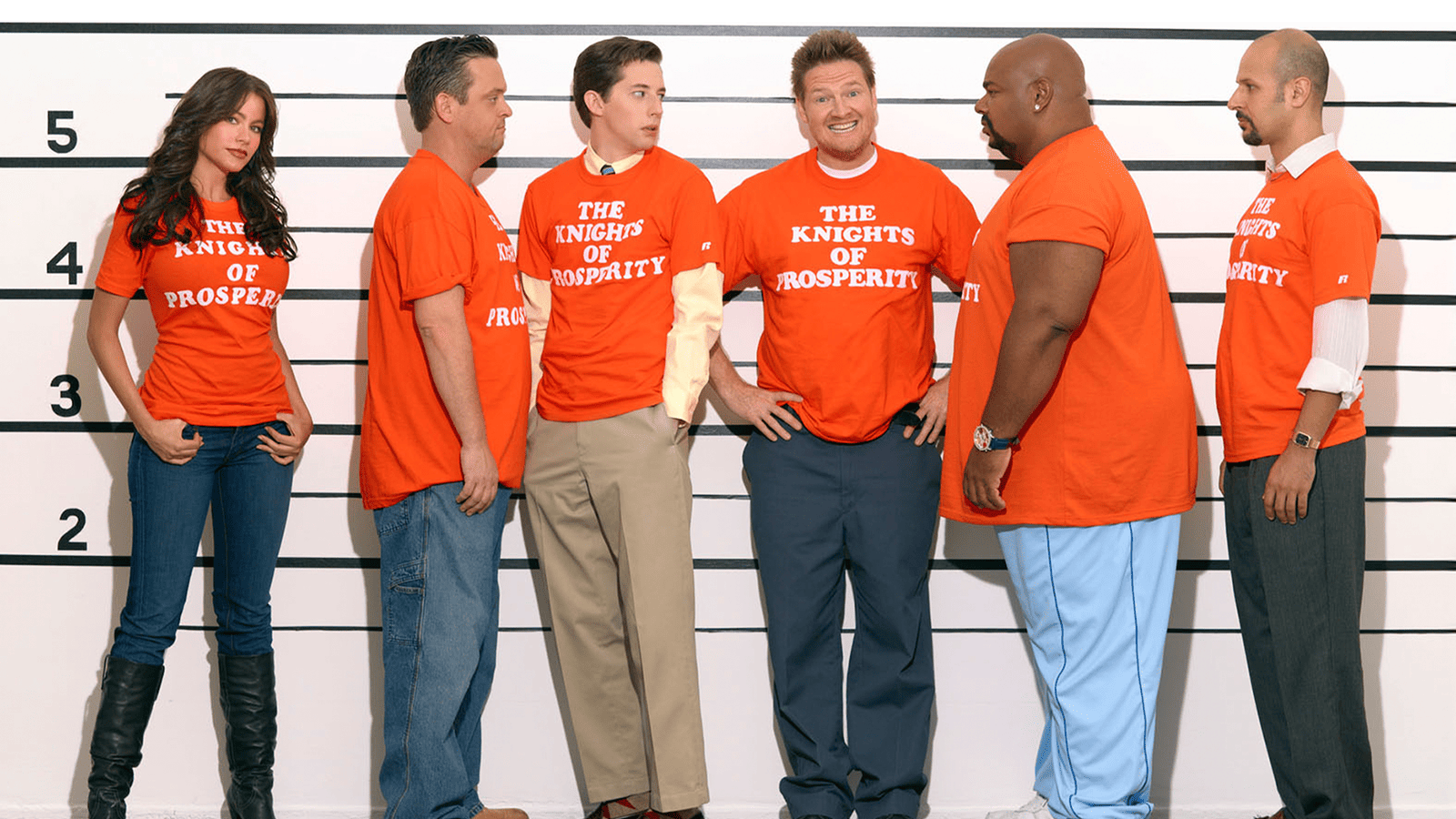
ABC's The Knights of Prosperity followed a group of blue-collar dreamers plotting to rob Mick Jagger's apartment. The quirky heist comedy starred Donal Logue, Sofía Vergara, and Kevin Michael Richardson, and featured Jagger himself in a cameo. Despite a cult following, the show's oddball premise couldn't sustain ratings, and it was canceled after 13 episodes.
These five sitcoms prove that ambition and weirdness don't always equal success. Sometimes, a show is just too strange for its own good—and for network television.