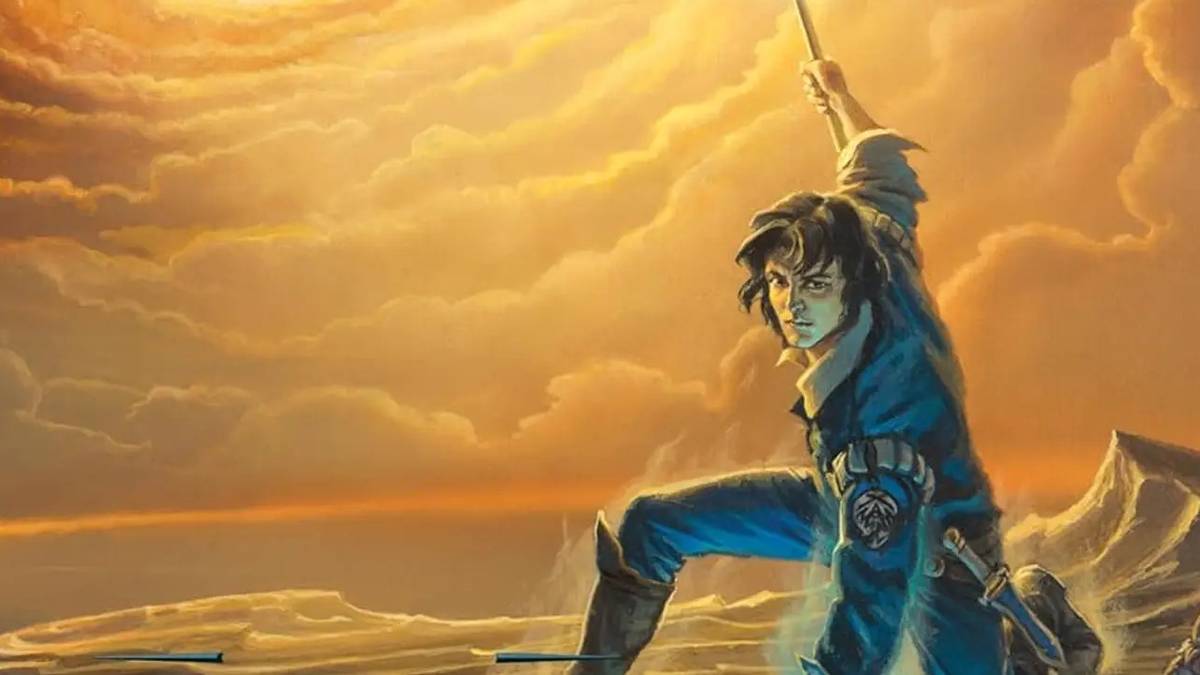
Movies and books tell stories in fundamentally different ways, but that doesn't stop us from comparing the sheer exhilaration, wonder, and emotional impact they deliver. While Hollywood has produced plenty of memorable fantasy blockbusters, some novels simply operate on a level that even the best films can't touch. These are the books that build worlds so rich, characters so complex, and themes so resonant that they leave most movie adaptations—and even original screen fantasies—in the dust.
From standalone epics to series that redefine the genre, here are seven fantasy books that are better than most movies you've seen.
'The Barbed Coil' (1997) by J.V. Jones
The 1990s were a golden age for fantasy literature, pushing beyond Tolkien-inspired tropes into darker, more mature territory. J.V. Jones' The Barbed Coil is a standout standalone portal fantasy that often gets overlooked next to her Sword of Shadows series. But this novel's self-contained story—no sequels required—is a gripping blend of suspense, romance, and immersive worldbuilding that keeps you hooked from the first page. It's the kind of epic that proves a single volume can deliver as much satisfaction as a trilogy.
'The Fifth Season' (2015) by N.K. Jemisin
Winner of the 2016 Hugo Award for Best Novel, N.K. Jemisin's The Fifth Season launches the Broken Earth trilogy, one of the most acclaimed science fantasy series ever written. Its magic system is rooted in real scientific principles, but that's just one layer of a book that also features genre-defying worldbuilding, powerful anti-oppression themes, and chapters written in a stunning second-person perspective. This is climate fiction at its finest—a novel that feels both urgent and timeless.
'The Blade Itself' (2006) by Joe Abercrombie
Not to be confused with the crime thriller of the same name, Joe Abercrombie's The Blade Itself is a landmark of grimdark fantasy. The first book in the First Law trilogy, it follows deeply flawed, morally gray characters through a bleak world with dark humor and sharp subversion of fantasy clichés. Abercrombie's focus on damaged, unlikable protagonists allows for a level of psychological depth rarely seen in blockbuster films—and it's wickedly clever to boot.
'The Lions of Al-Rassan' (1995) by Guy Gavriel Kay
For readers who prefer standalone novels over multi-book commitments, Guy Gavriel Kay's The Lions of Al-Rassan is a masterpiece of historical fantasy. Set in a world inspired by Moorish Spain, it weaves historical realism with a deeply moving tragedy—all without clunky exposition. Kay's ability to build a self-contained epic that feels both intimate and grand is unmatched, making this one of the best standalone fantasies ever written.
'The Golden Compass' (1995) by Philip Pullman
The 2007 film adaptation of The Golden Compass was a disappointment largely because the source material is so extraordinary. Philip Pullman's novel, originally titled Northern Lights, kicks off the His Dark Materials trilogy with a masterclass in tone, symbolism, and psychological depth. Though often categorized as YA, Pullman wrote it for all ages, tackling heavy religious themes and criticism of the Catholic Church with a sophistication that few movies dare to approach.
'A Wizard of Earthsea' (1968) by Ursula K. Le Guin
Ursula K. Le Guin's Earthsea Cycle is one of the most influential fantasy series ever written, and A Wizard of Earthsea remains a cornerstone of the genre. Its exploration of balance, identity, and the power of names has inspired generations of writers and readers. While film adaptations have struggled to capture its magic, the book itself is a quiet, profound masterpiece that proves fantasy can be both simple and deeply philosophical.
These novels remind us that while movies can dazzle with visuals, books have the power to build entire worlds inside our minds—and that's a magic no special effect can replicate. For more epic fantasy recommendations, check out our list of 5 Sci-Fi Books for Fans of 'Dungeon Crawler Carl' or dive into the heaviest sci-fi books ever written.