Christopher Nolan's The Odyssey has taken the cinematic world by storm, dominating both the box office and critical conversations. But for those who've already devoured that spectacle, there's another Homeric adaptation quietly making waves on streaming: The Return, starring Ralph Fiennes. This 2024 film has been climbing the charts on Just Watch, and it offers a radically different—yet equally compelling—vision of Odysseus' story.
While Nolan's film is a sprawling, effects-driven epic that covers the entirety of Homer's poem, The Return takes a more focused approach. Directed by Uberto Pasolini, the script—co-written with John Collee and Edward Bond—zeroes in on the final act of Odysseus' journey: his arrival in Ithaca and his struggle to reclaim his kingdom. The film opens with a weathered, exhausted Odysseus washing ashore, only to find his homeland in ruins, overrun by arrogant suitors vying for Queen Penelope's hand. Disguised as a beggar, he must summon the strength to confront both his enemies and his own trauma from the Trojan War.
Fans of Nolan's version will recognize key moments from the source material, such as the poignant scene where Odysseus' aging dog Argos recognizes his master before dying, or the moment when the servant Eurycleia identifies Odysseus by his scar. But The Return treats these beats with a slower, more contemplative pace, allowing the emotional weight to settle rather than rushing to the next action set piece.
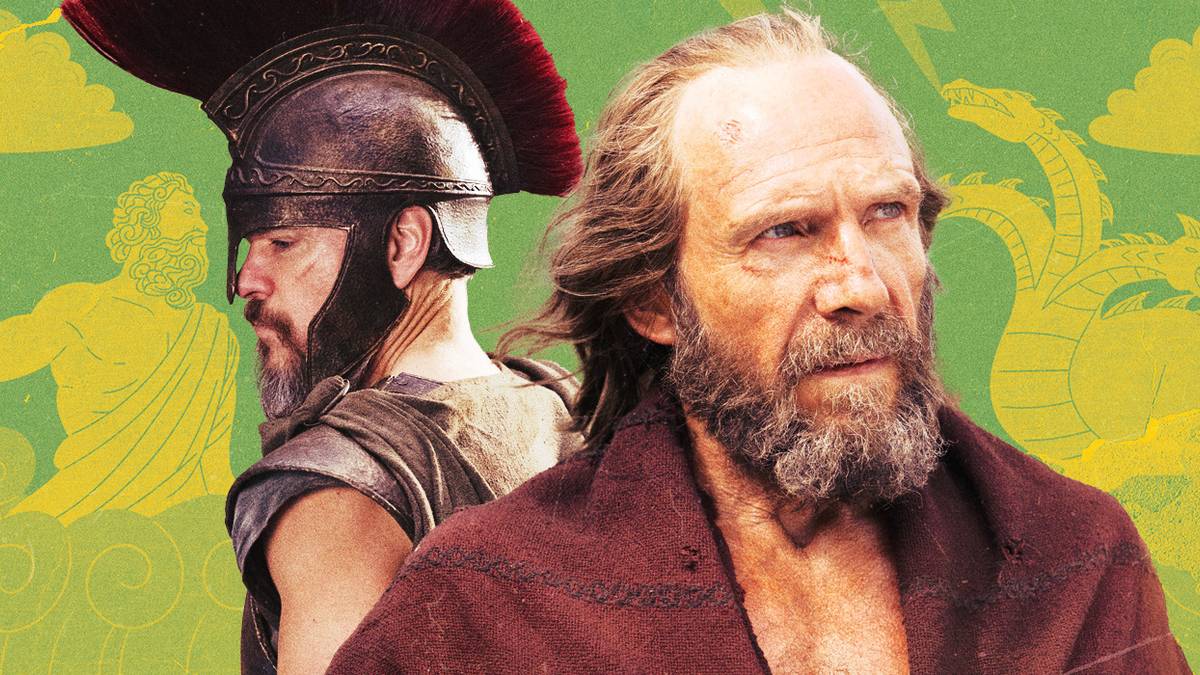
Fiennes delivers a masterclass in portraying a haunted hero. His Odysseus is not just a warrior scarred by battle; he's a man grappling with survivor's guilt. While Matt Damon's Odysseus in Nolan's film is tormented by the moral consequences of his Trojan Horse trick, Fiennes' version is more introspective—he survived while his soldiers perished, and he fears that the man he's become is no longer worthy of Penelope's love. The chemistry between Fiennes and Juliette Binoche, who plays Penelope, is palpable, culminating in a bittersweet, emotionally resonant finale that offers a sense of forgiveness and hope.
Where Nolan's The Odyssey paints on a grand canvas—with a reported $250 million budget and a mythological scope that ties Odysseus' actions to the fall of the Bronze Age—The Return is a more intimate, grounded affair. It's less concerned with cosmic consequences and more with the personal devastation of war and the difficulty of coming home. The suitors in this version are not just obstacles; they're a symptom of a kingdom left without a strong leader, and Odysseus must rediscover his own strength to set things right.
For those who've enjoyed epic fantasy adaptations or gripping dramas, The Return offers a different flavor of heroism. It's a film that rewards patience, with performances that feel achingly real. If you're in the mood for something that explores the psychological toll of war and the fragile nature of love, this is a must-watch.
As The Odyssey continues to dominate theaters, The Return serves as a perfect companion piece—a quieter, more human counterpoint that reminds us that the greatest battles are often fought within. So after you've marveled at Nolan's spectacle, take a moment to appreciate Fiennes' raw, soulful portrayal. It's a journey worth taking.