Christopher Nolan is a filmmaker whose name is synonymous with ambition, spectacle, and mind-bending storytelling. But when it comes to dialogue, the director has often been accused of being a bit, well, clunky. Critics and fans alike have rolled their eyes at some of his more on-the-nose lines, from Interstellar's love speech to a certain line in his upcoming The Odyssey. But what if these supposedly awkward moments are actually the result of a master storyteller working on a level we're not always ready to appreciate?
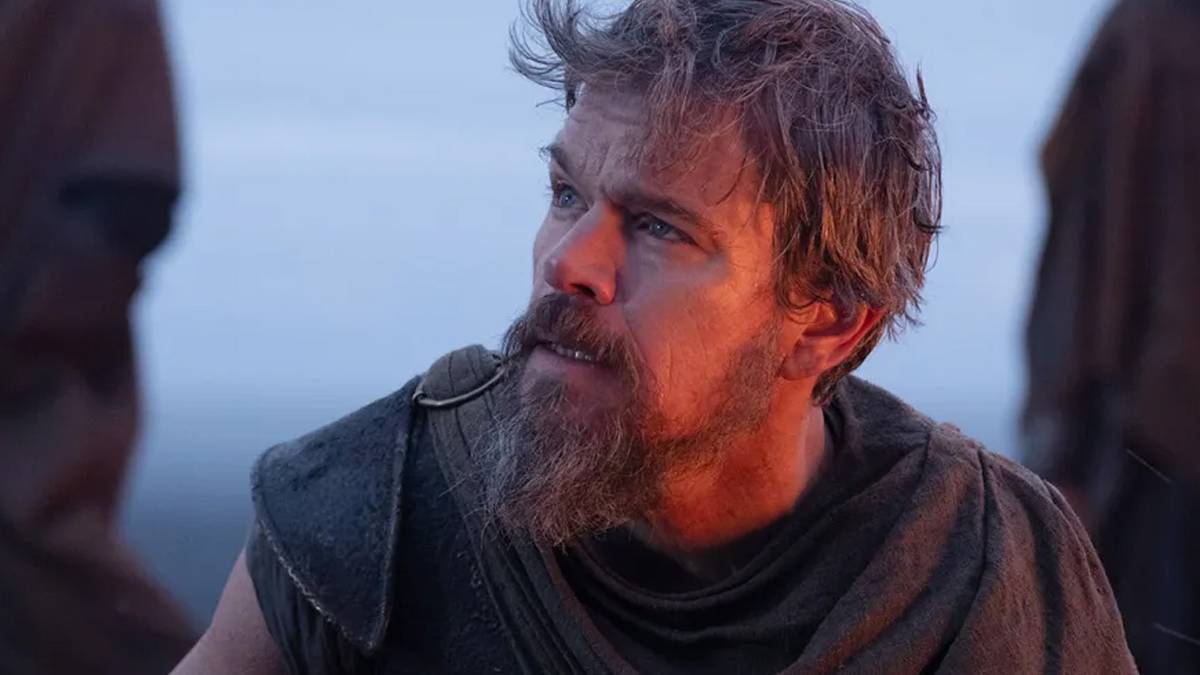
Take, for instance, the line from The Odyssey that has already sparked mockery among test audiences: “Our age of bronze is collapsing.” On the surface, it sounds absurd—how could a character in the Bronze Age know the name of his own era? But as Nolan himself might argue, the line isn't meant to be taken literally. Odysseus isn't using a historical label; he's describing his world in poetic terms. He's saying that the age of bronze, of palaces and trade and language, is coming to an end. It's a lament for a civilization on the brink, not a history lesson.
And it's not just The Odyssey. In Interstellar, Anne Hathaway's character, Brand, delivers a monologue about love being “the one thing we’re capable of perceiving that transcends dimensions of time and space.” It's a line that has been widely parodied and criticized for being too sentimental for a sci-fi epic. But here's the thing: the speech isn't meant to be convincing. In the film, it's a moment of vulnerability, not triumph. The other characters are visibly uncomfortable, and Cooper (Matthew McConaughey) uses it as evidence that Brand's judgment is clouded. The speech is supposed to sound like a desperate plea, not a scientific breakthrough.
Yet, as the film unfolds, we learn that Brand's faith in love isn't just sentimental—it's actually a key to understanding the film's deeper themes. The tesseract, the fifth dimension, the idea that love might be a fundamental force—these are all part of Nolan's grand design. The line that seems clunky on the surface is actually a crucial piece of the puzzle, one that rewards viewers who are willing to look beyond the surface.
Nolan's approach to dialogue is often misunderstood because he doesn't write for the ear; he writes for the idea. His characters speak in a way that serves the film's intellectual and emotional architecture, not necessarily in a way that sounds natural in everyday conversation. This is why his lines can feel stilted or overly explanatory—they're not meant to be realistic; they're meant to be functional.
Consider the way Nolan's Batman trilogy is often praised for its operatic tone, even as some of its dialogue is mocked. The same fans who laugh at “Why so serious?” or “Some men just want to watch the world burn” would never deny the impact of those lines in context. They're memorable precisely because they're so theatrical, so larger than life.
So, the next time you hear a Nolan line that makes you cringe, take a moment to consider what it's really doing. Is it setting up a theme? Revealing a character's inner conflict? Or perhaps, as with The Odyssey, it's a wink to the audience, a nod to the fact that we're watching a story that has been told for millennia. In that context, “Our age of bronze is collapsing” isn't just a line—it's a bridge between the ancient world and our own, a reminder that every era thinks it's witnessing the end of days.
Nolan's dialogue may not always be smooth, but it's never accidental. It's part of a larger design, one that rewards patience and attention. So, before you dismiss his next line as clunky, ask yourself: what if it's actually brilliant?