When people talk about Stephen King's Storm of the Century, they usually bring up the villain Andre Linoge (Colm Feore) and his creepy cane, or the iconic line, "Give me what I want, and I'll go away." They remember the blizzard that buries Little Tall Island under mountains of snow. But what often gets overlooked is the real heart of this three-part miniseries: the way ordinary people slowly talk themselves into disaster. That's where the Twin Peaks comparison actually fits—not because the stories are alike in plot, but because both excel at watching a community unravel under pressure.
Unlike David Lynch's dreamy, surreal world of dancing dwarfs and alternate realities, King's Storm of the Century is grounded in a grim question: How long can a town hold together before fear starts making decisions for everyone? The storm is just an excuse to lock the doors and let the psychological horror begin.

Little Tall Island Becomes Its Own Nightmare
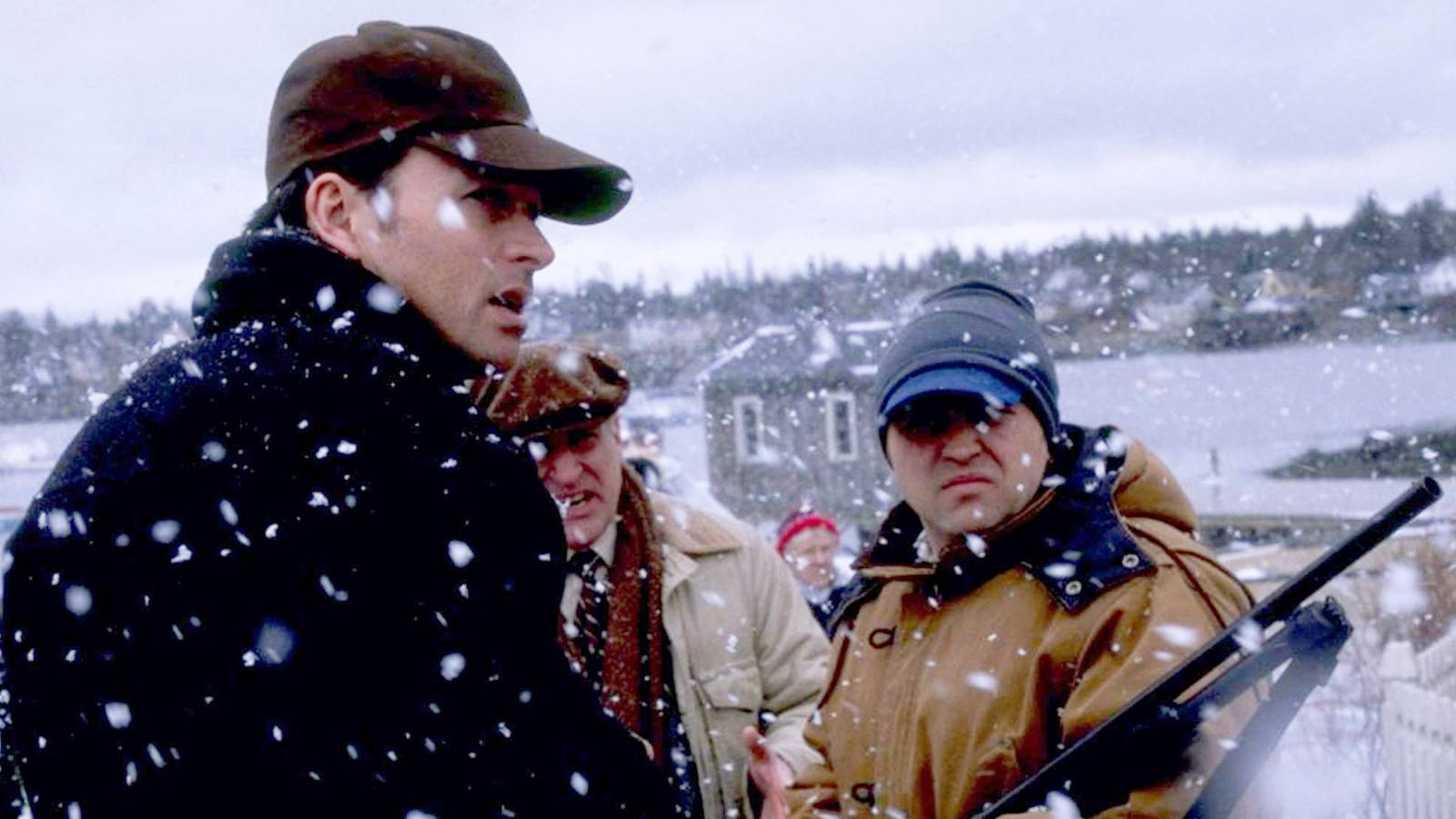
The residents of Little Tall Island start with mundane concerns—stocking up on groceries, bracing for a blizzard. Then Linoge appears, and suddenly the snowstorm feels like the least of their worries. This stranger with a knowing smile turns a town preparing for bad weather into a town preparing for something far worse. King excels at making the setting feel real: these are people who've known each other for decades, shared weddings and funerals, nursed old grudges and hidden secrets. Linoge doesn't create those tensions; he simply drags them into the light.
The town meetings become the most gripping scenes in the miniseries. Everyone shows up thinking they're there to solve a problem, but what unfolds is a community slowly discovering how well—or poorly—it knows itself. Every conversation cracks the foundation a little more. Every argument makes the room feel smaller. It's a masterclass in building dread without relying on jump scares or elaborate mythology.
Andre Linoge: The Calm at the Center of the Storm
Colm Feore's performance is chilling precisely because Linoge never seems interested in frightening anyone. He moves through the story like a man attending a meeting he's already chaired twice. While everyone else panics, he looks amused that they're taking so long to catch up. This is where the Salem's Lot influence creeps in: the horror isn't that evil is arriving—it's that evil unpacked its bags last week and is patiently waiting for everyone to notice.
By the midpoint, the town meetings are more compelling than any supernatural event outside. Neighbors turn on neighbors. Old resentments bubble up. People start making calculations they'd never admit to under normal circumstances. That's the real horror: watching decent people convince themselves that a terrible decision might actually be the reasonable one. Modern horror might throw jump scares or build a convoluted mythology, but Storm of the Century sticks a bunch of frightened people in a room and lets them argue. It works brilliantly.
The miniseries also has a refreshing confidence. It doesn't race toward the next twist or try to constantly surprise the audience. It knows exactly where it's heading and trusts the discomfort of the journey to keep viewers invested. The snow keeps falling, the pressure keeps building, and the town gets pushed closer to a decision nobody wants to make. Twenty-five years later, that's what fans remember—not the cane or the snow, but the image of an entire town sitting around trying to figure out how much of its soul it's willing to trade for a little peace and quiet.
If you're looking for more Stephen King adaptations that capture this kind of slow-burn dread, check out Stephen King's 'The Long Walk' Is the Hunger Games Replacement You Need on Starz. And for other miniseries that excel at psychological tension, see Netflix's Best Miniseries Under 6 Episodes: Ranked.