Every Ian Fleming James Bond novel has eventually found its way to the big screen, but not all of them have been treated with equal reverence. While Casino Royale and From Russia With Love are often praised for their fidelity, many other Bond films have taken only a few threads from the source material and woven entirely new stories around them. This is especially true of later entries, which might borrow just a title, a villain, or a single set piece—No Time to Die being a prime example.
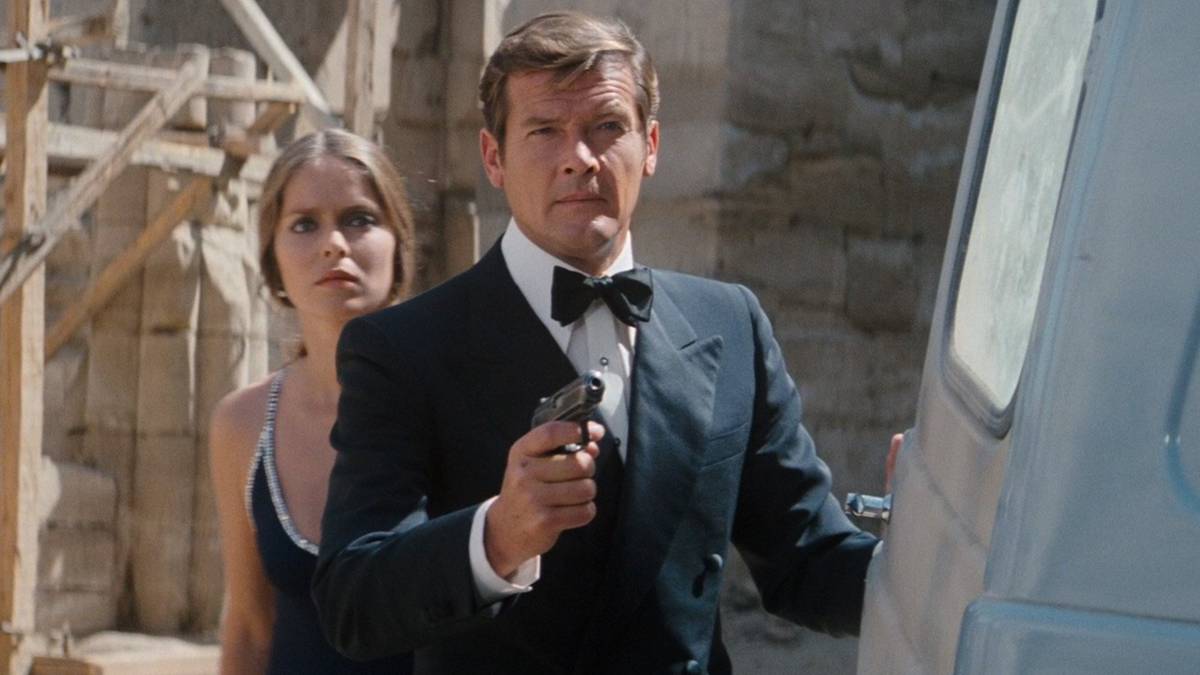
But one Fleming novel stands apart from the rest in this regard. The Spy Who Loved Me technically inspired the beloved 1977 Roger Moore film of the same name, yet the movie shares virtually nothing with the book beyond its title—and that's exactly how the author wanted it. More than six decades after its publication, The Spy Who Loved Me remains the closest thing the Bond franchise has to a permanently unadaptable story. For one, it couldn't possibly work on screen. And two, Fleming himself made sure it never would.
The Roger Moore Film Shares Almost Nothing With the Novel
When readers pick up The Spy Who Loved Me, they're often surprised by how little James Bond actually appears. Fleming made a radical creative gamble by telling the entire story through the eyes of Vivienne "Viv" Michel, a young Canadian woman recounting her troubled romantic history before finding herself trapped overnight in an isolated Adirondack motel. The story is divided into three sections—"Me," "Them," and "Him"—and Bond doesn't appear at all until that last part. And even then, he's been relegated to a supporting character viewed through someone else's eyes.
It's an experiment that didn't go over well. Critics largely rejected the novel upon release in 1962, with many expressing disappointment that Fleming had abandoned the formula of his other Bond books. Fleming himself later admitted the experiment had failed, writing to his editor that it had "obviously gone very much awry." The backlash became so discouraging that he actively tried to suppress the book, blocking a British paperback edition during his lifetime and distancing himself from it more than any other Bond novel. His disappointment had one lasting consequence for the franchise: When Fleming eventually sold the film rights, he permitted producers Harry Saltzman and Albert R. Broccoli to use only the novel's title. The plot, characters, and narrative structure were completely off limits.
So, by the time we got The Spy Who Loved Me on the big screen during the Roger Moore era, we were not really getting much from the book at all. There's underwater supervillain lairs, globe-trotting espionage, Lotus Esprit submarines, and, of course, the iconic henchman Jaws. Believe it or not, Jaws is the only other element of the book included beyond the title. (And even then, his name was originally Horror.) Everything else—the romance with Soviet agent Anya Amasova, Karl Stromberg's underwater city, the ski chases, and the massive tanker battle—was invented entirely for the film. It's one of the most unfaithful book-to-movie adaptations ever.
Today, The Novel Is More Fascinating Than Ever
Perhaps the greatest irony is that The Spy Who Loved Me feels far more distinctive today than it did in 1962. Over 60 years later, modern audiences are much more accustomed to stories told from unexpected perspectives and franchises willing to experiment with structure. A Bond story seen almost entirely through the eyes of an ordinary civilian no longer seems outrageous as it once did. If anything, it feels refreshing. Not to mention, Viv Michel is nothing like the other Bond girls who only exist as accessories to 007. Viv carries the novel emotionally from beginning to end. Readers spend nearly two-thirds of the book inside her head before Bond ever arrives. Who wouldn't love a weird movie sequel like that?
Rather than following the world's greatest spy, the novel asks what it would actually feel like for an ordinary person to encounter someone like James Bond. It's an angle the films have never attempted… and, as the future of the Bond franchise continues to be negotiated, almost certainly never will. As long as Eon Productions honors the agreement Fleming made decades ago, The Spy Who Loved Me will remain the Bond franchise's great cinematic "what if." Every other Fleming novel has found its way onto the screen in some recognizable form. This one exists in a category entirely by itself: the only James Bond story movie audiences will never truly get to see.
For more on how other adaptations have diverged from their source material, check out our look at how Cross on Prime Video breaks new ground beyond James Patterson's books, or see how FX's Say Nothing turns a true crime story into a gripping thriller. And if you're curious about other franchises that have struggled with faithful adaptations, our piece on TV shows that changed course for the worse might interest you.