Arthouse cinema exists on its own terms. It's a realm where traditional plotlines dissolve, clarity is often a suggestion, and the goal is to provoke thought rather than provide simple satisfaction. These films demand engagement, rewarding viewers with experiences that resonate long after the screen fades to black. While not always easy viewing, the masterpieces of the genre offer some of cinema's most profound artistic achievements.
This list celebrates those landmark works. From fragmented narratives to sheer visual poetry, each film below represents a pinnacle of artistic ambition. They challenge, mesmerize, and ultimately transform how we see the world through a lens. For those seeking cinematic journeys beyond the mainstream, these are essential destinations.
10. 'Koyaanisqatsi' (1982)
More a transcendent visual symphony than a conventional movie, Koyaanisqatsi unfolds without dialogue, characters, or plot. Director Godfrey Reggio presents a stunning collage of images—pristine nature, industrial landscapes, teeming urban centers—all set to the iconic, pulsating score of Philip Glass. The Hopi word for "life out of balance" provides both title and thesis, as the film accelerates from serene natural beauty into a frenetic, mechanized world.
Using revolutionary time-lapse and slow-motion photography, the film transforms reality. Cities breathe like organisms, and traffic flows like rushing rivers. The masterful editing creates a hypnotic rhythm, its juxtapositions inviting personal interpretation. It's a pure, overwhelming sensory experience about humanity's relationship with technology and the planet.
9. 'The White Ribbon' (2009)
Michael Haneke's chilling, austere masterpiece is set in a repressed German village on the eve of World War I. A series of unexplained, cruel acts disrupts the community, breeding suspicion and fear among its rigidly disciplined residents. The film is a meticulous moral excavation, suggesting how the seeds of societal violence are sown in the everyday soil of authoritarianism and hypocrisy.
Shot in stark, beautiful black-and-white, the cinematography mirrors the village's emotional frigidity. Haneke constructs an atmosphere of profound unease, where repression simmers beneath a surface of order. It's a brilliant, unsettling study of how moral corruption takes root, earning its prestigious Palme d'Or at the Cannes Film Festival.
8. 'Dancer in the Dark' (2000)
Lars von Trier's heart-wrenching musical drama stars the incomparable Björk as Selma, a factory worker going blind while desperately saving to secure a future for her son. The film brutally contrasts her harsh reality with vibrant musical fantasies that spring from her imagination. These sequences provide fleeting escapes, making the crushing weight of her circumstances even more devastating.
Von Trier radically subverts the musical genre, using its joy to amplify tragedy. The result is an emotionally grueling yet unforgettable experience, powered by Björk's raw, phenomenal performance. It's a film that challenges the viewer's endurance while showcasing breathtaking artistic ambition, also a recipient of the Cannes Palme d'Or.
7. 'Three Colours: Blue' (1993)
The first film in Krzysztof Kieślowski's celebrated trilogy, Blue is a profound meditation on grief and liberty. Juliette Binoche delivers a stunning performance as Julie, who retreats into isolation after tragically losing her family. The narrative focuses almost entirely on her internal landscape—her struggle to sever all emotional ties and find a sterile form of freedom.
Kieślowski uses color, sound, and intimate cinematography to make abstract concepts feel intensely personal. The film questions whether true freedom is found in detachment or in forging new connections. It's a masterclass in visual storytelling that turns deep emotion into a tangible cinematic experience. For more films that achieve a similar level of crafted perfection, explore our list of cinematic masterpieces that achieved perfection.
6. 'The Tree of Life' (2011)
Terrence Malick's magnum opus is a cosmic-scale poem that interweaves the intimate story of a 1950s Texas family with grand visual sequences depicting the creation of the universe and the dawn of life. Through the memories of an adult Jack (Sean Penn), the film explores childhood, grace, nature, and the search for meaning against the backdrop of infinite time and space.
It's a film of breathtaking ambition, juxtaposing dinosaur encounters with suburban growing pains, and whispered prayers with swirling galaxies. The Tree of Life asks fundamental questions about existence, crafting a visual and emotional experience that is both personal and universal, cementing its status as a modern arthouse landmark.
5. 'Persona' (1966)
Ingmar Bergman's psychological labyrinth remains a towering achievement. It follows a nurse, Alma, and her patient, a stage actress named Elisabet who has suddenly stopped speaking. As they retreat to a remote island cottage, their identities begin to blur and merge in disturbing ways. The film dismantles the constructs of self, sanity, and performance.
With stark, mesmerizing cinematography and fearless performances from Bibi Andersson and Liv Ullmann, Persona is a formally daring exploration of the human psyche. Its iconic imagery and fragmented narrative have influenced countless filmmakers, solidifying its place as a cornerstone of cerebral cinema.
4. 'Mirror' (1975)
Andrei Tarkovsky's deeply personal, non-linear film is a stream of consciousness drawn from memory, dreams, and historical newsreel. Eschewing plot, it floats through the recollections of a dying man—his childhood, his mother, his former wife, and pivotal moments in Soviet history. The result is less a story told than a life felt.
A masterpiece of visual poetry, Mirror uses breathtaking, painterly imagery—rain indoors, burning buildings, floating hair—to evoke the elusive texture of memory itself. It's a challenging, profoundly moving work that demands the viewer surrender to its hypnotic, emotional flow.
3. '8½' (1963)
Federico Fellini's semi-autobiographical triumph is a dazzling metafictional whirlwind. It follows Guido, a famous film director suffering from creative block, as his fantasies, memories, and anxieties collide with the pressures of his production. The line between his reality and his rich inner world spectacularly dissolves.
A celebration and critique of the artistic process, 8½ is both exuberant and deeply introspective. Its inventive structure, surreal set pieces, and iconic style have made it the definitive film about filmmaking, inspiring generations of directors to break narrative conventions.
2. 'Hiroshima Mon Amour' (1959)
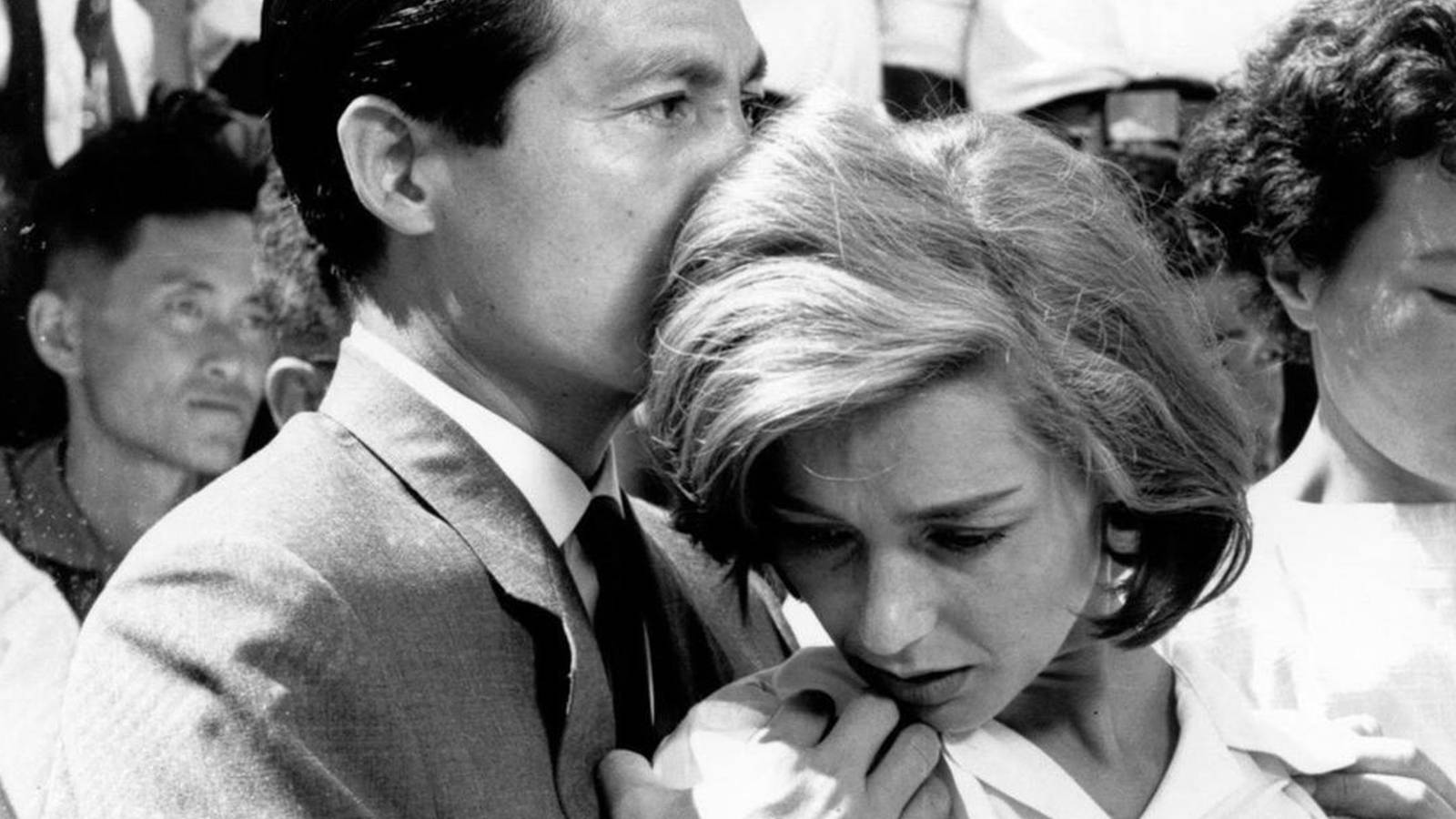
Alain Resnais's groundbreaking debut, from a script by Marguerite Duras, intertwines a fleeting love affair in post-war Hiroshima with traumatic memories of a past romance in occupied France. It's a film about the impossibility of forgetting, both personal heartbreak and historical atrocity.
Through its revolutionary editing and fluid shifts in time, the film creates a powerful dialogue between individual and collective memory. Its poetic, fragmented approach to narrative and theme helped launch the French New Wave and remains a touchstone for emotionally complex, formally innovative cinema.
1. 'Jeanne Dielman, 23, quai du Commerce, 1080 Bruxelles' (1975)
Chantal Akerman's monumental work is a radical exercise in duration and observation. Over three and a half hours, it meticulously documents three days in the life of a widowed housewife, Jeanne Dielman, as she performs her domestic rituals: peeling potatoes, making meatloaf, cleaning, and receiving a client each afternoon to support herself and her son.
The film's hypnotic, real-time pacing and static camera frames transform the mundane into the profound. Every small deviation in Jeanne's routine becomes a seismic event, building an almost unbearable tension that leads to a shocking, inevitable climax. It is a feminist landmark and a revolutionary study of time, space, and repression, recently crowned the greatest film of all time in Sight & Sound's prestigious poll. Its influence echoes in modern character studies, much like the intense focus found in some of the most flawless thrillers since 2020.
These films represent the daring spirit of arthouse cinema. They reject formula to explore memory, emotion, and society in ways that pure entertainment seldom can. While their challenges are part of their power, the rewards—new perspectives, unforgettable images, and deeper emotional understanding—are what make them timeless masterpieces. For those captivated by ranked lists of transformative art, you might also appreciate our exploration of dystopian literature's masterpieces.