Dystopian fiction holds up a dark mirror to our own world, amplifying our deepest societal fears into terrifyingly plausible futures. The most powerful books in the genre don't just entertain; they unsettle us by showing how our current path could lead to ruin. This list ranks the absolute pinnacle of dystopian literature—stories that have defined the genre and continue to resonate with urgent relevance.
10. The Fifth Season (2015)
N.K. Jemisin's groundbreaking novel introduces the Stillness, a supercontinent where civilization is routinely destroyed by catastrophic climate events called Seasons. Society is built around surviving these apocalypses, but it also brutally oppresses the orogenes—people born with the power to control seismic energy. The story masterfully weaves together the lives of three women, presenting disaster not as a singular event but as a relentless cycle that shapes every aspect of life, power, and oppression.

9. The Circle (2013)
Dave Eggers crafts a disturbingly familiar vision of a tech-dominated future where one corporation merges social media, commerce, and surveillance into a single, inescapable system. New employee Mae Holland initially revels in the Circle's utopian campus culture, but soon discovers its sinister core: the total erosion of privacy framed as social progress. The novel's exploration of surveillance capitalism feels increasingly prophetic with each passing year.
8. The Power (2016)
What if teenage girls worldwide suddenly gained a deadly physical advantage? Naomi Alderman's brilliant novel explores this premise not as wish-fulfillment but as a complex study of how power corrupts. As women overthrow patriarchal systems, they establish new hierarchies that are just as brutal. The dystopia emerges from the terrifying speed at which revolution hardens into oppression, making readers question the very nature of power and justice.
7. Do Androids Dream of Electric Sheep? (1968)
The source material for Blade Runner, Philip K. Dick's masterpiece is set in a poisoned, post-apocalyptic San Francisco. Bounty hunter Rick Deckard hunts androids indistinguishable from humans, in a society where real animals are status symbols and empathy is both prized and performative. The novel delves deep into questions of authenticity, consciousness, and what truly makes us human in a world of artificial life and profound moral decay.
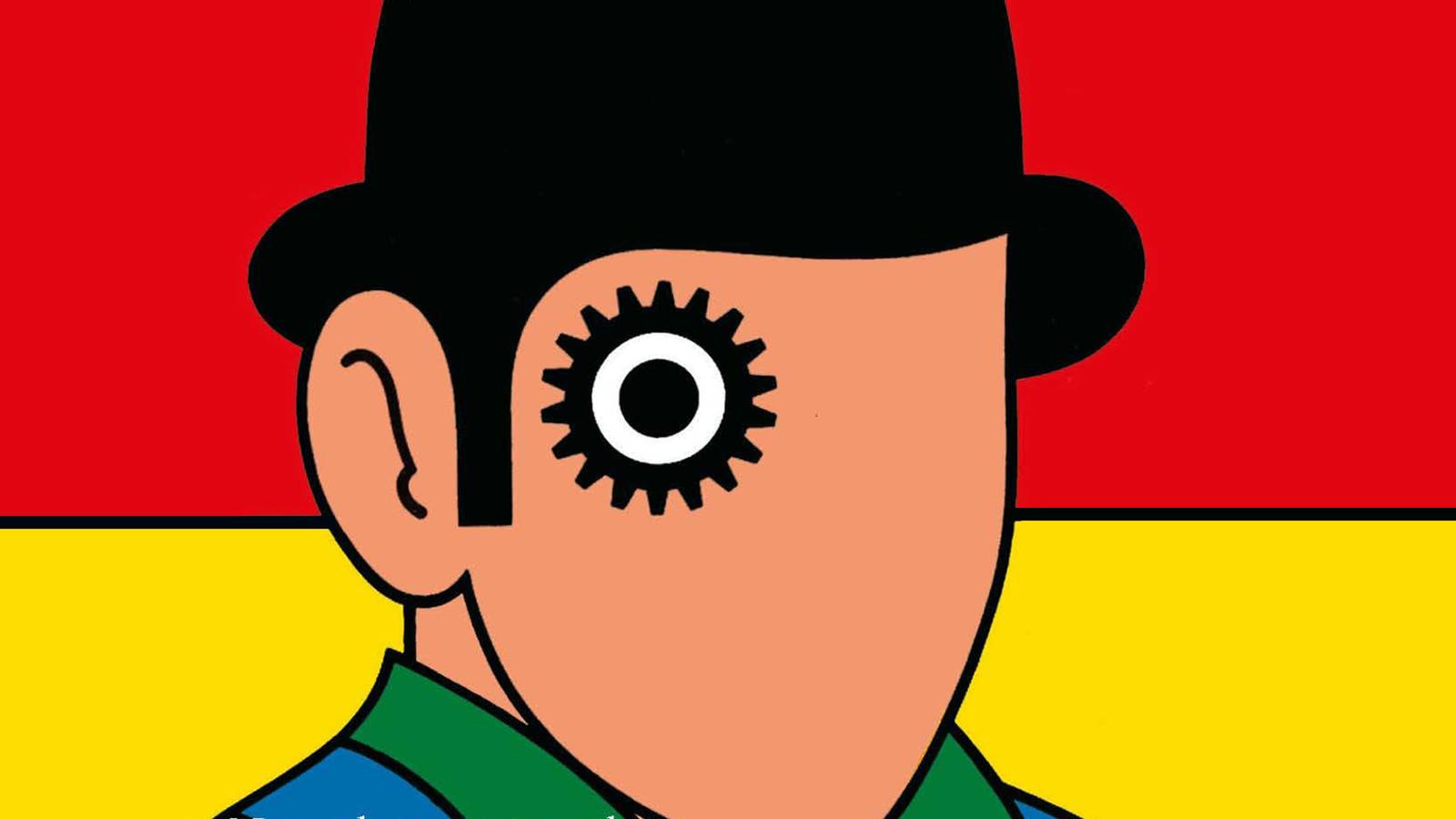
6. A Clockwork Orange (1962)
Anthony Burgess drops readers into a violent future Britain ruled by teenage gangs. We follow the charismatic but monstrous Alex, who undergoes a radical psychological experiment designed to cure him of violent impulses. The state's attempt to engineer morality raises profound questions about free will, the nature of evil, and whether forced goodness has any value at all. Its linguistic invention and moral complexity remain unmatched.
These foundational works paved the way for modern classics that continue to push the genre forward. For fans of cinematic dystopias, our companion piece, From Metropolis to Mad Max, ranks the most chilling visions on screen. Meanwhile, the influence of these books is clear in contemporary hits; for instance, Stephen King's 'The Long Walk' has found new life as a streaming adaptation, proving the enduring appeal of grim futures.
The Unranked Legends
No discussion of dystopian fiction is complete without the titans that defined the genre. George Orwell's Nineteen Eighty-Four gave us Newspeak, Big Brother, and the concept of thoughtcrime—its vocabulary of control remains embedded in our culture. Margaret Atwood's The Handmaid's Tale crafted a theocratic nightmare of gendered oppression that feels perpetually contemporary. Cormac McCarthy's The Road presents a stripped-down, post-apocalyptic hellscape where a father and son cling to humanity itself as their last possession.
Ray Bradbury's Fahrenheit 451 warned against the dangers of censorship and anti-intellectualism in a society addicted to shallow entertainment. Aldous Huxley's Brave New World presented a different kind of hell: one of numbing pleasure and engineered contentment, where people love their oppression. These novels form the essential canon, each offering a distinct and terrifying warning about the paths society might take.
What makes these stories endure is their uncanny ability to feel less like fantasy and more like exaggeration. They take the seeds of our present anxieties—climate change, surveillance, political extremism, technological overreach—and grow them into fully realized worlds of consequence. They challenge us, scare us, and ultimately ask the most important question: what kind of future are we building right now? For more ranked explorations of genre greatness, check out our list of the greatest sci-fi fantasy hybrid films.