Biopics have a reputation for playing it safe. They often zero in on a single chapter of a famous life, tidy everything up into a neat two-hour package, and call it a day. But every so often, a filmmaker decides to throw caution to the wind and take a truly audacious swing at the genre. These are the movies that refuse to be conventional—whether through their sprawling runtimes, their unconventional storytelling, or their sheer visual ambition. Here are the most ambitious biopics ever made, ranked.
10. The Wolf of Wall Street (2013)
Martin Scorsese's The Wolf of Wall Street is a three-hour, coke-fueled rollercoaster that mirrors the chaotic life of Jordan Belfort. It's a film that doesn't just tell you about excess—it immerses you in it, making white-collar crime look thrillingly glamorous before pulling the rug out from under you. The movie's ambition lies in its refusal to moralize, letting Belfort's story unfold with all its messy, unpunished consequences. It's a bold, uncomfortable, and wildly entertaining ride that asks you to sit with the fact that sometimes the bad guys win.
9. I'm Not There (2007)
Bob Dylan is a shapeshifter, so why should his biopic be any different? I'm Not There is a kaleidoscopic portrait that uses six different actors—including a woman and a Black child—to embody different facets of Dylan's persona. It's a film that feels more like a dream than a documentary, capturing the spirit of the artist rather than the literal facts. It's a daring choice that pays off, offering a more truthful representation of Dylan's ever-evolving identity than any straightforward retelling could.
8. Oppenheimer (2023)
Christopher Nolan's Oppenheimer is a three-hour epic that feels both intimate and monumental. It's a biopic that doesn't just cover the life of J. Robert Oppenheimer—it dives into the moral complexities of the atomic bomb, the political witch hunts of the McCarthy era, and the personal turmoil of a man haunted by his creation. Nolan's signature non-linear storytelling and IMAX visuals elevate the genre, making a historical drama feel as urgent and thrilling as any blockbuster. It's a dense, ambitious work that rewards multiple viewings.
7. Amadeus (1984)
Is Amadeus a biopic? It's more of a fictionalized exploration of the rivalry between Mozart and Salieri, but it's so brilliantly executed that it transcends the label. The film is told from Salieri's jealous perspective, painting Mozart as a vulgar genius and Salieri as a mediocre talent who can't comprehend why God chose his rival. It's a meditation on art, envy, and mortality, wrapped in sumptuous period detail and unforgettable music. The ambition here is in the storytelling—taking historical liberties to create something more profound than a simple life story.
6. The Irishman (2019)
Scorsese returns to the mob genre with The Irishman, a sprawling, elegiac epic that spans decades in the life of hitman Frank Sheeran. The film's ambition is evident in its nearly three-and-a-half-hour runtime and its groundbreaking de-aging technology, which allows Robert De Niro, Al Pacino, and Joe Pesci to play their characters across multiple generations. But beyond the technical wizardry, The Irishman is a somber reflection on mortality and the cost of a life of violence. It's a slow burn that demands patience, but its rewards are immense.
5. Malcolm X (1992)
Spike Lee's Malcolm X is a sweeping, three-and-a-half-hour epic that traces the civil rights leader's journey from street hustler to prison inmate to charismatic orator. Lee's direction is unflinching, capturing both the personal transformation and the political firestorm that defined Malcolm X's life. The film's ambition is in its scope—it doesn't shy away from the complexities of its subject, presenting a fully realized portrait that is both inspiring and tragic. Denzel Washington's performance is legendary, and the film remains a towering achievement in American cinema.
4. Mishima: A Life in Four Chapters (1985)
Paul Schrader's Mishima: A Life in Four Chapters is a visually stunning and structurally audacious biopic about the Japanese author Yukio Mishima. The film interweaves three strands: Mishima's final day, his past memories, and stylized adaptations of his novels. The result is a film that feels like a work of art in its own right, using color, music, and theatricality to explore the intersection of art and life. It's a bold, experimental approach that few filmmakers would dare attempt, and it stands as a testament to Schrader's vision.
3. Lawrence of Arabia (1962)
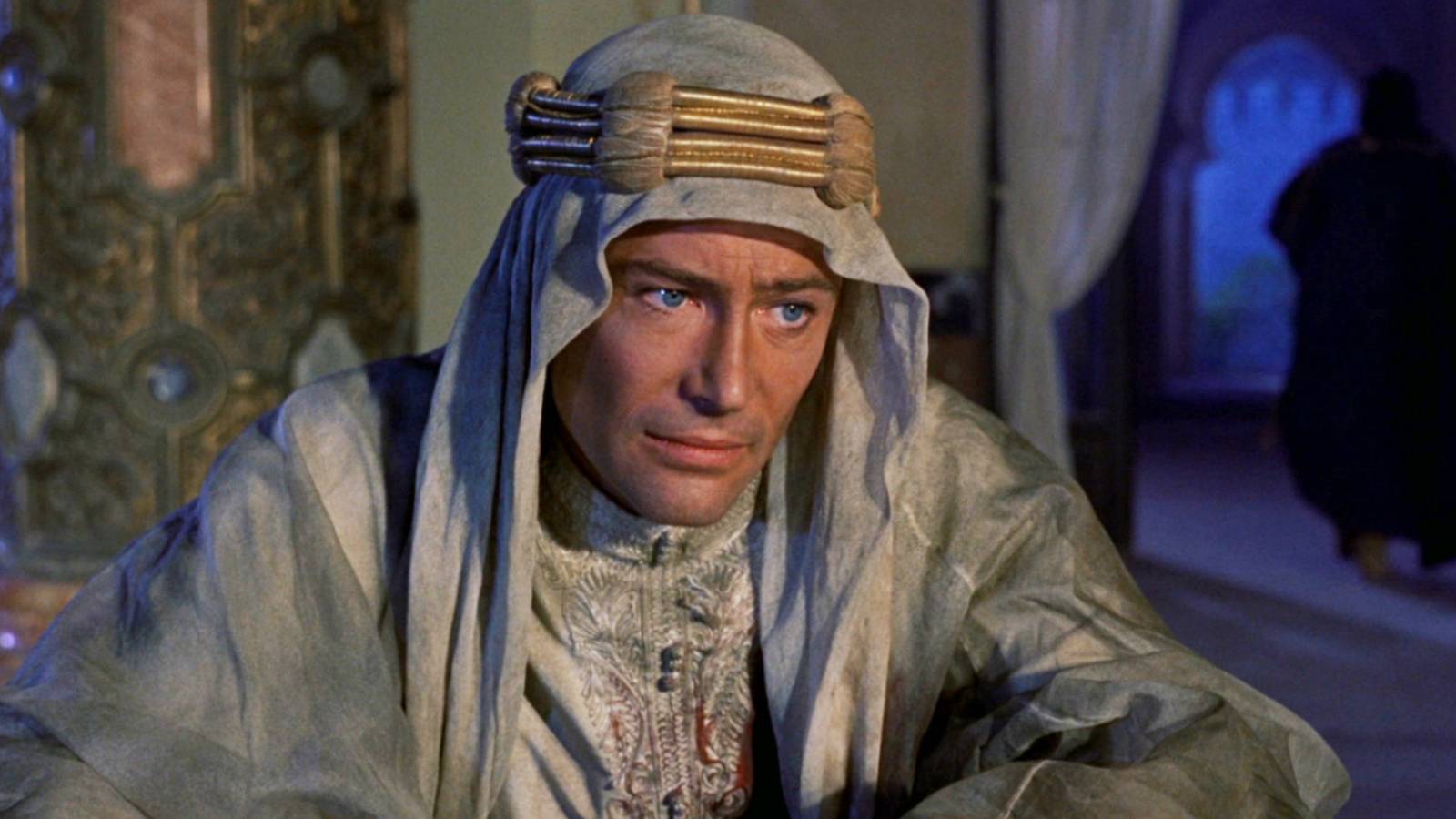
David Lean's Lawrence of Arabia is the granddaddy of ambitious biopics. A four-hour epic shot in breathtaking 70mm, it chronicles T.E. Lawrence's exploits during the Arab Revolt. The film's ambition is in its sheer scale—desert landscapes that stretch to the horizon, battle sequences that feel like operas, and a central performance from Peter O'Toole that is both charismatic and enigmatic. It's a film that redefined what a biopic could be, setting a bar for epic filmmaking that few have since matched.
2. Raging Bull (1980)
Martin Scorsese's Raging Bull is a brutal, black-and-white portrait of boxer Jake LaMotta. It's not a conventional sports biopic—it's a descent into jealousy, self-destruction, and rage. Scorsese's direction is visceral, with fight scenes that are more like nightmares than sporting events. The film's ambition is in its psychological depth, refusing to glamorize its subject and instead presenting a raw, unflinching look at a man's demons. Robert De Niro's transformative performance is legendary, and the film remains a benchmark for artistic ambition in the genre.
1. Citizen Kane (1941)
Is Citizen Kane a biopic? It's a fictionalized portrait of William Randolph Hearst, but it's also so much more. Orson Welles's masterpiece is a technical and narrative tour de force, using non-linear storytelling, deep focus cinematography, and a puzzle-box structure to explore the life of Charles Foster Kane. It's a film that redefined what cinema could do, and its ambition is still unmatched. From its groundbreaking special effects to its layered character study, Citizen Kane remains the gold standard for ambitious filmmaking, biopic or otherwise.
These films prove that biopics don't have to be safe. They can be daring, experimental, and even revolutionary. Whether it's through epic length, unconventional structure, or sheer visual audacity, they push the boundaries of what a life story can be. And in doing so, they remind us that the most interesting lives are rarely simple—and the films about them shouldn't be either.