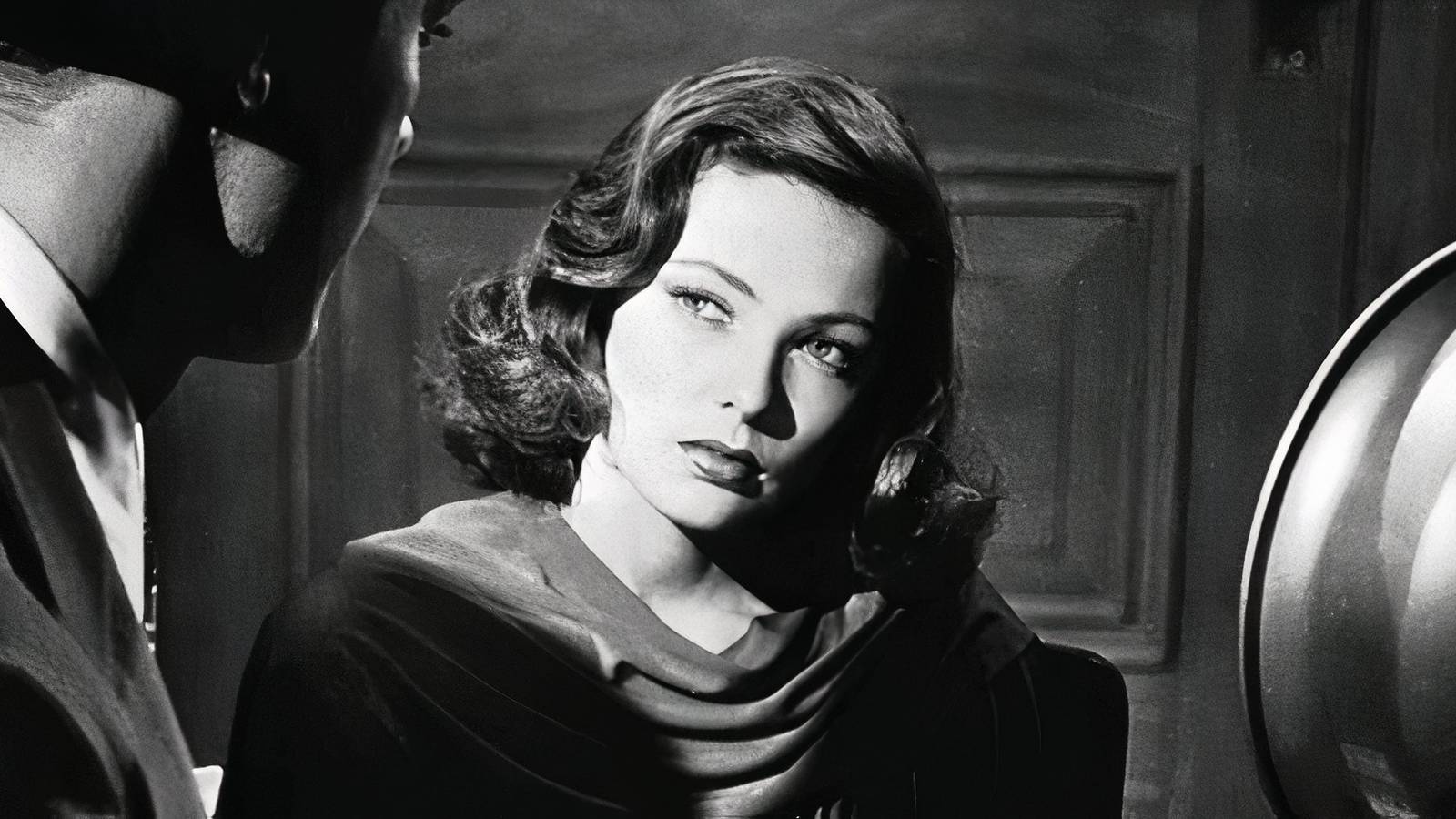
The 1940s were a golden era for cinema, and no genre defined that decade quite like film noir. Born from German Expressionism and hardboiled crime fiction, these movies painted a world of shadows, moral ambiguity, and danger lurking just out of frame. They gave us cynical detectives, femme fatales, and plots that twisted like a winding staircase. Even today, their influence echoes through modern thrillers and crime dramas, proving that noir's dark magic never fades.
From the labyrinthine mysteries of Raymond Chandler adaptations to the psychological tension of Otto Preminger's best work, the 1940s produced some of the most enduring classics in film history. Here are the ten greatest film noir masterpieces of that decade, ranked for their style, storytelling, and lasting impact.

10. 'Murder, My Sweet' (1944)
Edward Dmytryk's Murder, My Sweet introduced audiences to Raymond Chandler's iconic private eye, Philip Marlowe, in a way that would define the character for generations. Dick Powell, known for his musical roles, surprised everyone with his portrayal of the cynical yet charismatic detective. When Marlowe takes a case that spirals into a web of crime and corruption, he finds himself entangled with a deadly dame (Claire Trevor) and a disappearance that hits too close to home.
This film helped establish many of the tropes we now associate with classic noir: the hardboiled detective, the morally ambiguous characters, and the shadow-drenched visuals. Its dreamlike sequences and low-key lighting create an unsettling atmosphere that keeps you on edge. Murder, My Sweet is a cornerstone of the genre, blending Chandler's sharp storytelling with a visual style that would influence countless films to come.
9. 'White Heat' (1949)
James Cagney delivers one of his most explosive performances in Raoul Walsh's White Heat, playing Cody Jarrett, a psychopathic criminal with a mother fixation and a hair-trigger temper. When his mother is murdered, Jarrett orchestrates a daring prison break to exact revenge, unaware that his new cellmate (Edmund O'Brien) is an undercover cop. Cagney's portrayal is both terrifying and magnetic, making Jarrett one of cinema's most memorable villains.
The film captures the essence of noir—bleak, violent, and morally compromised—while also pushing the boundaries of the gangster genre. Its tense pacing and explosive action sequences build to one of the most iconic endings in American film history: "Made it, ma! Top of the world!" White Heat is a must-watch for anyone exploring the darker side of 1940s cinema.
8. 'The Big Sleep' (1946)
Howard Hawks' The Big Sleep is a quintessential noir, starring Humphrey Bogart as Philip Marlowe in a case that gets more complicated with every clue. Hired by a wealthy general to settle his daughter's gambling debts, Marlowe soon finds himself investigating a disappearance that leads him into a world of blackmail, seduction, and murder. The plot is famously convoluted, but that's part of its charm—it's less about the mystery and more about the atmosphere and the chemistry between Bogart and Lauren Bacall.
Bogart's Marlowe is confident, witty, and independent, becoming the template for every noir detective that followed. Bacall brings her own brand of mystery and allure, creating a dynamic that crackles on screen. The film's sharp dialogue and cynical tone are hallmarks of the genre, making The Big Sleep an essential piece of Hollywood's golden age of crime cinema.
7. 'Laura' (1944)
Otto Preminger's Laura is a noir that breaks the rules, with a plot twist that redefines the story halfway through. Dana Andrews plays a detective investigating the murder of a beautiful advertising executive, Laura Hunt (Gene Tierney). As he delves into her life, he becomes obsessed with the woman he never met, uncovering secrets that challenge everything he thought he knew. The film earned five Oscar nominations, including Best Director and Best Supporting Actor for Clifton Webb's chilling performance, and won for its stunning cinematography.
With its elegant visuals, haunting score by David Raksin, and a story that explores manipulation and obsession, Laura stands out as a sophisticated and unsettling masterpiece. It's a film that proves noir can be as much about psychological depth as it is about crime and punishment.
6. 'Out of the Past' (1947)
Jacques Tourneur's Out of the Past is often cited as the ultimate film noir, and for good reason. Robert Mitchum plays Jeff Bailey, a former private eye trying to escape his past by running a gas station in a small town. But when his old partner shows up with a job offer, Jeff is pulled back into a world of double-crosses and deadly women, including the enigmatic Kathie Moffat (Jane Greer). The film's non-linear narrative and shadowy visuals are pure noir, and Mitchum's performance is the epitome of cool detachment.
The movie's exploration of fate and the inescapability of the past resonates deeply, making it a favorite among critics and fans alike. Out of the Past is a masterclass in atmosphere and tension, cementing its place as one of the greatest noirs ever made.
5. 'The Maltese Falcon' (1941)
John Huston's directorial debut, The Maltese Falcon, is the film that launched the noir genre into the mainstream. Humphrey Bogart stars as Sam Spade, a private detective who gets drawn into a hunt for a priceless statuette, surrounded by a cast of unforgettable characters, including the duplicitous Brigid O'Shaughnessy (Mary Astor) and the sinister Kasper Gutman (Sydney Greenstreet). The plot is a web of lies and betrayal, with Spade navigating a world where no one can be trusted.
Bogart's portrayal of Spade set the standard for the hardboiled detective—tough, cynical, but with a code of honor. The film's sharp dialogue and intricate plotting made it an instant classic, and it remains a touchstone for crime cinema. The Maltese Falcon is not just a great noir; it's a great film, period.
4. 'Double Indemnity' (1944)
Billy Wilder's Double Indemnity is a textbook example of film noir, with its tale of insurance salesman Walter Neff (Fred MacMurray) and femme fatale Phyllis Dietrichson (Barbara Stanwyck) plotting to murder her husband for the insurance money. The film is narrated by Neff in a confession, adding a layer of fatalism that permeates every scene. The tension builds relentlessly as the plan begins to unravel, and the chemistry between MacMurray and Stanwyck is electric.
Wilder's direction, combined with Raymond Chandler's screenplay, creates a world of moral decay where greed and lust lead to destruction. The film's iconic dialogue and shadowy visuals have influenced countless filmmakers, and it remains one of the most celebrated noirs of all time. Double Indemnity is a must-see for any fan of the genre.
3. 'The Third Man' (1949)
Set in post-war Vienna, Carol Reed's The Third Man is a masterpiece of atmosphere and suspense. Joseph Cotten plays Holly Martins, an American writer who arrives in the city to find his friend Harry Lime (Orson Welles) dead. But as Martins investigates, he uncovers a web of deceit and corruption that leads him to question everything he knew. The film's use of zither music, tilted camera angles, and the iconic sewer chase sequence make it a visual and auditory treat.
Welles' brief but memorable appearance as Lime is one of cinema's great cameos, and his speech about the cuckoo clock is legendary. The Third Man is a film that transcends the noir genre, offering a gripping thriller that also serves as a commentary on post-war Europe. It's a must-watch for its storytelling and its stunning cinematography.
2. 'Notorious' (1946)
Alfred Hitchcock's Notorious is a spy thriller that blends romance and suspense with noir sensibilities. Ingrid Bergman plays Alicia Huberman, a woman recruited by American agent Devlin (Cary Grant) to infiltrate a Nazi ring in Rio de Janeiro. As she gets deeper into her mission, she must marry a Nazi officer (Claude Rains), putting her relationship with Devlin and her own life at risk. The film is a tense exploration of loyalty, sacrifice, and the moral compromises of espionage.
Hitchcock's direction is masterful, with the famous crane shot into Bergman's hand holding a key becoming one of cinema's most iconic moments. The film's psychological depth and moral ambiguity make it a standout in Hitchcock's filmography and a key work of 1940s noir. Notorious is a gripping, emotionally charged thriller that keeps you on the edge of your seat.
1. 'The Big Sleep' (1946) – The Ultimate Noir
While many films could claim the top spot, The Big Sleep stands as the ultimate expression of film noir. It has everything: a complex mystery, unforgettable characters, and a style that defines the genre. Bogart's Marlowe is the quintessential detective, and Bacall's Vivian is the perfect femme fatale. The film's plot may be baffling, but that's beside the point—it's about the mood, the dialogue, and the chemistry between its stars.
From its opening scene to its final shot, The Big Sleep immerses you in a world of shadows and secrets. It's a film that rewards repeat viewings, revealing new layers each time. For those looking to understand why film noir remains so beloved, this is the essential starting point. It's not just a great noir; it's one of the greatest films ever made.
These ten films represent the pinnacle of 1940s noir, each contributing to a genre that continues to inspire and captivate audiences. Whether you're a longtime fan or new to the style, these masterpieces are essential viewing. And if you're hungry for more, check out our list of heart-pounding thrillers or explore essential action classics for more cinematic thrills.