Film noir isn't just a genre—it's a mood. A world of cynical detectives, femme fatales, and doomed heists, all bathed in stark black-and-white shadows. Born from the hardboiled pages of Raymond Chandler and Dashiell Hammett, classic noir took hold in the 1940s and flourished through the 1950s, leaving an indelible mark on cinema. These films continue to influence modern storytelling, from neo-noir thrillers to contemporary crime dramas. Here are the ten most undeniable film noir classics, ranked.
10. 'The Killers' (1946)
Robert Siodmak's The Killers opens with one of the most iconic sequences in noir history: two hitmen arrive in a small town, and we know—inevitably—that someone is about to die. Based on Ernest Hemingway's short story, the film stars Burt Lancaster in his debut as Pete Lund, a former boxer turned gas station attendant whose murder is investigated by insurance detective Jim Reardon (Edmond O'Brien). Through flashbacks, we uncover Lund's tangled past with a beautiful woman (Ava Gardner) and a botched robbery. The film's stark cinematography and sense of doom earned it four Academy Award nominations, including Best Director.
9. 'The Killing' (1956)
Stanley Kubrick's The Killing is a heist film that refines noir to its essence. Sterling Hayden plays Johnny Clay, a just-paroled criminal who assembles a team for one last score. But as in any great noir, fate—and human weakness—conspire against them. The film's nonlinear structure and tight, cynical storytelling make it a blueprint for crime films to come. Every character carries a flaw that quietly dooms the plan, reminding us that in noir, luck is just another name for failure.
8. 'The Big Heat' (1953)
Fritz Lang's The Big Heat is pure, unflinching noir. Glenn Ford stars as Detective Dave Bannion, who uncovers a web of corruption after a colleague's suspicious death. The film's violence is shockingly personal—most famously, Lee Marvin throws scalding coffee in Gloria Grahame's face. Lang's precise compositions and harsh lighting expose a world where justice is compromised and brutality operates in plain sight. It's a film that strips away any romanticism, revealing the raw cruelty beneath the genre's criminal surface.
7. 'Touch of Evil' (1958)
Orson Welles' Touch of Evil is often hailed as the last great film of the classic noir era. Charlton Heston plays Mexican prosecutor Miguel Vargas, who investigates a car bombing on the U.S.-Mexico border. He soon suspects that corrupt police chief Hank Quinlan (Welles) has framed an innocent man. The film's famous opening tracking shot is a masterclass in tension, and its themes of moral compromise and institutional rot are as relevant today as ever. It's a fitting swan song for the golden age of noir.
6. 'Laura' (1944)
Otto Preminger's Laura is a noir that twists the detective formula. When a beautiful advertising executive is murdered, Detective Mark McPherson falls in love with her portrait—only to discover she may not be dead. The film's elegant style and psychological depth set it apart, exploring obsession and identity with a sophistication that influenced countless later films. Its famous twist ending remains one of the genre's most satisfying.
5. 'The Third Man' (1949)
Set in post-war Vienna, Carol Reed's The Third Man is a masterpiece of atmosphere. Holly Martins (Joseph Cotten) arrives to visit his friend Harry Lime (Orson Welles), only to learn Lime is dead. Or is he? The film's zither score, tilted camera angles, and shadowy sewers create a world of moral ambiguity. Welles' iconic speech about cuckoo clocks is one of cinema's great moments. It's a noir that transcends the genre, a meditation on loyalty and betrayal in a shattered Europe.
4. 'Out of the Past' (1947)
Jacques Tourneur's Out of the Past is the quintessential noir love triangle. Robert Mitchum plays Jeff Bailey, a former detective trying to escape his past, but femme fatale Kathie Moffat (Jane Greer) pulls him back into a web of deceit and murder. The film's flashback structure, sharp dialogue, and fatalistic tone make it a fan favorite. Mitchum's weary performance and Greer's icy beauty define the noir archetype.
3. 'Double Indemnity' (1944)
Billy Wilder's Double Indemnity is the gold standard for noir. Fred MacMurray plays insurance salesman Walter Neff, who conspires with Barbara Stanwyck's Phyllis Dietrichson to kill her husband and collect on a double indemnity policy. The film's voice-over narration, venetian blind shadows, and cynical view of human nature are pure noir. Stanwyck's blonde wig and ankle bracelet are iconic, and the film's tension never lets up. It earned seven Oscar nominations and remains a masterclass in suspense.
2. 'Sunset Boulevard' (1950)
Billy Wilder returns with Sunset Boulevard, a noir that turns the camera on Hollywood itself. William Holden plays Joe Gillis, a struggling screenwriter who becomes entangled with Norma Desmond (Gloria Swanson), a faded silent film star. The film's opening—a dead man floating in a pool—sets the tone for a story of delusion, desperation, and the dark side of fame. Swanson's performance is legendary, and the film's critique of the movie industry is as sharp today as it was in 1950. It won three Oscars, including Best Original Screenplay.
1. 'The Maltese Falcon' (1941)
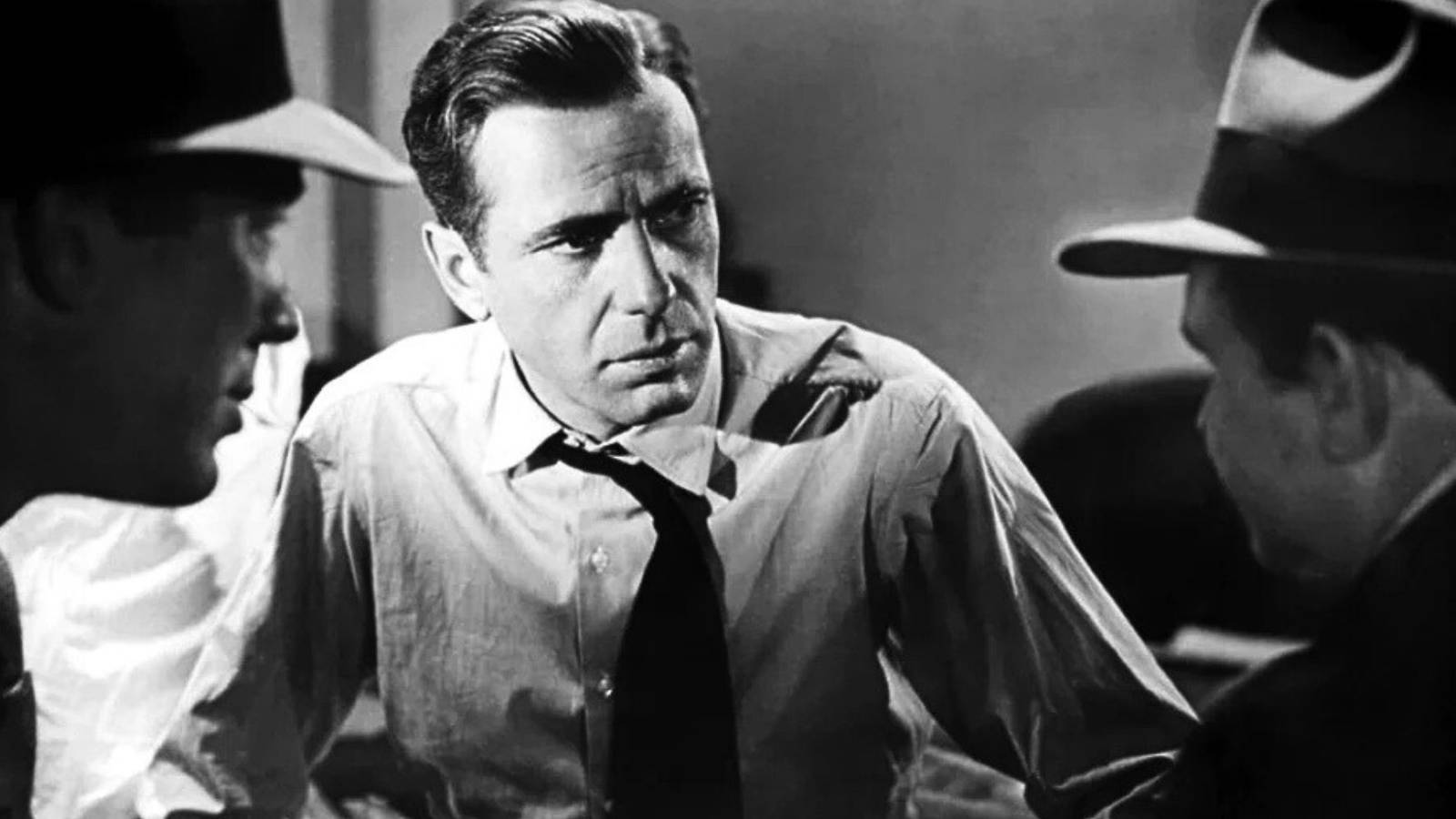
John Huston's directorial debut, The Maltese Falcon, is the film that launched classic noir. Humphrey Bogart plays Sam Spade, a hardboiled detective caught in a hunt for a priceless statuette. With its rapid-fire dialogue, morally ambiguous characters, and a plot full of double-crosses, the film set the template for the genre. Sydney Greenstreet, Peter Lorre, and Mary Astor deliver unforgettable performances. The falcon itself—a black bird that may be a fake—is a perfect symbol for noir's obsession with illusion and greed. It's the undeniable king of film noir.
These ten films not only defined a genre but also shaped the way we tell stories about crime, corruption, and the human condition. For more on the best of cinema, check out our rankings of the most universally acclaimed westerns and the most beloved horror movies.