The 1990s produced some of the most enduring and emotionally devastating novels of the modern era. These books don't just tell stories—they burrow into your mind, leaving you thinking about a single conversation or a quiet moment long after you've turned the final page. Whether it's a silence that should have been noticed, a choice made to protect a friendship, or a memory that shifts with every retelling, these authors make the smallest details feel monumental.
Here are six remarkable novels from the 1990s that continue to resonate, ranked by their lasting impact.
6. The Secret History (1992) by Donna Tartt
Richard Papen arrives at Hampden College desperate to escape his unremarkable California life. He becomes fascinated by an exclusive group of classics students studying under Julian Morrow, whose intellectual confidence and privileged lifestyles seem utterly irresistible. Tartt reveals almost immediately that these students will murder their friend Bunny Corcoran, yet Richard's determination to belong makes their increasingly disturbing behavior alarmingly easy to understand.
There's something especially horrifying about watching intelligent people rationalize cruelty among friends. Henry Winter's calm authority, Francis Abernathy's nervousness, and Bunny's relentless provocations make every gathering increasingly uncomfortable. Richard sees the lies for what they are, but walking away would mean losing his place among them. So he stays, finding ways to live with the lies. Tartt makes that slow surrender feel uncomfortably familiar. The murder promises suspense, but watching these friendships deteriorate under guilt and suspicion is what makes the novel unforgettable.
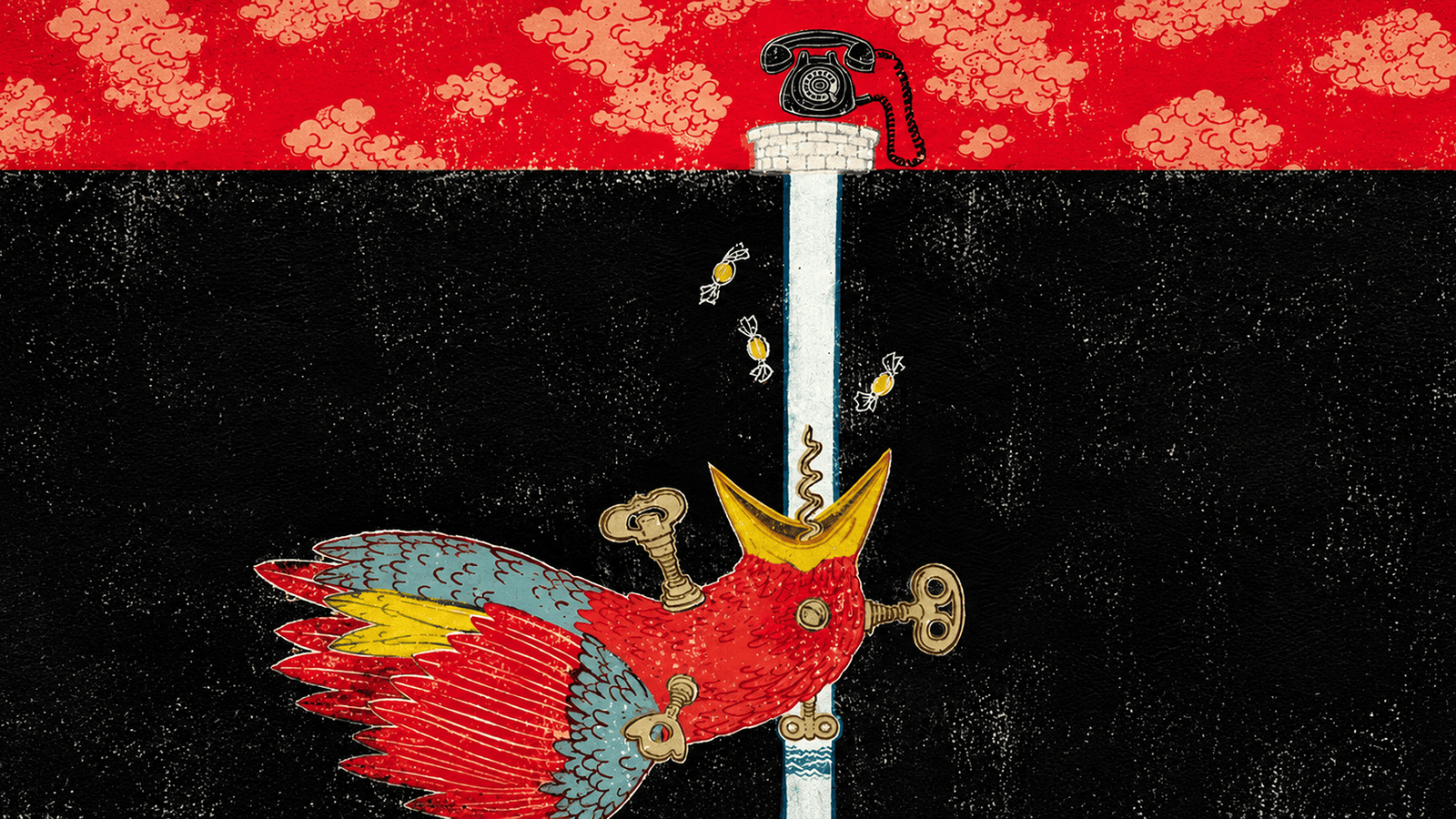
5. The Wind-Up Bird Chronicle (1994–1995) by Haruki Murakami
An unemployed Tokyo man searches his neighborhood for a missing cat while his wife goes to work. That's how casually The Wind-Up Bird Chronicle begins, spending considerable time describing Toru Okada's cooking, household routines, and conversations with an inquisitive teenager named May Kasahara. There's something incredibly convincing about Toru's indifference to his own future. He cooks spaghetti, wanders through quiet streets, and listens to strange telephone calls without exhibiting the urgency most people would consider appropriate. Then his wife Kumiko disappears.
The abandoned well behind a neighboring property becomes one of the novel's most unforgettable locations. Toru spends extended periods sitting in complete darkness, attempting to understand experiences that increasingly defy ordinary explanation. Meanwhile, Lieutenant Mamiya recounts horrifying wartime events in Manchuria, including witnessing a man being skinned alive. This book's achievement is the unmistakably disturbing relationship between these experiences. A simple domestic disappearance gradually introduces questions about violence, memory, and the painful histories people prefer to leave unexamined. Nothing stays buried forever.
4. Disgrace (1999) by J.M. Coetzee
The story starts with David Lurie, an aging Cape Town professor, who loses his university position following a sexual relationship with a student whom he exploited. Refusing to offer the satisfactory public repentance demanded by his disciplinary committee, he retreats to the Eastern Cape farm of his daughter Lucy. Disgrace initially follows David's uncomfortable adjustment to rural life, where his academic credentials provide little practical advantage. Lucy works hard, manages her property independently, and has remarkably little patience for her father's assumptions about how she should live.
And then three strangers attack the farmhouse. David is locked in a bathroom, set on fire, and rendered completely helpless. Meanwhile, Lucy is assaulted, and the dogs are slaughtered. Their disagreement afterward is devastatingly difficult to read. David demands action and answers, while Lucy insists upon making decisions he cannot accept. This book refuses to give either character a comforting resolution. Stripped of all authority, David's eventual work helping Bev Shaw euthanize unwanted dogs culminates in a final decision so painfully ordinary that it becomes almost unbearable.
3. The Things They Carried (1990) by Tim O'Brien
The Things They Carried follows Lieutenant Jimmy Cross, who leads young American soldiers through Vietnam while obsessing over letters from Martha, a college student who doesn't return his romantic feelings. These men are introduced through the objects they transport on exhausting marches. Kiowa carries an illustrated New Testament and his grandfather's hatchet. Ted Lavender carries tranquilizers and marijuana. Cross keeps Martha's photographs and a pebble she sent him. Even the regulation flak jackets receive an exact weight of 6.7 pounds.
Then Lavender is shot dead after relieving himself. His companions wrap his body in a poncho and carry him away, and Cross burns Martha's letters because he believes his distraction contributed to the death. That terrible attempt to regain control becomes even more upsetting when the book recounts Kiowa's death and the soldiers searching through a flooded sewage field for his body. O'Brien repeatedly questions the reliability of his own narration, forcing readers to consider how soldiers remember events they can barely tolerate discussing. Few war books capture guilt with such genuinely distressing precision.
2. Infinite Jest (1996) by David Foster Wallace
Infinite Jest is a wildly ambitious, frequently hilarious novel that somehow makes endless tennis drills, painfully awkward recovery meetings, and hundreds of footnotes fascinating. It follows Hal Incandenza, a gifted junior tennis player at the Enfield Tennis Academy, and the residents of Ennet House, a halfway house for recovering addicts. The novel's sprawling narrative weaves together the Incandenza family's tragic history, the mysterious film that is so entertaining it kills its viewers, and a geopolitical crisis involving the U.S. and Canada. Wallace's prose is dense and playful, but beneath the intellectual pyrotechnics lies a profound meditation on addiction, entertainment, and the loneliness of modern life. The book's structure—with its endnotes, digressions, and fragmented timelines—mirrors the way memory and obsession work. It's a challenging read, but those who persist are rewarded with moments of startling beauty and insight.
1. Beloved (1987) by Toni Morrison
While technically published in 1987, Beloved had its cultural peak in the 1990s, winning the Nobel Prize for Literature in 1993 and becoming a staple of book clubs and college syllabi. Set after the Civil War, the novel follows Sethe, a former enslaved woman who has escaped to Cincinnati but is haunted by the ghost of her baby daughter, whom she killed to spare her from a life of slavery. The ghost, known as Beloved, returns as a young woman, forcing Sethe and her family to confront the trauma they've tried to bury. Morrison's prose is lyrical and brutal, weaving together memory, history, and the supernatural to create a devastating portrait of the psychological costs of slavery. The novel's exploration of motherhood, guilt, and the need to remember—rather than forget—makes it one of the most powerful works of American literature. Its influence can be seen in countless contemporary novels that grapple with historical trauma.
These six novels, along with other 1990s gems like American Psycho and The Virgin Suicides, remind us that the decade was a golden age for literary fiction. They challenge us to sit with discomfort, to question our own narratives, and to recognize the profound humanity in even the darkest stories. For more on the books that defined the era, check out our favorite sci-fi quotes or explore fantasy novels that prove magic isn't just for kids.