Science fiction truly soars when the big idea isn't the only thing driving the story. Aliens, AI, time travel, genetic engineering, gender, empire, technology, and revolution can all grab our attention. But the books we return to again and again are the ones that tie those ideas to the decisions real people have to make.
That's the standard here. Each of these novels changes how you see something beyond the story—whether it's faith in progress, the need to belong, political loyalty, race, power, love, or the stories societies tell to justify cruelty. You might come for the concept, but you'll stay because you're still arguing with the book years later. Here are eight sci-fi books that deserve the label "masterpiece."
'The Three-Body Problem' (2008)
The Cultural Revolution is a brutal starting point for an alien-contact story, but it explains the decision that drives everything after it. Liu Cixin's novel follows Ye Wenjie as she watches her father die, losing faith in humanity. She later sends a message into space, inviting another civilization toward Earth. Her choice comes from experience, not cartoon villainy—she's seen people destroy knowledge, family, and each other in the name of ideology. When an alien warning tells her to stay silent, she answers anyway.
The present-day mystery follows Wang Miao through scientific suicides, impossible countdowns, a strange virtual-reality game, and growing evidence that human science is being deliberately disrupted. The ideas are huge, yet the most disturbing one is simple: first contact may arrive through someone who has already decided humanity is beyond saving. The English translation appeared in 2014 and later won the Hugo Award, helping the book reach a massive international audience. Few books make physics, politics, and existential panic this hard to put down.
'Do Androids Dream of Electric Sheep?' (1968)
Philip K. Dick's novel follows Rick Deckard, who earns money by hunting androids and "retiring" them. The language is deliberately clean for a job that's obviously killing. Earth has been damaged by nuclear war, most healthy people have left for Mars, and owning a real animal has become a sign of empathy and social worth. Rick wants enough bounty money to replace his electric sheep with a living creature. That desire sounds harmless until the book starts questioning whether people have turned compassion into another status symbol.
The androids are supposed to lack empathy, yet the humans keep behaving in cold, selfish, and violent ways. Rick gradually loses confidence in the test that separates one group from the other. Rachael Rosen complicates the issue even further, both emotionally and morally. The novel inspired Blade Runner, though the book spends far more time on religion, animals, Mercerism, and the uneasy business of proving humanity through approved behavior. Rick finishes his assignment with less certainty than he had at the start—and that discomfort is exactly what stays with you.
'Hyperion' (1989)
Seven pilgrims travel toward the Time Tombs, knowing the Shrike may kill them, ignore them, or grant one of them a request. Instead of rushing toward that confrontation, Dan Simmons's Hyperion lets each traveler explain why they came. Those personal histories change the book's genre again and again. One section reads like military science fiction, another becomes a detective story, another deals with religion, while Sol Weintraub's account of his daughter Rachel is one of the most painful uses of time in the genre.
Rachel begins aging backward after visiting the Tombs. Each day removes part of her life and eventually part of her memory. Sol has to introduce himself to his own daughter every morning while deciding whether the Shrike truly wants her as a sacrifice. That story alone could support a complete novel. Around it, the Hegemony, the TechnoCore, farcasters, the Ousters, and an approaching war keep widening the picture. Hyperion won the Hugo Award, but its lasting strength comes from something less official: every pilgrim reaches the same destination with a completely different reason to fear it.
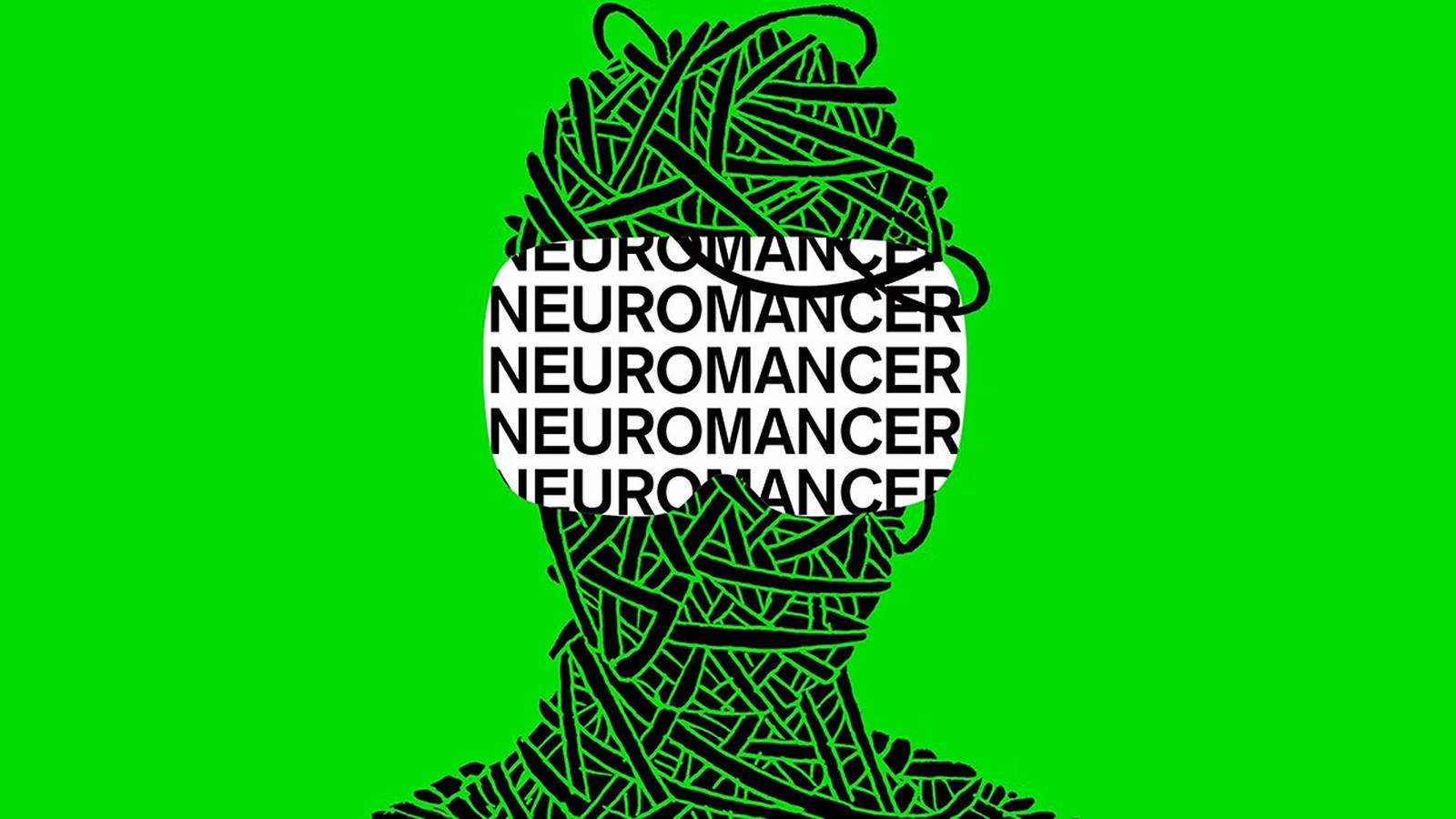
'Neuromancer' (1984)
This is arguably William Gibson's finest work. Case has lost access to cyberspace, and life outside it barely interests him. He used to be a gifted hacker until his employers damaged his nervous system after he stole from them. A mysterious employer offers to repair him in exchange for one more job. Molly, a mercenary with implanted lenses and retractable blades, keeps him alive while he tries to understand who hired them and what the real target is.
What shocks new readers is how much modern technology language seems to come after this book. Cyberspace, digital identity, corporate power, artificial intelligence, virtual environments, and bodies modified for work are all packed into a story published before the modern internet became part of daily life. Yet Neuromancer never reads like a tidy prediction exercise. Case is an addict, Molly has her own history, and the artificial intelligences Wintermute and Neuromancer are pursuing goals humans barely understand. The novel won the Hugo, Nebula, and Philip K. Dick Awards. Its influence is enormous, but the sweaty criminal energy keeps it from becoming a museum piece. For more on its legacy, check out our analysis of the upcoming adaptation.
'Kindred' (1979)
Octavia E. Butler's Kindred follows Dana, who is celebrating her twenty-sixth birthday in 1976 when she is suddenly pulled into the antebellum South. She finds herself saving a white boy named Rufus, the son of a plantation owner, and realizes she's been called back to protect him so that he can grow up to father her ancestor. Each trip becomes more dangerous, and Dana must navigate the brutal realities of slavery while trying to survive and return home.
Butler uses time travel not as a gimmick but as a way to confront history head-on. Dana's modern sensibilities clash with the horrors she witnesses, and she's forced to make impossible choices to ensure her own existence. The novel is a powerful exploration of race, power, and survival, and it remains one of the most essential works in science fiction. It's a book that doesn't let you look away, and it's a perfect example of how the genre can tackle the deepest human questions.
'The Left Hand of Darkness' (1969)
Ursula K. Le Guin's novel is set on the planet Gethen, where the inhabitants are ambisexual—they have no fixed gender except during a brief mating period. Genly Ai, an envoy from the Ekumen, is sent to persuade the nations of Gethen to join a galactic alliance. His mission is complicated by his own assumptions about gender and by the political intrigue of the planet's two major nations.
Le Guin uses the alien society to question our own ideas about gender and sexuality. The Gethenians' fluid sexuality challenges Genly's—and the reader's—expectations, and the novel becomes a meditation on what it means to be human. The book won both the Hugo and Nebula Awards, and its influence can be seen in countless works that explore gender and identity. It's a masterpiece that remains as thought-provoking today as it was over fifty years ago.
'Dune' (1965)
Frank Herbert's Dune is a towering achievement in science fiction, set on the desert planet Arrakis, the only source of the spice melange, the most valuable substance in the universe. The story follows Paul Atreides, whose family is betrayed and destroyed, leading him to unite with the native Fremen and seek revenge against his enemies. But Dune is more than a revenge tale—it's a complex exploration of politics, religion, ecology, and the dangers of messianic leadership.
Herbert's world-building is unmatched, with intricate details about the ecology of Arrakis, the political maneuvering of the Great Houses, and the mysterious Bene Gesserit sisterhood. Paul's journey from noble heir to religious figure is both epic and tragic, as he grapples with the consequences of his own rise to power. Dune won the Hugo Award and is widely considered one of the greatest science fiction novels ever written. Its themes resonate even more today, making it a timeless masterpiece.
'Snow Crash' (1992)
Neal Stephenson's Snow Crash is a cyberpunk classic that blends virtual reality, Sumerian mythology, and corporate dystopia. The story follows Hiro Protagonist, a pizza delivery driver and hacker, who discovers a new drug called Snow Crash that affects both the virtual and real worlds. As he investigates, he uncovers a conspiracy that threatens to destroy civilization.
Stephenson's novel is a wild ride, full of sharp wit and prescient ideas about the internet, memes, and the power of language. It's a book that feels both of its time and ahead of it, and its influence can be seen in everything from The Matrix to modern discussions of the metaverse. Snow Crash is a masterpiece of speculative fiction that remains essential reading for anyone interested in the intersection of technology and society.
These eight novels represent the best of what science fiction can achieve—stories that entertain, challenge, and stay with you long after you've turned the final page. They're not just books; they're experiences that reshape how you see the world. If you're looking for more literary masterpieces, check out our list of flawless reads or our ranking of psychological thrillers. And for more on the genre's impact, see our piece on movie masterpieces that were ahead of their time.