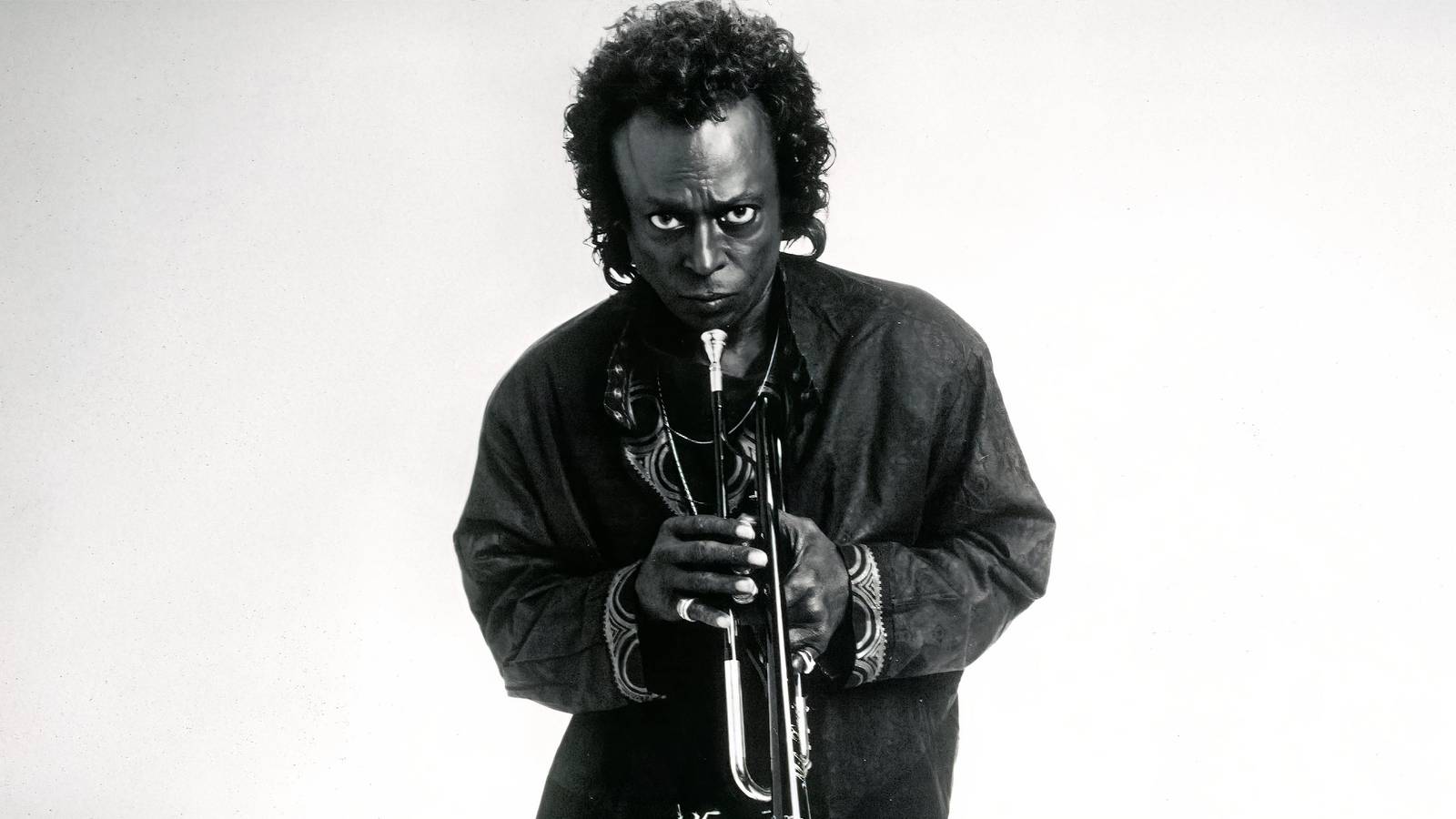
Miles Davis remains one of the most transformative figures in jazz history. Over a six-decade career, the trumpeter released more than sixty albums, won nine Grammys, and earned honors from the Grammy Hall of Fame, Rock and Roll Hall of Fame, and the NEA Jazz Masters Fellowship. Three of his records—Kind of Blue, Bitches Brew, and Birth of the Cool—are preserved in the Library of Congress's National Recording Registry. Davis was a relentless innovator, pioneering genres like fusion by blending jazz with rock. Born on May 26, 1926, he passed away in 1991, but his estate continues to release archival material. Here are the ten studio albums that define his legacy.
10. Ascenseur pour l'échafaud (1958)
This soundtrack to Louis Malle's film noir debut is a haunting, atmospheric jazz recording. Miles's trumpet, drenched in reverb, captures the heartbreak and suspense of the story, which follows a woman whose lover kills her husband but gets trapped in an elevator. Recorded in Paris with French musicians, tracks like "Générique" and "L'Assassinat de Carala" are essential.

9. Milestones (1958)
This album marks a shift from hard bop to modal jazz. With Cannonball Adderley and John Coltrane, Davis delivers fiery performances on "Straight, No Chaser" and "Two Bass Hit." The title track is his first true modal composition, switching between two keys. It was inducted into the Grammy Hall of Fame in 2004.
8. Workin' with the Miles Davis Quintet (1959)
Recorded in 1956 but released later, this album features Davis's first great quintet with Coltrane, Red Garland, Paul Chambers, and Philly Joe Jones. Highlights include a definitive version of "It Never Entered My Mind" and the hard bop classic "Four." The chemistry is electric.
7. 'Round About Midnight (1957)
Davis's Columbia debut introduced his first great quintet to a mainstream audience. The title track redefines Thelonious Monk's classic, while "Ah-Leu-Cha" and "Bye Bye Blackbird" showcase blistering hard bop. It earned a Grammy Hall of Fame induction in 2019.
6. Sketches of Spain (1960)
Collaborating with Gil Evans, Davis created a lush blend of jazz, Spanish folk, and classical music. The 16-minute opener, based on Rodrigo's "Concerto de Aranjuez," is cinematic and emotional. The album won a Grammy and remains a genre-defying masterpiece.
5. E.S.P. (1965)
This album introduced Davis's second great quintet with Wayne Shorter, Herbie Hancock, Ron Carter, and Tony Williams. The title track and "Eighty-One" showcase a new, exploratory sound that pushed jazz forward.
4. Kind of Blue (1959)
The best-selling jazz album of all time is a modal masterpiece. With Coltrane, Adderley, Bill Evans, and Jimmy Cobb, tracks like "So What" and "Freddie Freeloader" are timeless. It's a must-own for any music fan.
3. Birth of the Cool (1957)
Compiled from 1949-50 sessions, this album defined cool jazz. Nonet arrangements with French horn and tuba created a relaxed, intricate sound that influenced generations.
2. Bitches Brew (1970)
A fusion landmark, this double album blended jazz with rock, funk, and electronic effects. Tracks like "Pharaoh's Dance" and the title track are dense, improvisational, and revolutionary. It won a Grammy and changed jazz forever.
1. In a Silent Way (1969)
This album bridged Davis's acoustic work and his electric fusion era. With Shorter, Hancock, and John McLaughlin, it's a serene yet complex journey that set the stage for Bitches Brew. Essential listening.
For more on genre-defining music, check out our list of 10 classic rock albums where every track is a masterpiece and our ranking of the best grunge albums of all time.