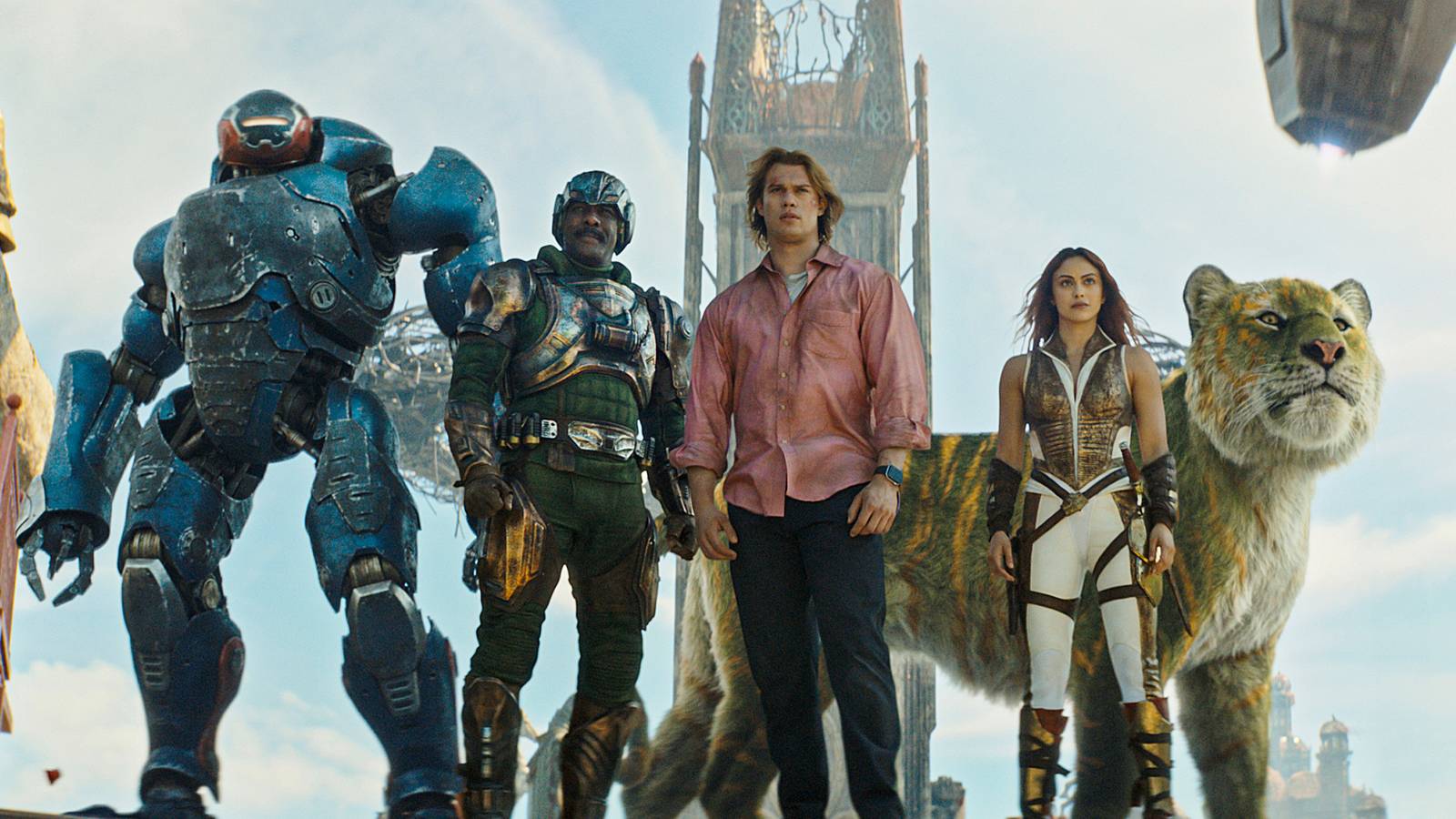
On a bright spring morning in 2025, a group of journalists stepped onto the sets of Masters of the Universe and discovered something almost radical in today's fantasy landscape: color. Real, vivid, unapologetic color. Director Travis Knight and his team at Amazon MGM Studios and Mattel are betting that audiences are hungry for a fantasy world that doesn't hide in shadows or monochromatic palettes.
For years, critics and fans have lamented the trend of dimly lit, gray-and-beige fantasy films. The prevailing theory is that low lighting helps hide the seams of rushed visual effects. But on the set of Masters of the Universe, the approach is refreshingly different. The film leans into practical sets, intricate prosthetics, and detailed costumes, with visual effects from ILM, Rodeo FX, and DNEG used to enhance—not replace—what was built in the real world.

Bringing Eternia to Life with Color
Production designer Guy Hendrix Dyas, a two-time Oscar nominee, grew up a fanatical viewer of the original He-Man cartoon in Devon, England. That childhood obsession is evident in every sketch and set piece. "What I've tried to do in every case is make sure that all the vehicles adhere to the original color schemes of the toys and the animation," Dyas explained. "We all know spaceships are always gray, right? Not in this world."
His concept art for Skeletor's Rotons—saw-like vehicles—features bold red accents that pop against the typical sci-fi steel. The capital city of Eternos is designed with functional egress and ingress, showing a civilization that feels lived-in and real. Dyas drew inspiration from Ralph McQuarrie's uncredited concept art for the 1987 live-action film, but added his own twist. "I kept in mind his gestures of the domes, but I changed them into glass. If they were stone, it would start to look too much like a Star Wars world."
Why Color Matters in Fantasy
Dyas notes that most sci-fi and fantasy films lean into a single palette: Dune's yellows and browns, Star Wars' grays. "What is the palette for this world? Well, one thing's for sure, it's not short on color. Our forests are absolutely vivid and beautiful." In fact, the only color restriction for the forest set was "no green"—a choice that will make sense once audiences see the final film.
This commitment to vibrancy is a direct nod to the franchise's roots. He-Man was born in 1976 after Mattel passed on George Lucas' offer to produce Star Wars toys. Designer Roger Sweet created a character that was "Conan the Barbarian meets Star Wars," and the bright color scheme became its signature. For fans of the best fantasy action movies, this return to bold visuals is a welcome shift.
Practical Effects and Creature Work
Beyond the colors, the set visit revealed a dedication to practical effects that harkens back to an earlier era of filmmaking. The creature work and prosthetics are awe-inspiring, with highly detailed costumes that allow actors to interact with their environment. Visual effects supervisors Tim Burke and David Vickery work in tandem with Dyas's team to ensure the digital elements blend seamlessly with the physical sets.
This approach stands in stark contrast to the trend of relying entirely on green screens. As Dyas put it, "It's not a world that shies away from vivid color, and that's a very healthy thing." The result is a fantasy film that feels both nostalgic and fresh—a rare combination in today's blockbuster landscape.
With Masters of the Universe, Travis Knight and his team are proving that you can honor a beloved cartoon while pushing the boundaries of modern filmmaking. For anyone tired of squinting through murky action sequences, this film is a beacon of light—and color.