When Vision Meets Vastness: The Art of the Epic
Epic filmmaking is the ultimate test of a director's skill. It requires orchestrating sprawling narratives, colossal sets, and historical weight while never losing sight of the human heart at the story's core. Mere spectacle isn't enough; true mastery lies in balancing the monumental with the personal. This list celebrates those rare films where directorial vision achieved perfection, creating immersive worlds that feel both grand and intimately real.
10. The Last Duel (2021)
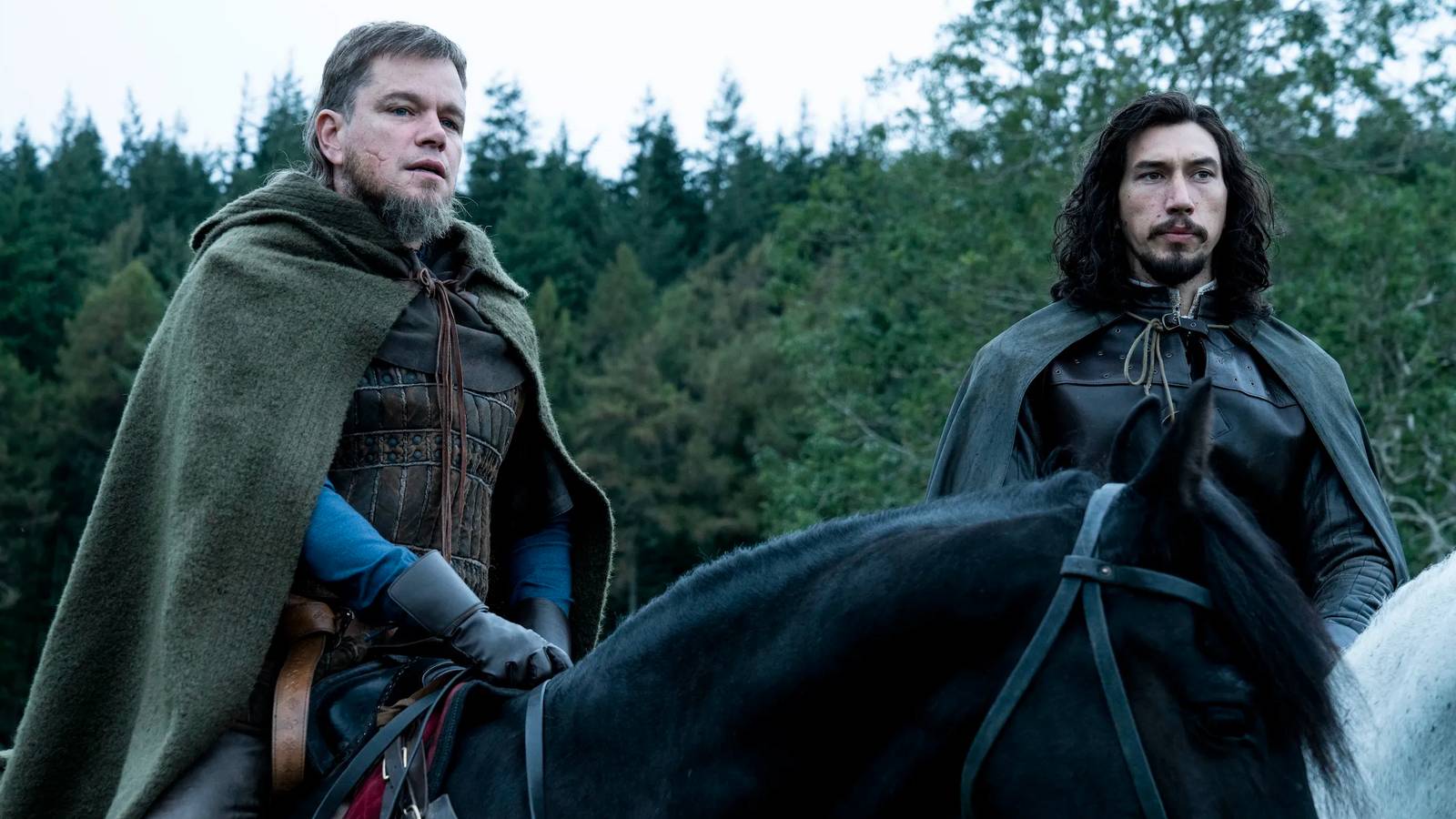
Ridley Scott's medieval drama may have underperformed at the box office, but it stands as a directorial triumph of structure and texture. The film revisits a grim historical incident through three conflicting perspectives, a narrative gamble that Scott executes with precision. He avoids the polished sheen of typical period pieces, instead crafting a world of grimy realism where light fights through shadows and costumes show the wear of life. The subtle shifts in camera work and performance across each chapter transform a potential storytelling redundancy into a compelling exploration of truth and perspective.
9. Braveheart (1995)
Mel Gibson's historical war film takes creative liberties with facts but achieves something more powerful: pure, rousing cinematic momentum. Gibson, serving as both star and director, delivers a performance of raw conviction as William Wallace, selling a transformative arc from peaceful farmer to revolutionary symbol. The film's genius lies in its battle sequences, which are chaotic yet coherent. Gibson's camera seamlessly moves from sweeping, wide-angle chaos to brutal, intimate close-ups, ensuring viewers always grasp the tactical stakes and emotional toll. It's a high-energy feat of visceral storytelling.
8. Silence (2016)
Martin Scorsese trades kinetic energy for profound stillness in this philosophical epic about faith and persecution. Following two Jesuit priests in 17th-century Japan, the film is a masterclass in disciplined, thematic direction. Scorsese restrains his typically dynamic style, allowing long stretches of quiet contemplation and landscape to build unbearable tension. The violence, when it comes, is presented not for thrill but as a prolonged, uncomfortable test of spirit. It's a sweeping story told with remarkable interior focus, making it one of Scorsese's most powerful and personal statements. For fans of intense, character-driven drama, this shares the meticulous craft found in the most flawless thrillers of recent years.
7. The Last Emperor (1987)
Bernardo Bertolucci's biographical masterpiece is a stunning fusion of personal destiny and national upheaval. Charting the life of Pu Yi, China's final emperor, the film spans decades without ever losing its narrative or emotional thread. Bertolucci's direction is painterly, using color as a primary storytelling device. The opulent golds and reds of the sequestered Forbidden City gradually give way to the muted grays and blues of political imprisonment and mundane reality. This visual journey mirrors the protagonist's loss of power and identity, creating an epic that feels both intimately personal and expansively historical.
6. Ben-Hur (1959)
William Wyler's biblical colossus set a new standard for cinematic spectacle. As the tale of a betrayed Jewish prince seeking revenge against Rome, it demanded a production of unprecedented scale. Wyler's genius was in never letting that scale overwhelm the story. Despite featuring thousands of extras, monumental sets, and the legendary, meticulously staged chariot race, the film remains intensely character-focused. Every grand gesture serves the core narrative of betrayal and redemption. Wyler maintains perfect clarity in even the most complex sequences, proving that the greatest spectacles are those we can feel, not just see.
5. Saving Private Ryan (1998)
Steven Spielberg redefined the war genre with this visceral, immersive plunge into World War II. The film's opening D-Day sequence is a landmark of directorial craft, plunging audiences into the chaotic, terrifying reality of combat with a shaky, subjective camera and sound design that strips away Hollywood glamour. Yet Spielberg's mastery extends beyond the battlefields. He balances this overwhelming intensity with quieter moments of camaraderie and moral questioning, ensuring the human cost of the mission is never forgotten. It's an epic that feels devastatingly real, a testament to direction that prioritizes emotional truth alongside historical recreation. This commitment to groundbreaking filmmaking echoes the ambition behind projects like Kevin Costner's ambitious 'Horizon' Western saga.
4. Gladiator (2000)
Ridley Scott revived the sword-and-sandal epic for the modern age with this tale of a betrayed general's quest for vengeance. Scott's direction is a brilliant synthesis of intimate drama and colossal action. He grounds the story in the gritty, tactile reality of the Roman world, from the mud of Germania to the blood-soaked sand of the Colosseum. The battle sequences are thunderous and coherent, but the film's power equally derives from its quieter moments—the dreamlike visions of a home left behind, the political machinations in marble halls. Scott makes the personal stakes feel as vast as the empire itself.
3. Lawrence of Arabia (1962)
David Lean's desert odyssey remains the quintessential epic, a film where the environment is both the setting and a central character. Lean's direction is defined by monumental patience, using wide shots of breathtaking scope to convey the isolating vastness of the Arabian desert and the scale of T.E. Lawrence's journey. The famous match-cut to a rising sun is a perfect example of cinematic storytelling without words. Yet, within these vast frames, Lean never loses the complex, enigmatic figure at its center, crafting a psychological portrait as expansive and mysterious as the landscapes themselves.
2. The Lord of the Rings: The Return of the King (2003)
Peter Jackson's culmination of the Tolkien trilogy is a staggering achievement in sustained epic filmmaking. Directing a narrative of this complexity—with its multiple converging storylines, massive digital and practical effects, and tonal shifts from intimate sorrow to apocalyptic war—required a monumental balancing act. Jackson succeeds by always tethering the fantasy spectacle to emotional truth. Whether it's the quiet determination of a hobbit or the thunderous charge of the Rohirrim, every scene is driven by character. The direction makes Middle-earth feel authentically lived-in and its stakes profoundly real, wrapping up one of cinema's most ambitious undertakings with flawless execution.
1. 2001: A Space Odyssey (1968)
Stanley Kubrick's sci-fi landmark stands alone as perhaps the most perfectly directed epic ever made. It is a film of staggering scale, spanning from the dawn of man to the birth of a new cosmic consciousness, yet it is executed with the precision of a Swiss watch. Every composition, every edit, every use of sound and classical music is meticulously calculated to evoke awe, mystery, and profound philosophical inquiry. Kubrick dispenses with conventional narrative to create a purely cinematic experience, using visual and auditory language to explore humanity's place in the universe. It is epic not just in its setting, but in its boundless ambition and flawless control, a timeless monument to directorial vision.
These films prove that an epic's true power isn't measured by budget or runtime, but by a director's ability to harness that scale in service of a resonant, human story. They are landmarks of craft where every directorial choice, from the grandest battle to the quietest glance, builds toward a perfect, unforgettable whole. For more rankings that celebrate cinematic achievement, explore our definitive ranking of blockbusters that defined 50 years of cinema.