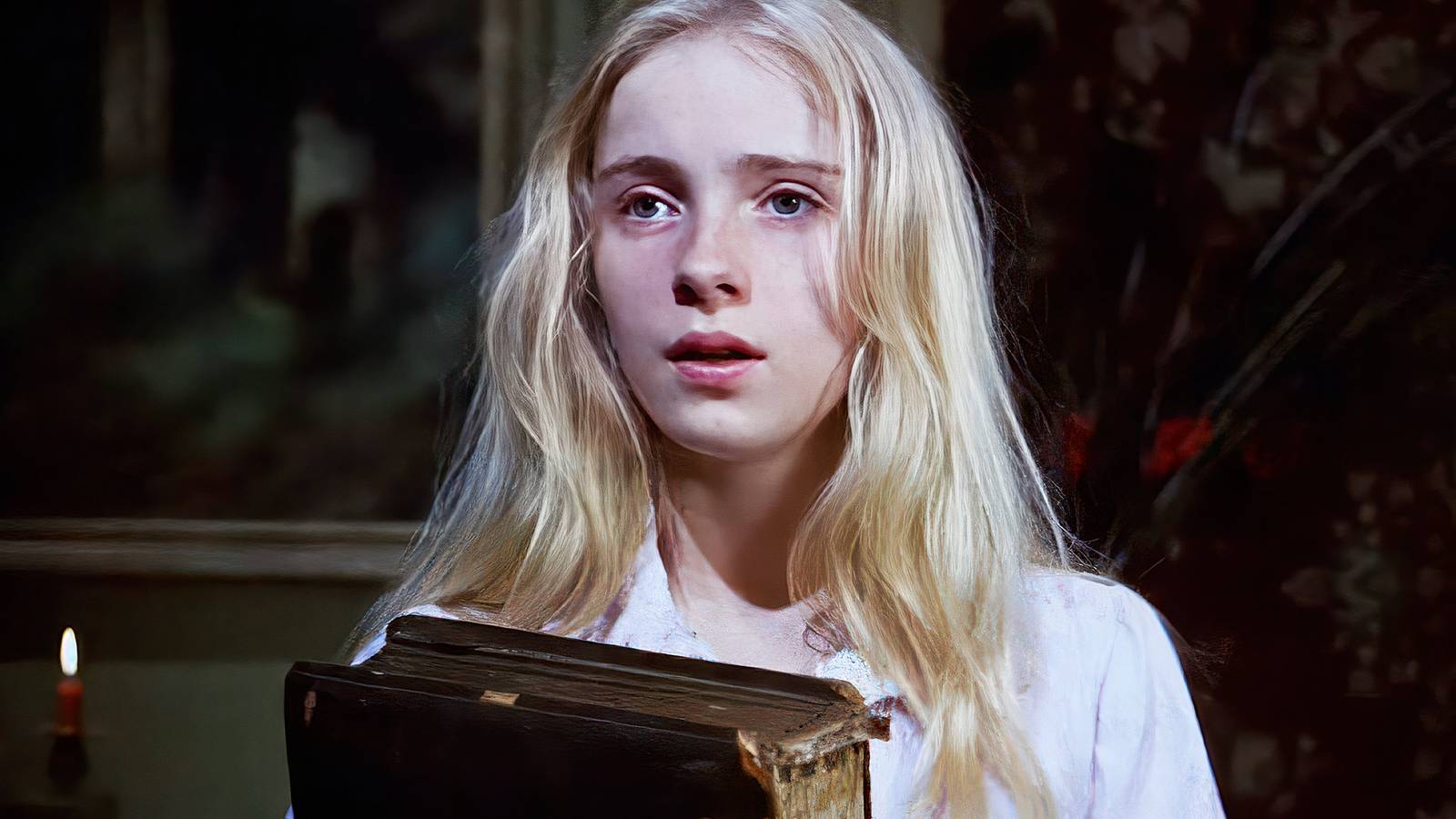
In the early 1970s, horror movies often sparked religious outrage, but few managed to get officially condemned by the Catholic Church while barely mentioning Catholicism. Lemora: A Child's Tale of the Supernatural did just that, earning a condemnation from the Catholic Legion of Decency for being "anti-Catholic." The accusation feels almost absurd, like blaming the weather on a suspicious pigeon, but it highlights the film's unsettling power.
Directed by Richard Blackburn, Lemora follows Lila Lee (Cheryl Smith), a teenage girl known as the "Singing Angel" in her small town. Raised by a strict Reverend (played by Blackburn himself) after her gangster father murdered her mother and disappeared, Lila lives under a rigid religious discipline. When she receives a letter saying her father is dying, she sneaks off to the town of Asteroth, where the story transforms into a twisted fairy tale of vampires and corrupt adults.

A Dreamlike Journey into Darkness
Lila's journey to Asteroth is anything but ordinary. The bus ride into the swamp feels increasingly surreal as the driver complains about a strange illness in the town ahead. The road narrows, trees close in, and the light dims, creating an atmosphere of dread. By the time the bus reaches Asteroth, the place already feels like somewhere people should avoid. Blackburn's modest budget works in his favor, using the swamps and forests to create a damp, unsettling stillness that lingers.
The Real Horror: Adult Corruption
While vampires are the obvious threat in Lemora, the true horror comes from the adults around Lila. Nearly every man she encounters watches her with a slightly predatory interest. The Reverend, who preaches purity and discipline, looks at Lila in a way that suggests his own struggles are closer to home than he admits. Other men offer rides with awkward flirtation, and strangers gaze too long. The film never explicitly points out this pattern, but it lets the audience notice the subtle buildup of tension. Lila navigates a world where the adults who claim moral authority are increasingly untrustworthy.
The Gothic Horror of Lemora's House
When Lila finally reaches Lemora's house, played by Lesley Taplin (credited as Leslie Gilb), she is greeted with warm confidence. Lemora seems like a gracious host, but the house gradually reveals its secrets. Pale children wander the halls, a squat stone building looks like a dungeon, and creatures in the woods barely resemble traditional vampires. Blackburn handles these scenes with restraint, letting horror seep in through suggestion—a flash of teeth, a shadow crossing a doorway, children drinking from a red chalice. The mood thickens like fog rolling across a churchyard.
Challenging Moral and Religious Authority
By the final act, the supernatural takes on deeper meaning. Lemora offers Lila eternal life and protection, but Lila is caught between forces: the church demands strict obedience, the adults fail to live up to those rules, and Lemora offers a freedom with an impossible cost. The Catholic Legion of Decency condemned the film as "anti-Catholic," but the film never openly attacks doctrine. Instead, it shows a young girl in a world where the authority meant to protect her can't do the job. Institutions built on moral certainty rarely enjoy seeing themselves reflected that way.
Today, Lemora: A Child's Tale of the Supernatural remains a strange entry in '70s horror, blending fairy tale structure with Southern decay and unease. The vampires and creatures may grab attention, but what lingers are the people: adults who misuse power, innocence treated as something to possess, and moral rules that look far less certain by the end. For fans of classic horror, this film is a must-see, much like Why These 10 Classic Horror Movies Are Still Terrifying Today. And if you're into vampire tales, check out Josh Hartnett's Savage Vampire Horror '30 Days of Night' Hits Free Streaming on Pluto in May 2026.