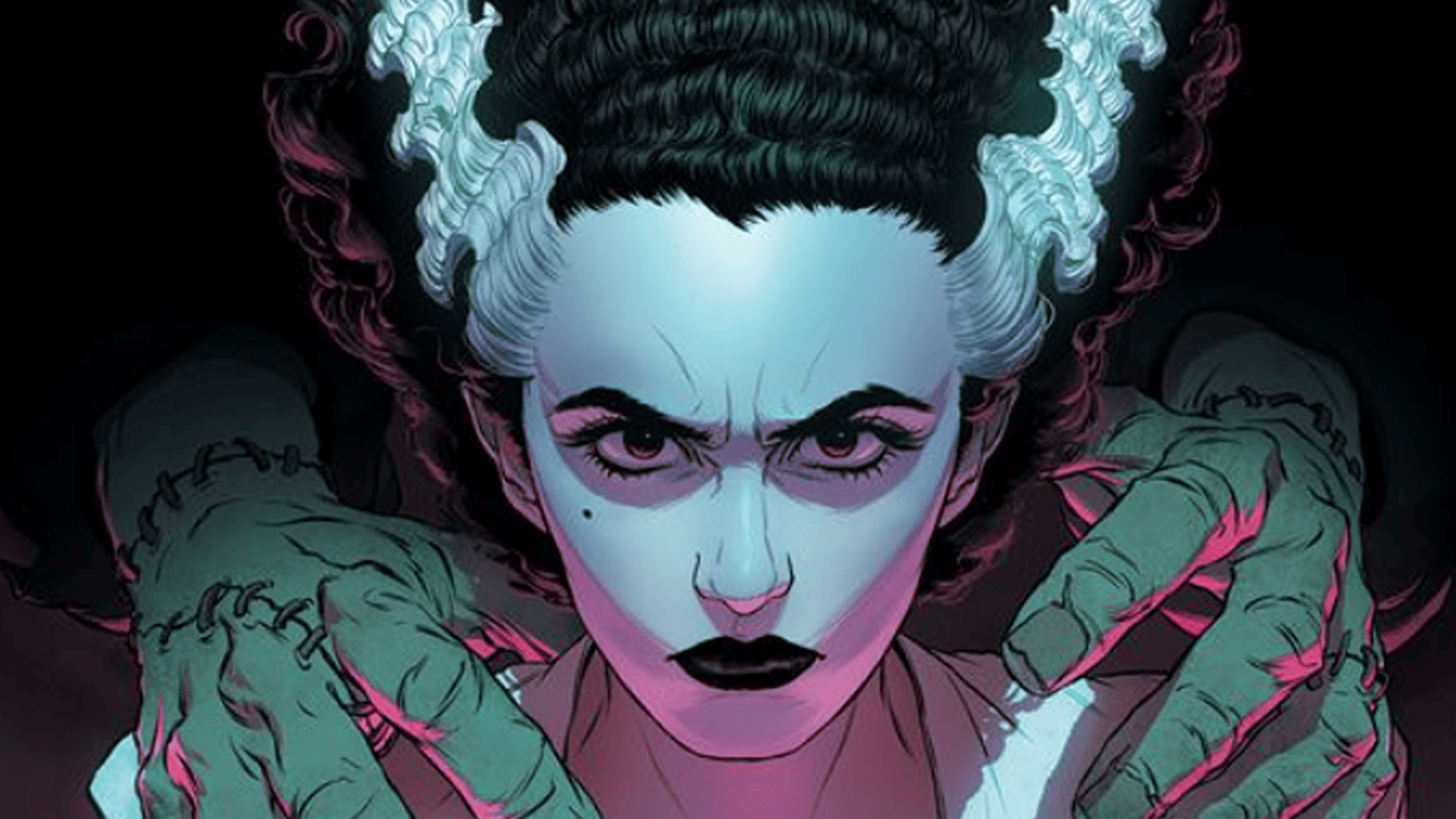
Nearly a century after she electrified audiences with just a few minutes of screen time, the Bride of Frankenstein is finally getting the spotlight she deserves. Writer Kelly Thompson and artist Mattia De Iulis are teaming up for Universal Monsters: The Bride of Frankenstein Lives, a four-issue series from Skybound that asks a question the 1935 film never bothered to: What does the Bride want for herself?
In the original movie, the Bride is brought to life, takes one look at the Creature, and screams. She's gone almost as quickly as she appeared, leaving behind only her iconic look and a whole lot of unanswered questions. Thompson sees that absence as an opportunity. "We know what everyone else wanted her to be, but almost nothing about what she wanted for herself," she told Collider's Hannah Hunt. That blank space is where the new series lives.
A Title That Almost Was
For Thompson, even the title was a chance to honor the women who made the Bride's existence possible. She originally wanted to call the series The Bride[s] of Frankenstein, with the "s" in brackets, and made an "impassioned plea" for it. The idea was to acknowledge that this Bride is literally built from multiple women whose lives shouldn't just disappear into hers. But practical concerns—like searchability—won out. "Not using it felt a little bit like erasing the agency of these women I was trying really hard to properly address," Thompson admitted. "It was hard to lose that, but I get it. It's not the point. The point is the story."
That story kicks off with a Bride who has no memory of the women whose bodies were used to create her. Discovering them becomes more than a mystery to solve; it's the foundation of who she chooses to become. "She literally [thinks about] how does she preserve these women's memories," Thompson said. The Bride sees those women as her true creators, "much more so than Frankenstein himself," and wants to honor them by living a life with purpose—whatever that means to her.
The Horror of Being Made for Someone Else
But that search comes with a painful complication. The Bride didn't choose to be made or to inhabit this body, and the people who see their lost loved ones in her may want things she can't give. One such character is West, who believes he's found his missing wife Elise when he looks at the Bride's face. Thompson explained that West's grief forces him to choose: try to fill the void with someone new, or accept that the woman in front of him must be free to become herself. His pain is real, but the story stays focused on the Bride. As Thompson put it, West is caught in "the wake of her creation."
Thompson also wants readers to sit with the horror of what was demanded of the Bride. In the original film, she's an object in the Creature's search for companionship. Thompson has sympathy for his loneliness, but giving the Bride her own narrative means confronting the ugly truth of her creation. "I think the Bride puts the really mundane, believable horror of women very forward, and you can't deny it," she said. While the Universal Monsters line has limits on how far it can push that material, Thompson felt it was crucial to bring some of that horror to the surface.
Fans of Thompson's work know she excels at writing complex women with agency, and this project is no exception. Her experience shaping characters like Rogue and Gambit in Marvel's X-Men comics helped her tackle the Bride's inner world. The series also joins a long tradition of reimagining classic monsters, much like the best sci-fi films have done for decades—from Frankenstein to Star Wars.
With De Iulis rendering both the beauty and the horror of her existence, The Bride of Frankenstein Lives promises to be a stunning and thought-provoking take on a character who's been more symbol than person for 90 years. Thompson hopes the story itself will do the work of honoring those forgotten women—and finally let the Bride decide who she wants to be.