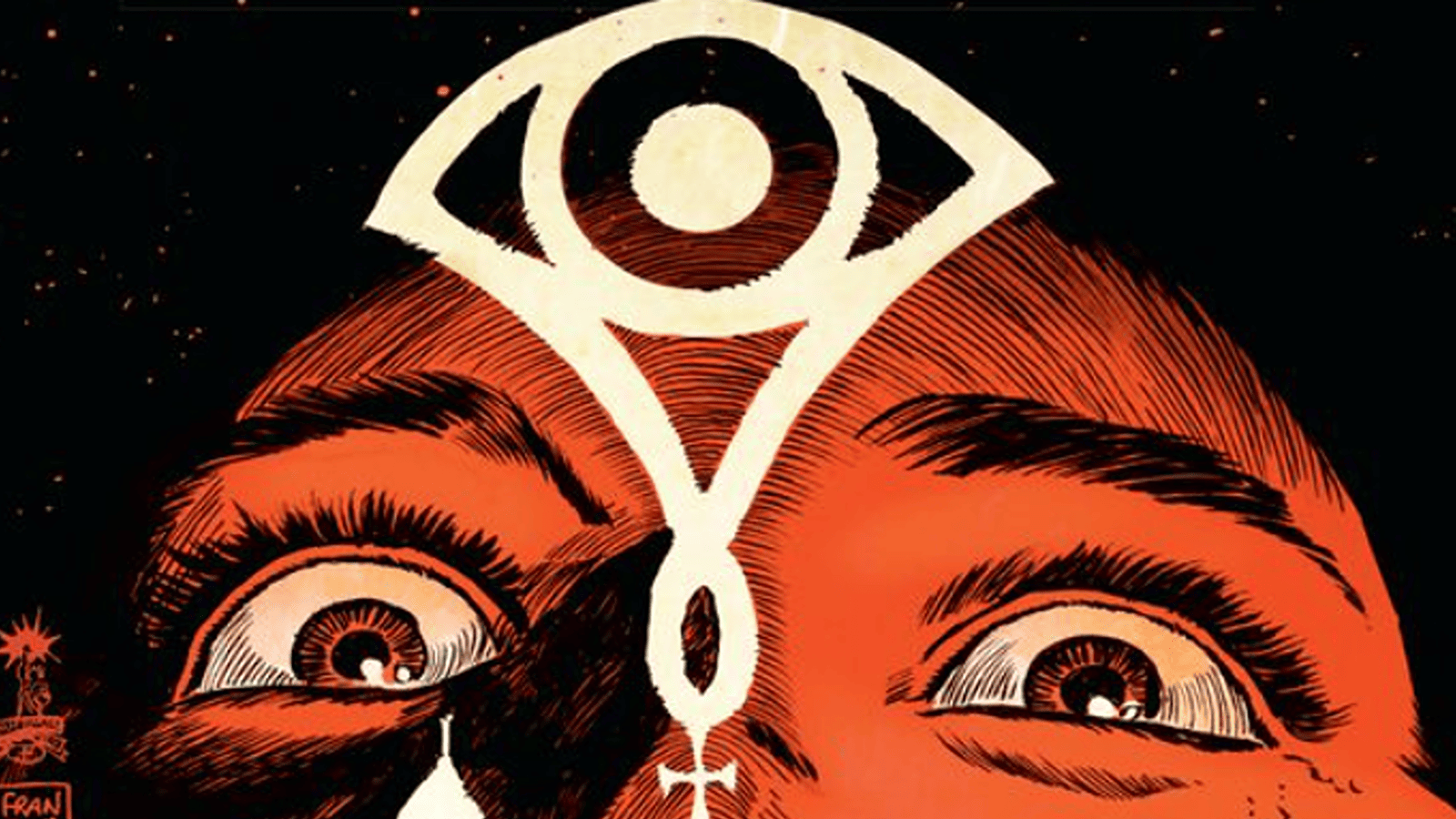
John Carpenter has spent decades crafting cinematic nightmares, from the relentless terror of Halloween to the paranoia of The Thing. But his latest horror story didn't start with a script—it started with a dream. And not just any dream: an unusually vivid, fully formed nightmare that Carpenter woke up from with a complete narrative in his head. That dream became the foundation for Cathedral, his first original graphic novel, published by Storm King Comics.
The story follows LAPD detective Christine Adams, who investigates her father's gruesome death and uncovers a portal to the underworld beneath an abandoned Los Angeles cathedral. There, she confronts creatures that can turn victims inside out, and a centuries-old conflict that threatens to spill into the city above. Carpenter developed the project with his longtime collaborator Sandy King and writer Sean Sobczak, with art by Federico De Luca and Luis Guaragna.
In an exclusive interview with Collider, King revealed that Carpenter rarely experiences dreams with such a linear, complete arc. "He had a fully realized, linear dream, which rarely happens," she said. "He was so surprised himself that he had this dream that he talked to the boys about it, and they decided they should do an album of it. That's where it started. Then they decided that there should be a graphic novel to go with the album."
Carpenter's written account of the dream provided only about 10 pages of material, which the team expanded into a 120-page story. King and Sobczak had to flesh out the characters, their motivations, and the rules of this dark fantasy world. "You kind of go, 'Okay, now you have to sit down and answer some questions. Who is this lead woman? What was her background? What was her father to her?'" King explained. "In order to do fantasy, in order to go into some other realm, you have to ground it in reality. You have to make your characters as well-rounded as possible so that people attach to them before you can push their imaginations into the insane."
The process became what King calls "a game of a thousand questions." Every detail from the dream—like eyes hanging from trees—had to be interrogated. Could they watch Christine? What ancient presence lurked beneath Los Angeles? How had previous generations contained it? King, who has worked with Carpenter for decades, often served as interpreter. "I've spent decades rummaging around in John's head, so I can pretty much interpret what he's saying to me," she said.
Even with that familiarity, Carpenter remained closely involved, listening from across the room and correcting any misinterpretations. "He would be listening to us from across the room, kind of going, 'No, no, no, that's not it,'" King recalled. "I'd go, 'Okay, care to explain?' Then we just got more and more clarified on what it was."
At the heart of Cathedral is Christine, a character who embodies Carpenter's fascination with strong female leads. "He's very big on female characters and their strengths," King said. "What do they represent? What is inside them that drives them? In her case, she was very close to her father. It's why she became a policeman." Christine's investigation is deeply personal, but her quest isn't just about revenge—it's about righteousness. "She's partly driven by vengeance and partly driven by righteousness," King explained. "Enough that she sacrifices part of herself, and yet is triumphant in the end when you think she's had it and the demon has bested her."
King considers Christine's ending a victory, even though the portal remains open and smaller creatures are still loose. The graphic novel leaves room for more stories, much like Carpenter's other works. For fans of his horror legacy, Cathedral offers a new glimpse into his twisted imagination, proving that even his dreams are fertile ground for terror. If you're a fan of gothic horror, you might also enjoy our list of top gothic horror novels or explore how other unfilmable novels became cinematic triumphs.